In China, people will soon be able to bring nothing but their smartphones (and clothes, perhaps) when going out, and the one and only app they’ll need to download is WeChat.

In China, people will soon be able to bring nothing but their smartphones (and clothes, perhaps) when going out, and the one and only app they’ll need to download is WeChat.
Owned by tech giant Tencent, WeChat has evolved from China’s answer to WhatsApp to an all-in-one app that let users order food, hail cars, and pay utility bills through its payment function. It has made cash and credit cards obsolete for many users, and it might soon do the same to physical identity cards issued by the government.
Join 500,000+ readers who start their day with Quartz.
By subscribing, you agree to our Terms of Service and Privacy Policy.
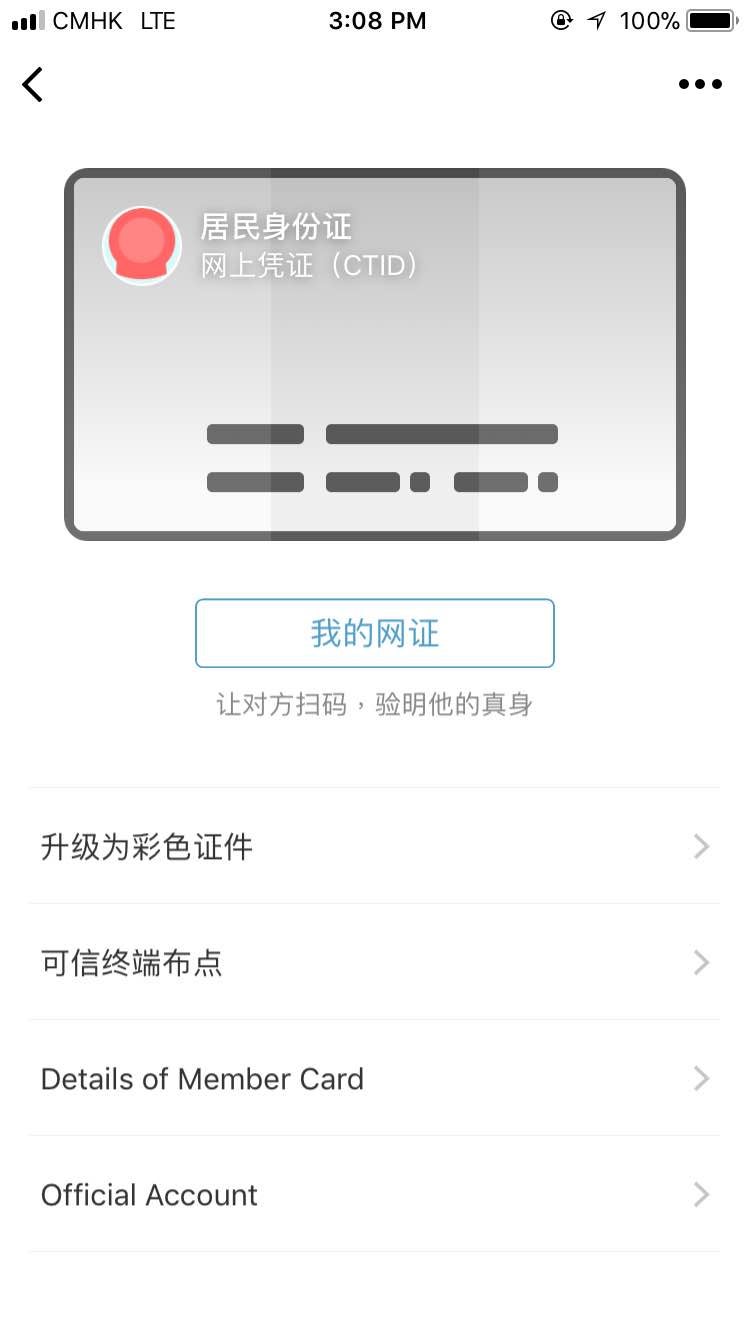
Earlier this week, WeChat rolled out a new function that lets users have a digital version of their government-issued ID cards. Users can go to a state-backed platform inside WeChat, enter their names and ID numbers, and then go through facial recognition to get their electronic ID cards. These digital versions will be accepted in place of ID cards for hotel check-ins and airport security checks, among other things. The program is currently available to citizens in the southern Guangdong province, and will be extended nationwide next month, according to a report from state newswire Xinhua (link in Chinese).
Previously, both WeChat and rival payment service Alipay from Alibaba rolled out similar ID card schemes in cooperation with local governments in cities such as Wuhan and Nanning. But the new WeChat feature is poised to become China’s first national, official electronic ID system powered by a tech company.
As the app continues to add features, people will only become more dependent on it over time. But the scary part is that WeChat gathers and monitors user data that can be shared with the government whenever deemed necessary. Police have arrested WeChat users for writing messages critical of the government. In some cases such messages are blocked from reaching their recipients, but the sender isn’t alerted to the fact.
So while WeChat is an all-encompassing system that does indeed make everyday life easier, it’s also a powerful tool of government surveillance and control. That’s an awkward situation, but it’s the kind any tech company has to deal with when operating within China’s authoritarian realm.
Below are two lists of all the things you can—and can’t—do with your WeChat account in China.
