
Japan’s prime minister wants you to call him by his name
Japan’s prime minister has long been known abroad as Shinzo Abe. At home, however, he’s called Abe Shinzo, as per east Asian naming conventions, which put family names or surnames first, followed by first names.
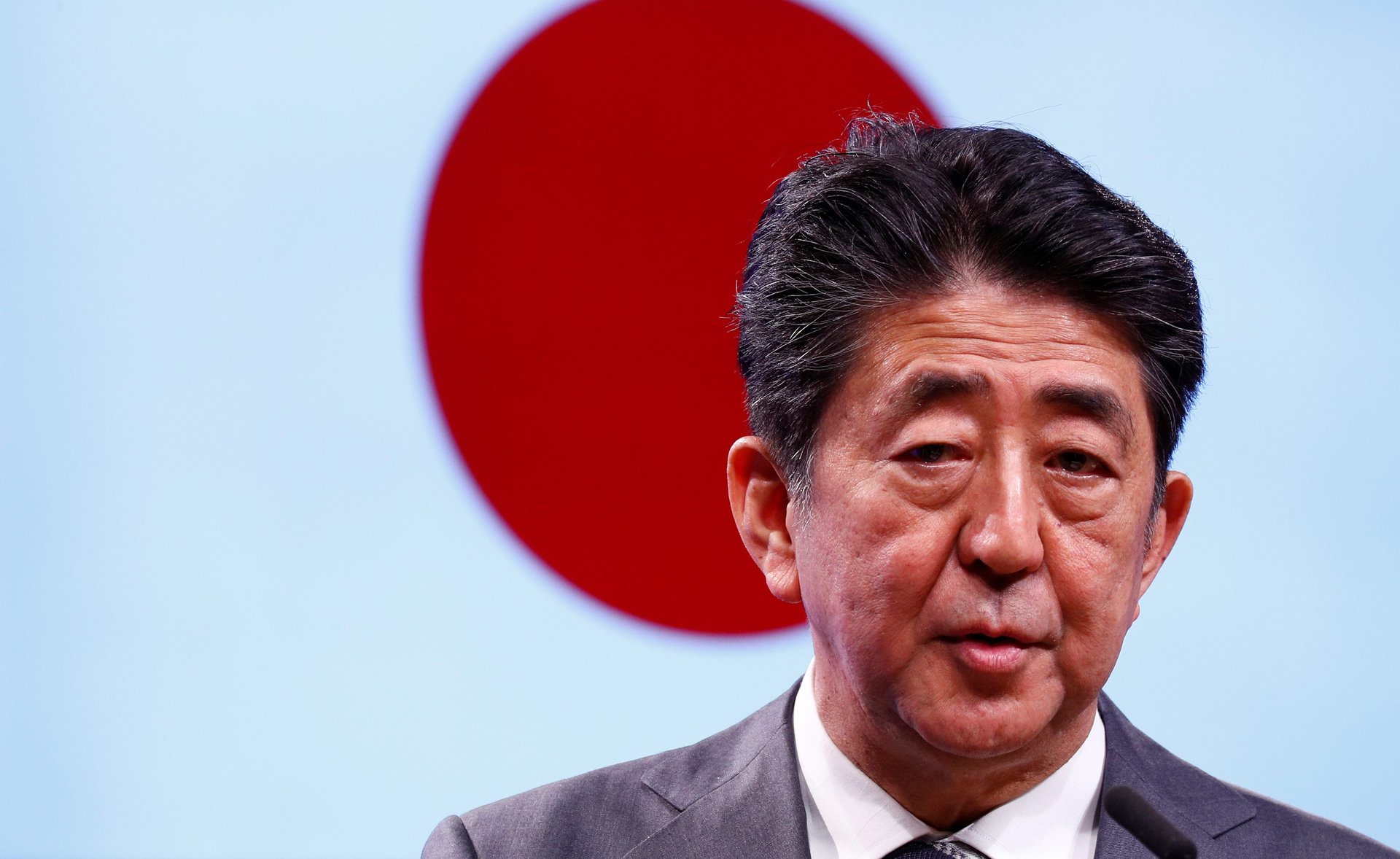
Japan’s prime minister has long been known abroad as Shinzo Abe. At home, however, he’s called Abe Shinzo, as per east Asian naming conventions, which put family names or surnames first, followed by first names.
Now the Japanese government wants that practice to be adopted uniformly by Western media outlets, which typically use a person’s full name on first reference (Kim Jong Un, for example), followed by their surname on second reference (Kim, or Mr. Kim). Foreign minister Taro Kono—known at home as Kono Taro—said today (May 21) that he plans to ask foreign news organizations to adopt the practice by next month, when Japan hosts the G20 summit in Osaka.
Kono said that the leaders of China and South Korea are both referred to in Western media by the order of family name followed by first name, as in: Xi Jinping (Xi, or Mr. Xi on second reference) and Moon Jae-in (Moon, or Mr. Moon). Kono also referred to a 2000 report by the education ministry’s National Language Council, which advised that it was preferable for Japanese names to be written in that order.
The foreign minister’s announcement revives an old debate in Japan over how names should be written outside of the country. A 2001 story in the LA Times explained that the Western practice of using a given name followed by a surname was promoted by the Meiji government in the late 19th century, when Japan was trying to modernize and catch up with the West.
The convention stuck, particularly as exposure to Japan in the West grew rapidly in the 20th century as it become economically more powerful. Japanese have also been taught from a young age to write their names in reverse order when writing in English or other Western languages. The Times story profiled Japanese who wanted to reverse the way their names were written in English out of what one person described as “cultural pride.”
It also isn’t always the case that Korean or Chinese names are written in Western media in the order of family name followed by given name. When the order is reversed, it usually indicates that the person has chosen to adopt Western naming conventions, such as tech investor and Google $GOOGL’s former China chief Kai-fu Lee, whose name is almost never written as “Lee Kai-fu” in Western media, or the late Chinese-American architect I.M. Pei. Another example is Samsung’s heir apparent and vice-chairman Lee Jae-yong, whose name is sometimes rendered as Jay Y. Lee.
A 2006 document published by the US Financial and Banking Information Infrastructure Committee explaining naming conventions in other cultures (pdf) states that “Chinese with Western connections often reverse the traditional sequence of family name + personal name.”
The essential business news, delivered fresh every morning.
Join 500,000+ readers who start their day with Quartz.
By subscribing, you agree to our Terms of Service and Privacy Policy.