Facebook CEO Mark Zuckerberg is willing to go to great lengths to give his company some semblance of a chance in China. Whether it’s learning Chinese, seeking to invest in smartphone maker Xiaomi, or recommending president Xi Jinping’s latest book, Zuckerberg has repeatedly demonstrated his desire to regain access to China’s 600 million-plus internet users, who have been barred from using Facebook since 2009.
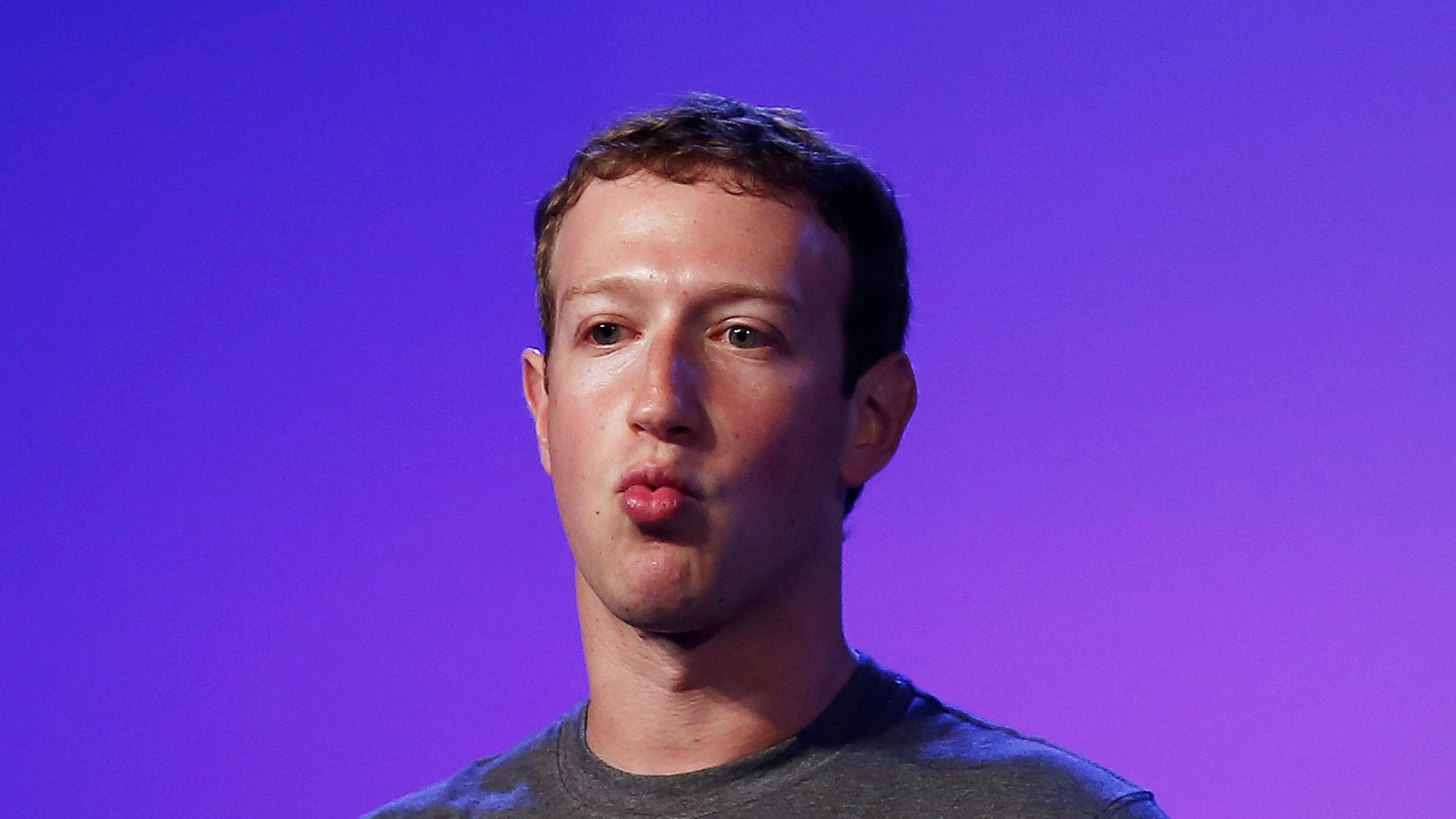
Facebook $META CEO Mark Zuckerberg is willing to go to great lengths to give his company some semblance of a chance in China. Whether it’s learning Chinese, seeking to invest in smartphone maker Xiaomi, or recommending president Xi Jinping’s latest book, Zuckerberg has repeatedly demonstrated his desire to regain access to China’s 600 million-plus internet users, who have been barred from using Facebook since 2009.
In fact, Facebook already owns a social media of sorts that is freely available throughout China: the popular text messaging app WhatsApp. The problem is that WhatsApp has failed to gain
Join 500,000+ readers who start their day with Quartz.
By subscribing, you agree to our Terms of Service and Privacy Policy.
WhatsApp’s most obvious obstacle to gaining a foothold in China is the rival service WeChat, known as Weixin in Chinese. Owned by Tencent, one of China’s two dominant Internet companies along with Alibaba, WeChat has more than 450 million users, mostly based in China. WhatsApp doesn’t break out its user numbers by country, but is estimated to have only about 23 million users on the mainland.
Few Chinese smartphone users have ever heard of WhatsApp, and those who have consider it to be a dinosaur in terms of functionality. As Foreign Policy noted when Facebook bought WhatsApp last year, Chinese users see it as ”clearly an outdated product” with an “ugly and simplistic interface.”
What sets WeChat apart from WhatsApp? Both apps started out as text-centric messaging services, but while WhatsApp has stayed mostly true to those minimalist roots, WeChat morphed into a ubiquitous mobile computing platform that can be used to make video calls, share articles, hail a taxi, and send money to friends, among dozens of other functions.
There is also a stark difference when it comes to revenue-generating potential: WhatsApp’s revenue for the first half of 2014 was $15 million; WeChat’s full-year revenue was forecast to be more than $1 billion.
The moral of WhatsApp’s struggles in China may be that even if Zuckerberg and COO Sheryl Sandberg can convince Beijing to unblock Facebook, the company’s prospects in China may be limited. China’s internet market has developed sophisticated preferences of its own, and it now bears little resemblance to the landscape of Chinese clones of western websites that once predominated.
So what is Facebook—which has already signed up many of the world’s internet users outside of China—to do?
The Information reports (paywall) that Facebook is already looking forward to releasing its virtual reality Oculus Rift, a highly-touted virtual reality headset, in China. And there are other options that could position the company to benefit from the Chinese market—including the potential creation of a fund that invests in Chinese companies. The recent negotiations between Facebook and Xiaomi—which according to Reuters were scuttled due to Xiaomi’s fear of political repercussions that might come with a Facebook investment—point in this direction.
Facebook could also partner with a Chinese firm like Baidu—the companies were in talks as recently as 2011, but the deal ultimately foundered, reportedly due to some of the same political concerns that Xiaomi cited. A third, perhaps more difficult option, is to try to learn from the Chinese tech scene.
“We’ve always said that we’re interested in, and are studying and learning about China. We haven’t made any decision on how or if we will enter China,” a Facebook spokeswoman told Quartz.
Opening a Facebook engineering office in Beijing and allowing it to create its own apps, independent of Facebook’s other businesses, might ultimately be the best way for Facebook to finally own something successful in China.
