Ethiopia launched its first observatory satellite into space on Friday (Dec. 20), according to local reports.
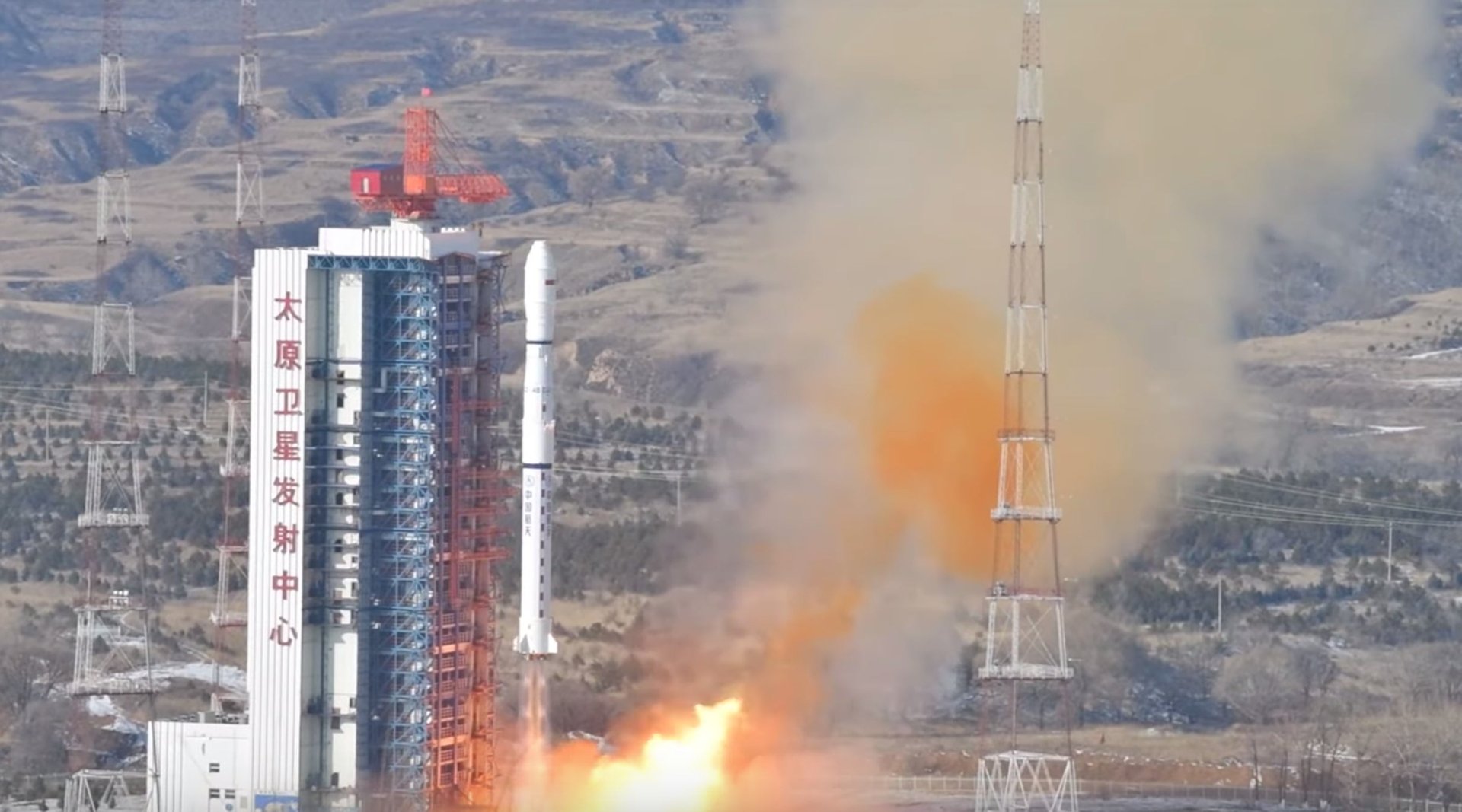
Ethiopia launched its first observatory satellite into space on Friday (Dec. 20), according to local reports.
The 70 kilogram remote sensing satellite is to be used for agricultural, climate, mining and environmental observations, allowing the Horn of Africa to collect data and improve its ability to plan for changing weather patterns for example. The satellite will operate from space around 700 kilometers above the surface of earth.
Join 500,000+ readers who start their day with Quartz.
By subscribing, you agree to our Terms of Service and Privacy Policy.
The launch, which was originally scheduled for September, took place at 03.21hours GMT from the Taiyuan Satellite Launch Center in Xinzhou, Shanxi Province, China. The satellite was carried on board a Long March 4B rocket.
The rocket launched was aired live on Ethiopian Broadcasting Corporation.
The Chinese satellite was designed and built at a cost of $8 million, with China paying around $6 million of the capsule’s price, according to the head of the Ethiopian Space Science and Technology Institute (ESSTI) at Addis Ababa University. Though it was launched from China its command and control center is based at the Entoto Observatory and Space Science Research Center (EORC) in Ethiopia, which is part of the Ethiopian Space, Science and Technology Institute (ESSTI).
In 2016, the Ethiopian government established ESSTI as a way to fully exploit space technologies for development purposes. In Jan. 2017, the ministry of science and technology announced it would launch a satellite into orbit in three to five years to improve its weather-monitoring capabilities. This followed the launch of a privately-funded, multi-million-dollar astronomical observatory in the Entoto hills overlooking Addis Ababa—a one-of-its-kind station that would allow Ethiopia to observe both the northern and southern hemisphere skies.
As satellites get smaller and cheaper, an increasing number of African nations are declaring their plans to look skyward. Countries including Kenya, Egypt, Nigeria, South Africa, and Morocco have partnered to launch or launched their own programs to power their own scientific, technological and military ambitions. In January 2018, China gave $550 million to Nigeria for the purchase of two satellites from Chinese manufacturers both of which are slated for launch in the next year.
The African Union has also introduced an African space policy, which calls for the development of a continental outer-space program and the adoption of a framework to use satellite communication for economic progress. And as criticisms abound over the anomalous use of resources in the face of more pressing day-to-day concerns, the demand for satellite capacity is expected to double in the next five years in sub-Saharan Africa as climate change concerns grow and governments try to get ahead of the challenge.
However, China’s technological transfers to Africa have increasingly come under scrutiny, with experts warning these digital systems could be used for Beijing’s intelligence operations and electronic surveillance. While Addis Ababa says it would use the satellite to monitor crops and the weather, it could just as well be used for spying.
Sign up to the Quartz Africa Weekly Brief here for news and analysis on African business, tech and innovation in your inbox
