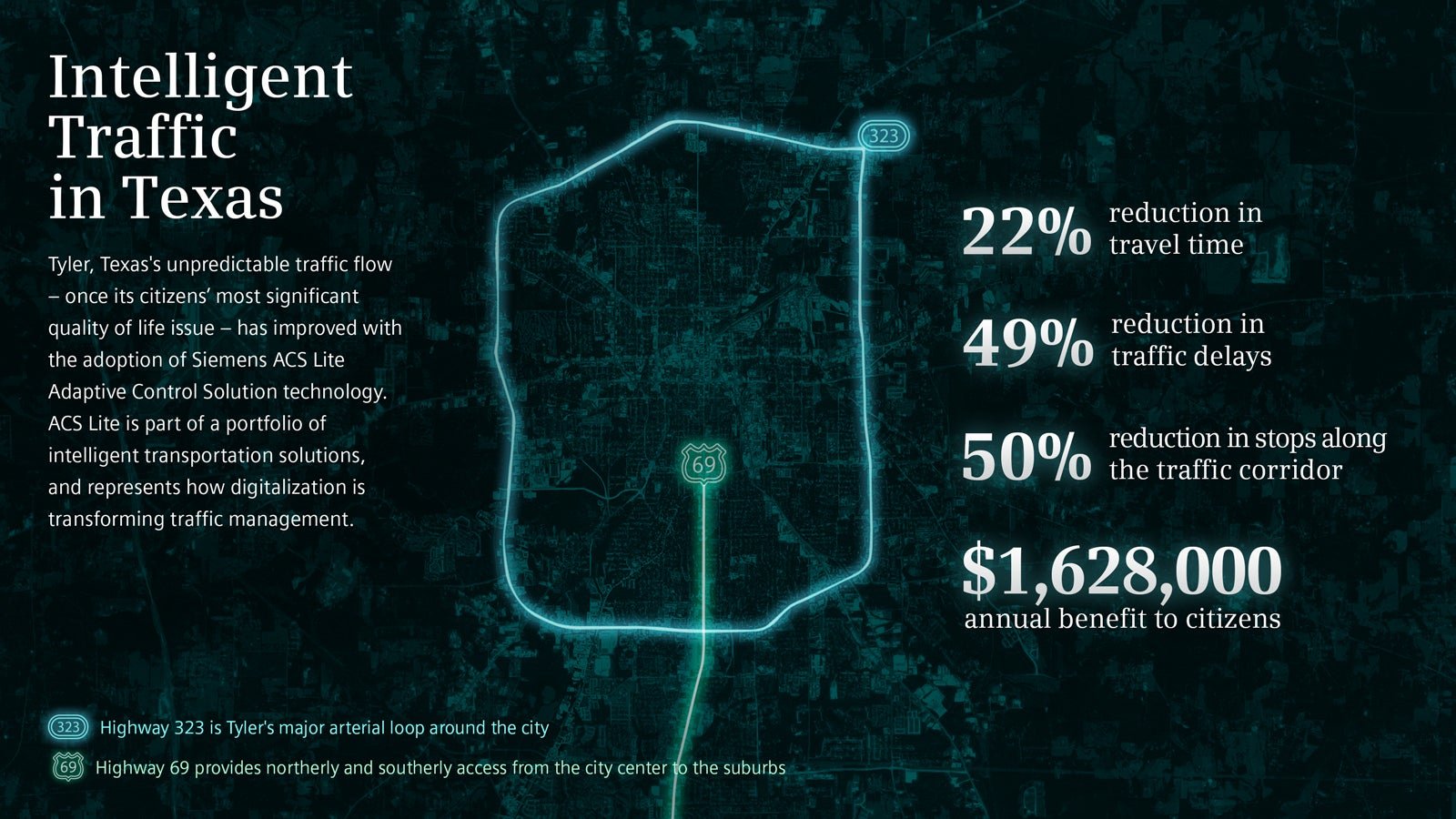
Your last glorious run of green lights was no accident. These are the all-important “green times” that consume someone like Mark Rogers of Siemens Intelligent Traffic Solutions.

Your last glorious run of green lights was no accident. These are the all-important “green times” that consume someone like Mark Rogers of Siemens Intelligent Traffic Solutions.

In many parts of the world, including the US, much progress has been made in raising awareness about the need for safe and sober driving. We see efforts along these lines daily in the US, where public service ads warning about the dangers of speeding, and of texting or drinking while driving, are ubiquitous, as are warnings from organizations like MADD and SADD. Nevertheless, there are still more than 30,000 traffic fatalities in this country every year. In some countries outside the US, the situation is better; in others, it is worse. But in all cases, there is room to improve road safety.

This article is part of an ongoing BULLETIN series exploring GE’s innovation, technology, and manufacturing initiatives in India.

Here’s a pop quiz for all midsized business owners: do you feel well versed in your company’s TCO? If you do, you’re in the minority; only 22 percent of owners have accurately and formally analyzed their company’s Total Cost of Ownership in the past year. (If you don’t even know what TCO is, you’re in another—slight—minority: 42 percent aren’t familiar with the concept.) These considerations are reflected upon in ADP’s “Total Cost of Ownership (TCO): How Midsized Businesses Can Find Competitive Advantage” report.

Here’s a pop quiz for all midsized business owners: do you feel well versed in your company’s TCO? If you do, you’re in the minority; only 22 percent of owners have accurately and formally analyzed their company’s Total Cost of Ownership in the past year. (If you don’t even know what TCO is, you’re in another—slight—minority: 42 percent aren’t familiar with the concept.) These considerations are reflected upon in ADP’s “Total Cost of Ownership (TCO): How Midsized Businesses Can Find Competitive Advantage” report.

The healthcare system in the United States is heading toward a recalibration. Generally, individuals are shouldering more of the financial burden of their healthcare and are more involved in medical decision-making, resulting in rising consumerism. In designing their strategy, industry players should take into consideration three shifts that are helping to transform the healthcare landscape and setting the scene for greater consumer involvement.

In preparing for this forecast for the next five years in telecommunications, I reviewed literally hundreds of predictions made by other industry observers. Many of these predictions were deeply technical; one needed an engineering PhD and an acronym encyclopedia in order to follow the conversation.

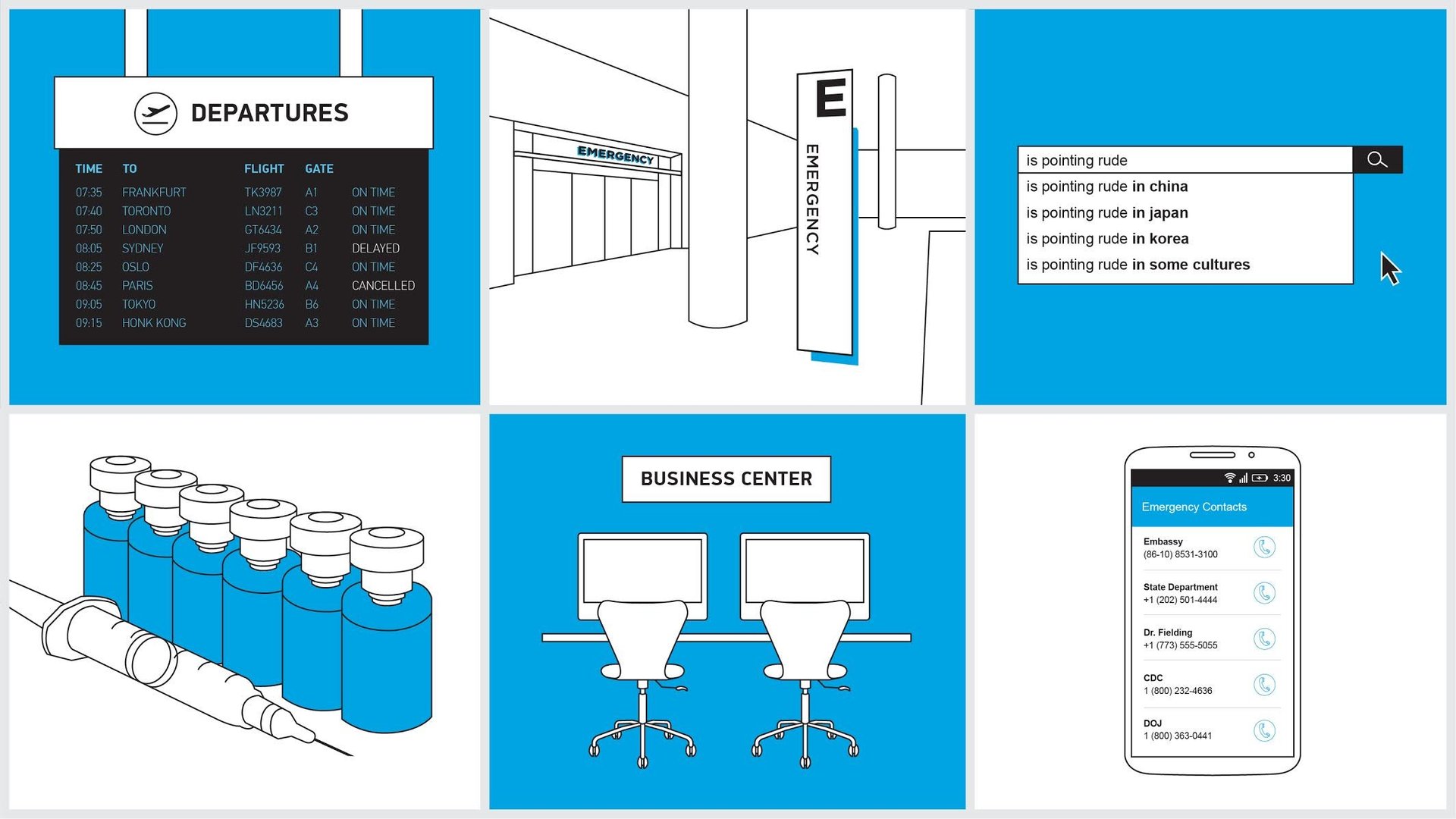
Today, enterprise knows no geographic boundaries. But as businesses move into emerging economies in pursuit of new markets, they are often entering unfamiliar territory, and their workers could be at higher risk for accidents. Both employers and employees need to appropriately protect themselves to mitigate those risks, whether large or small. To help reduce the likelihood of an incident, below is a nine-point checklist for business travelers.

Expansion. At some point every successful business will have to face down the challenges of growth. These are desirable challenges, to be sure: the magnified scope of a fledgling company is a validation of the ideas that first inspired the enterprise. But for any firm, growth means adjusting to a whole new set of tests. It means running a whole new kind of business.

Shanghai has an alluring reputation as the Paris of the East, but the nickname is a bit of misnomer: after the Opium War in 1842, the British, the French, and the Americans divvied up the city—then a fishing village—each colonizing their own district. In the 1940s, Japan occupied most of Shanghai. Then came the Cultural Revolution and a decline of foreign population that didn’t ease until the 1990s. The government opened back up to foreign investment and it came, in droves.

In these days of software-defined services and nanotechnology, visibility into the makeup of the products we use is often near zero. We know the flip phone eventually led to the smartphone, but what 90s technologies are finding extended life as key components of the iPhone? Curiosity about these origins led to the creation of the interactive above, which explores the relationships between the products named most influential in the field of electronics + communications over the past twenty years by our panel.

In these days of software-defined services and nanotechnology, visibility into the makeup of the products we use is often near zero. We know the flip phone eventually led to the smartphone, but what 90s technologies are finding extended life as key components of the iPhone? Curiosity about these origins led to the creation of the interactive above, which explores the relationships between the products named most influential in the field of electronics + communications over the past twenty years by our panel.

Intel has served as underwriter for a series of Quartz roundtable discussions with leaders from the financial sector on the impact of big data on their businesses. This BULLETIN is inspired by those discussions.

Intel has served as underwriter for a series of Quartz roundtable discussions with leaders from the financial sector on the impact of big data on their businesses. This BULLETIN is inspired by those discussions.

New technologies are redefining the customer relationship

Sonya Baumstein just became the first person to ever cross the Bering Strait on a stand-up paddleboard. And she’s already moving on.

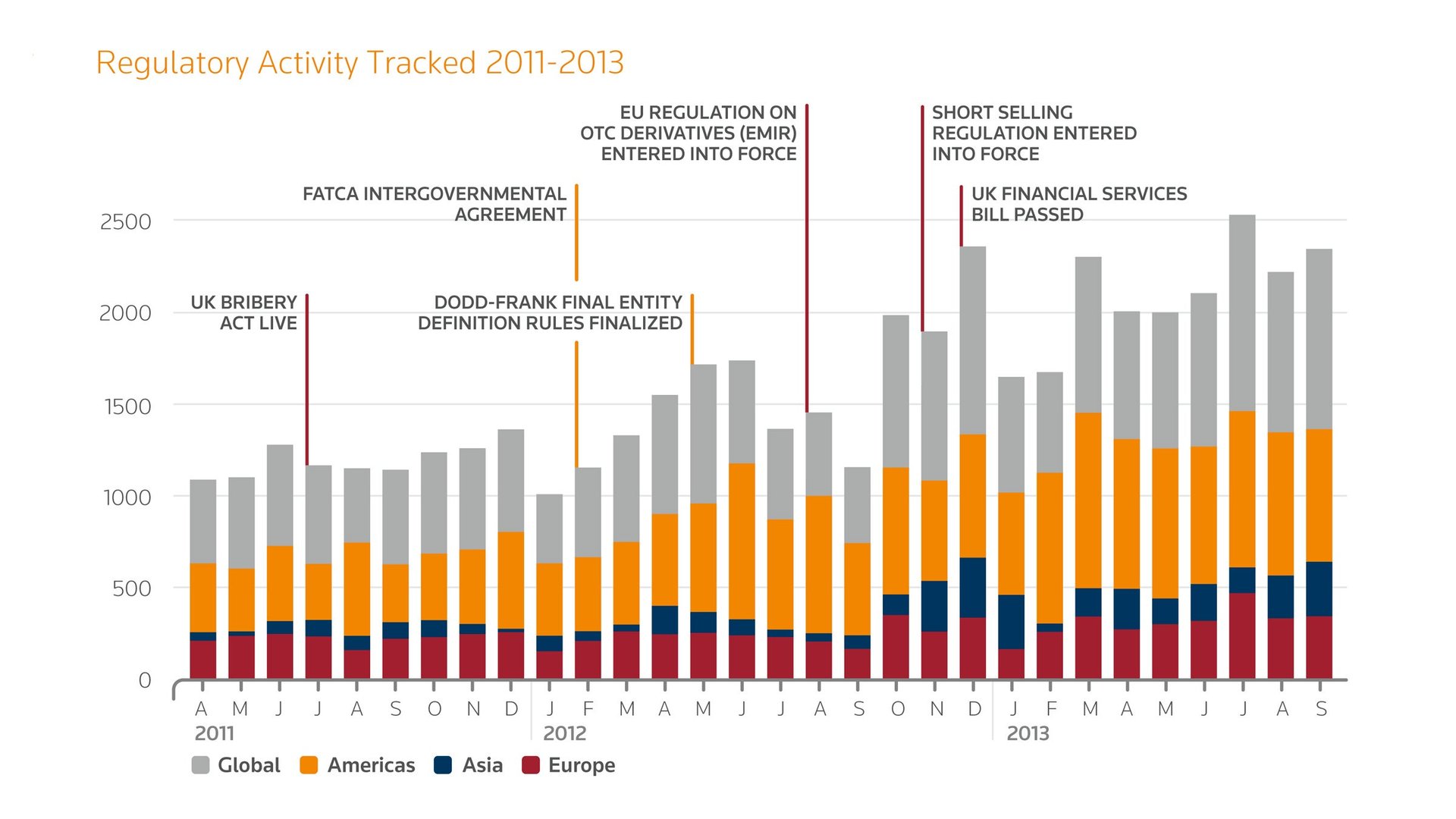
Increased regulation isn’t just a temporary challenge for global financial institutions–it’s the new reality.

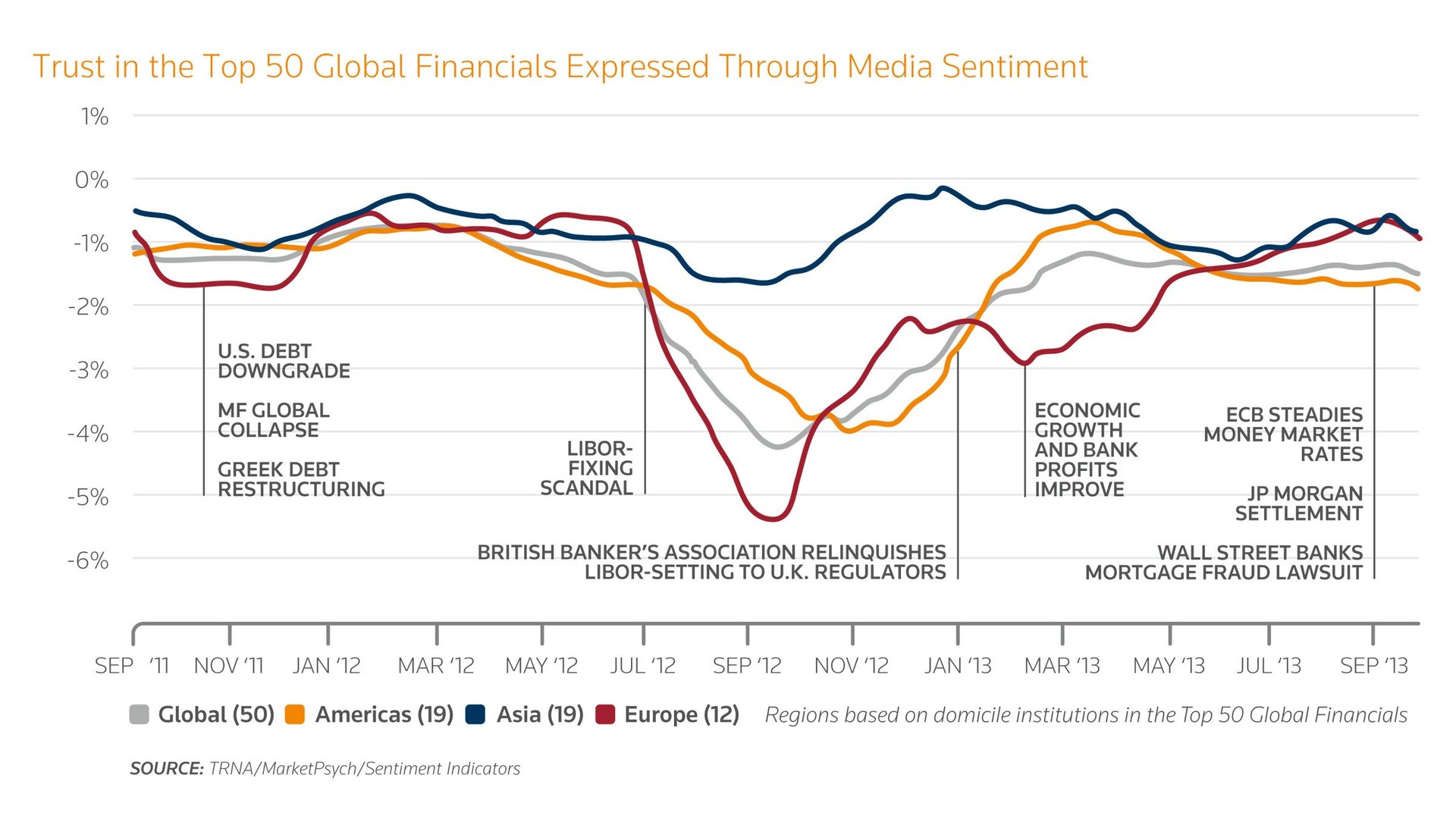
Financial institutions are regaining trust lost in the wake of the financial crisis, according to analysis of millions of news and social media sources by Thomson Reuters.

The plug-in hybrid gets a jolt

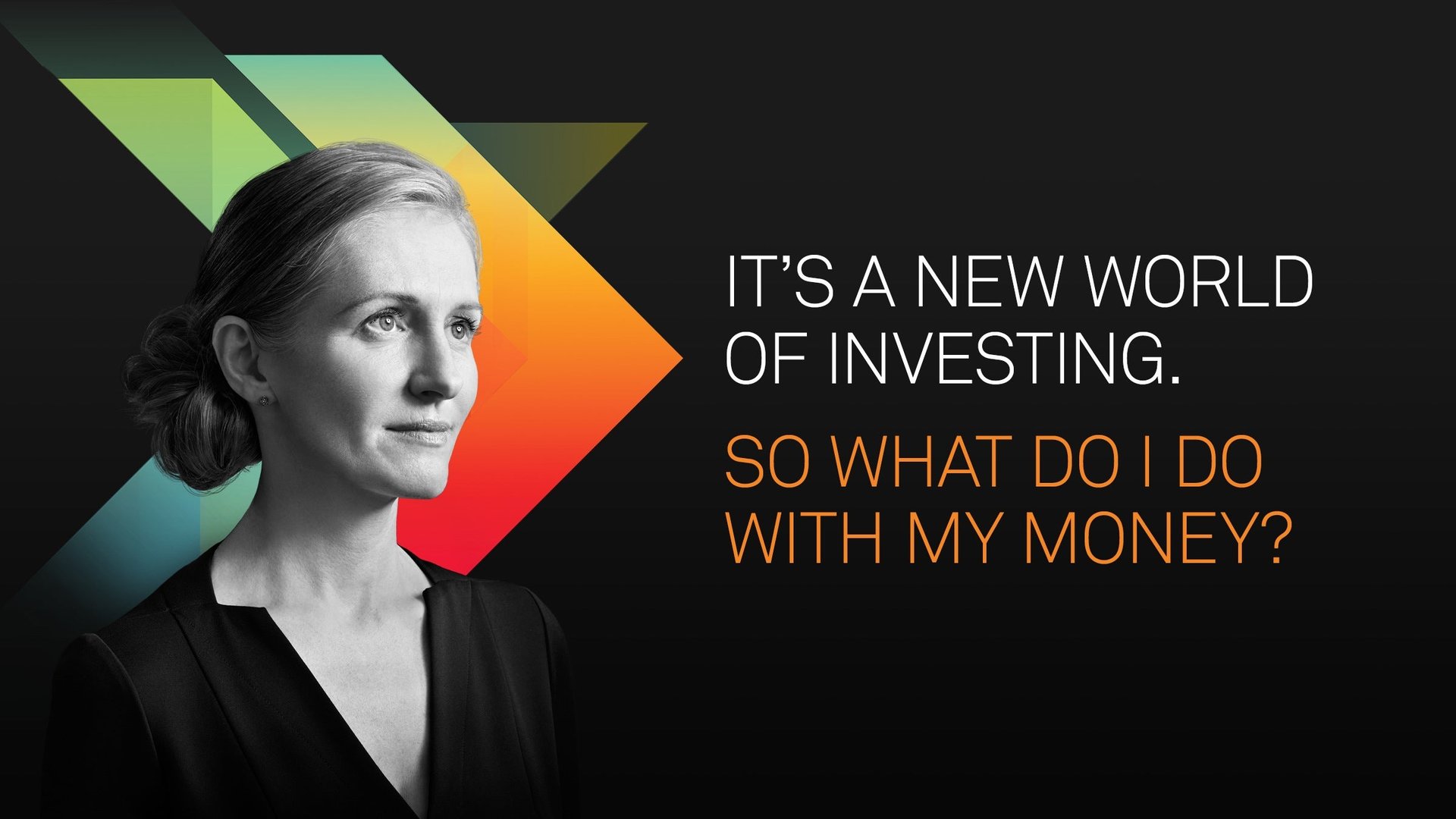
It’s a new world out there for investors. The financial crisis and its lingering effects have precipitated major changes in financial markets and created unfamiliar challenges. Bonds are behaving differently, the relationships between asset classes are shifting, and the conventional wisdom on investing has been turned on its ear.

Bryan Pearson is the President & CEO of LoyaltyOne and Best-Selling Author of The Loyalty Leap | Follow his blog at www.pearson4loyalty.com

Using technology to build out markets in an environmentally friendly fashion: that’s the goal of Shanghai startup V-Roof and its founder, Huang Ke. Thanks to an initial 1 million yuan ($163,000) investment, V-Roof’s small staff has installed nearly 2,000 square meters of green space–dubbed V-gardens–in high-tech industrial zones, office blocks, and residential compounds around Shanghai. Now, Huang Ke and her team are ready to take the next step and expand operations.

Take a step inside the Garage Cafe in Beijing, where the city’s brightest idea generators congregate in an unyielding cycle of development, innovation, and pitching. Or turn to Shenzhen, a prefecture which has funneled 100 billion yuan ($16.25 billion) directly into the development of an entrepreneurial start-up zone for small-to-medium sized enterprises. Better yet, cast gaze on individual innovators, like V-Roof founder Huang Ke, who saw an opportunity to install gardens on Shanghai rooftops and has since expanded and molded that concept to fit a variety of needs across sectors. All of these are products of the Chinese SME mindset: dynamic, adaptive, and forward-thinking.

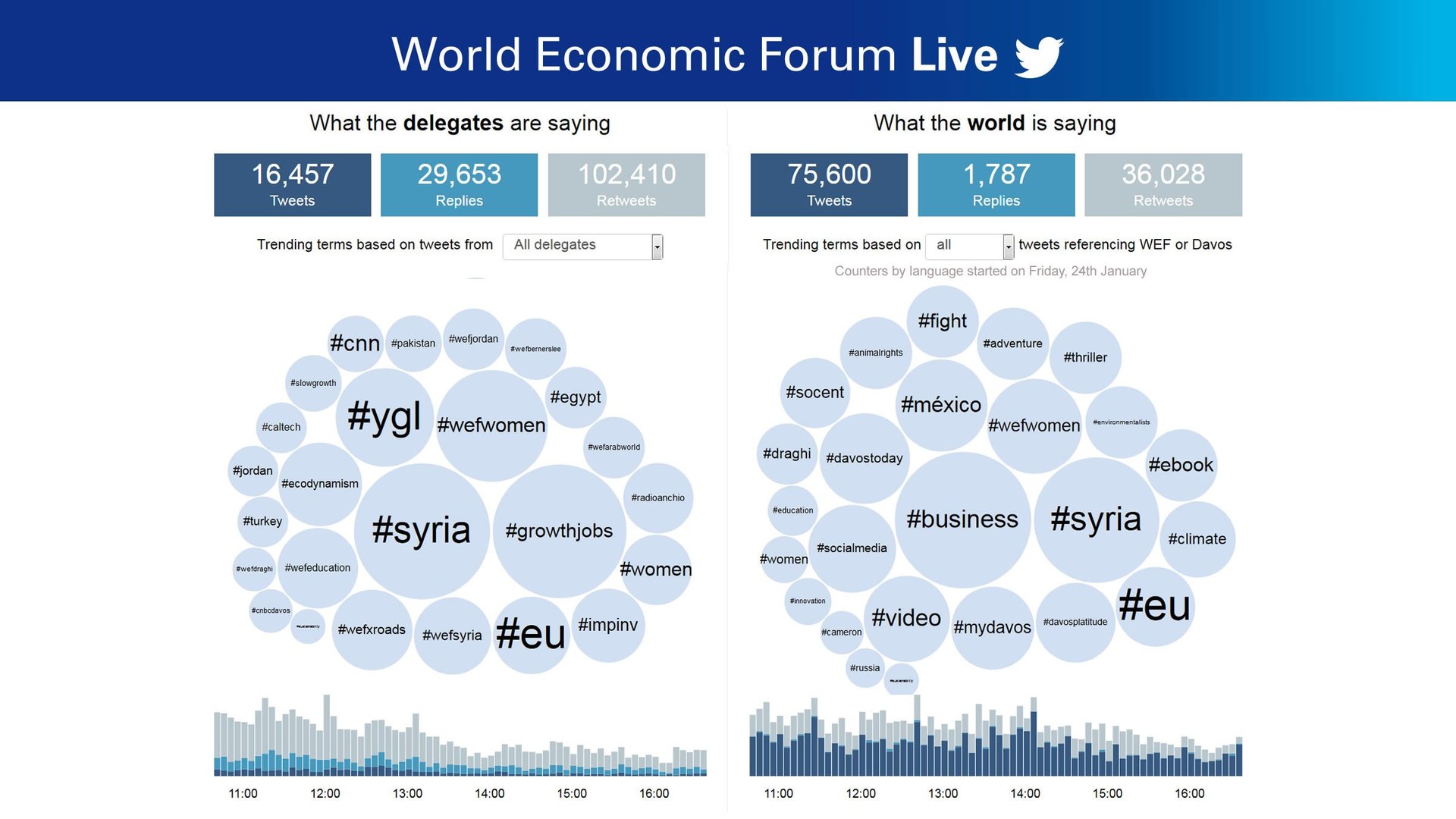
Syria (#Syria) was the dominant topic emerging from the Twitter accounts of official World Economic Forum delegates, as day three of the conference came to an end.