
Tech & Innovation
The three things humans will always do better than robotsHello?
Updated July 21, 20227 min read
Hello?

I never thought of diversity as being important. As an Asian-American high school student, I was angry about diversity. Why must I be the one to score higher on my tests? Why do I need to get better grades? Why is the bar set so much higher for me?

“I’m going to check out this breakfast tomorrow morning called New Jobs for the New Economy,” I said to my mom, who was intent on my getting a new job. It was post-Bubble 1.0 and I was a casualty. The Dot-Com I had worked for exploded. This was after leaving my bulge bracket investment banking job. I was lost. Throughout my life I’d had a roadmap, but a year ago I had none. So I did something that I didn’t normally do: I veered off the path by saying “yes.”
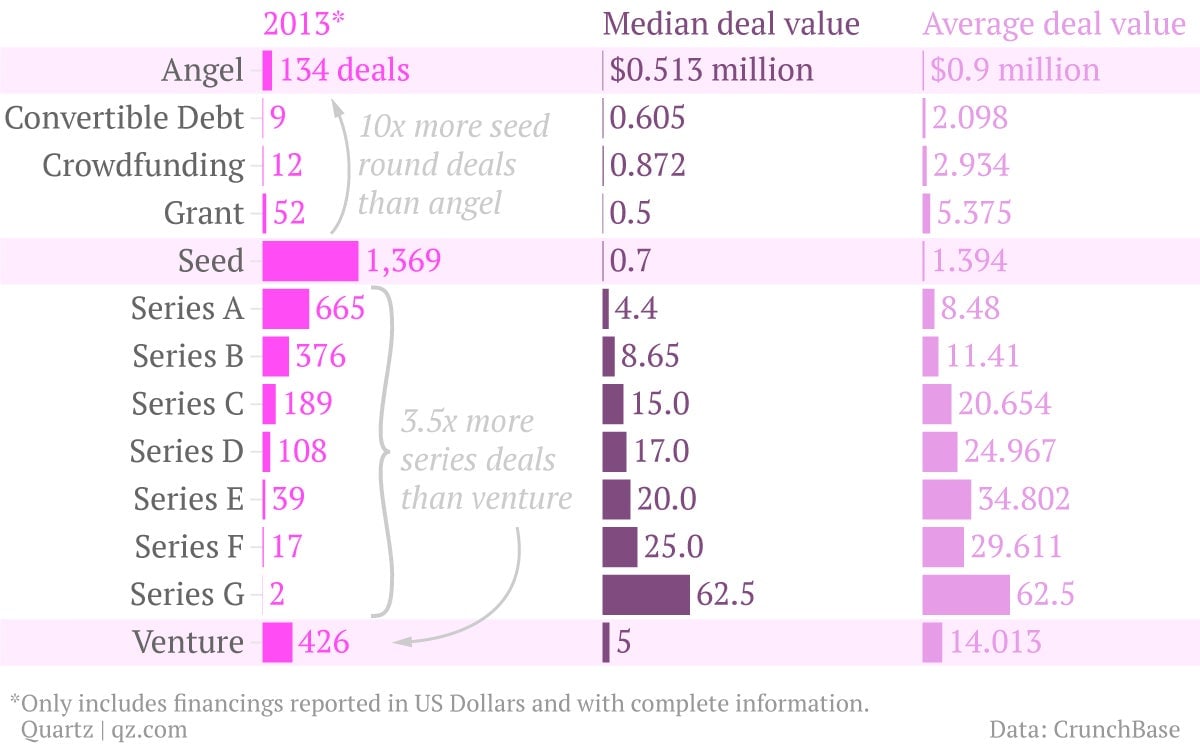
While raising outside capital is not the only way to obtain financing for a startup, it seems to be the preferred method for new technologies where revenue or a business model is unclear. A common trend is emerging: more often than not, I hear that folks are raising their “seed round,” typically the initial money used to capitalize a company or if founders have capitalized, the first money taken from outside investors. This money could be from friends and family, along with some angel investors or venture capitalists. Some of the money could be “dumb” money (money with no other benefits attached); some could be “smart” money (money from a strategic partner, a well-connected angel investor, or an executive with deep, long-standing connections in the given industry).

The best companies focus on product and in today’s startup world, we focus a lot on product. Steve Jobs built products doing zero market research. Henry Ford famously (and controversially) said that his customers, if asked, would have wanted a faster horse. There are many visionaries out there that don’t utilize any market research, yet have created exciting, world-changing tools that we never knew we needed or wanted but for each of these wildly successful products, though, there lies an even larger cemetery of products that no one wanted or rapidly abandoned. Today, where the cost of building a product has come down significantly, a glut of products has flooded the market. Many of them die in the depths of the interwebs, buried forever, like the 1996 Space Jam website. So, how do we gauge consumer interest in product? How do we separate an iPod from a Newton?

Why would anyone ever start a company in New York City when talent, capital, and network all favor Silicon Valley? This argument has persisted for a long time but let’s look at this from a pure financial and economic perspective for the first-time entrepreneur. If you achieve an exit you can expect a value nearly 40 times greater in the Valley than if you started your company in New York. Take all of the 2012 exits with reported numbers listed in CrunchBase (excludes the biotechnology and pharmaceutical industries):