

4 cars that are perfect for winter, according to Edmunds — and cost less than $40,000
Edmunds even has a convertible it recommends for the snowy season
By
Edmunds even has a convertible it recommends for the snowy season
If you’re gearing up for winter and looking for a new car that can handle snow and ice, Edmunds has some suggestions.
It recommended four cars — a pickup truck, an SUV, a sedan, and even a convertible — under $40,000 that are well-suited for harsh winter climates.
Check out which four it recommends — and why:

The Chevy Colorado is Edmunds’s top choice for a pickup truck in the U.S., and it says the Trail Boss model is particularly suited for winter weather. The Trail Boss model starts at $37,500.

With a base price of just under $40,000, the 2024 Ford $F (F) Bronco is another one of Edmunds’ picks for winter adventurers. It said the SUV is fun to drive and has a smooth ride.
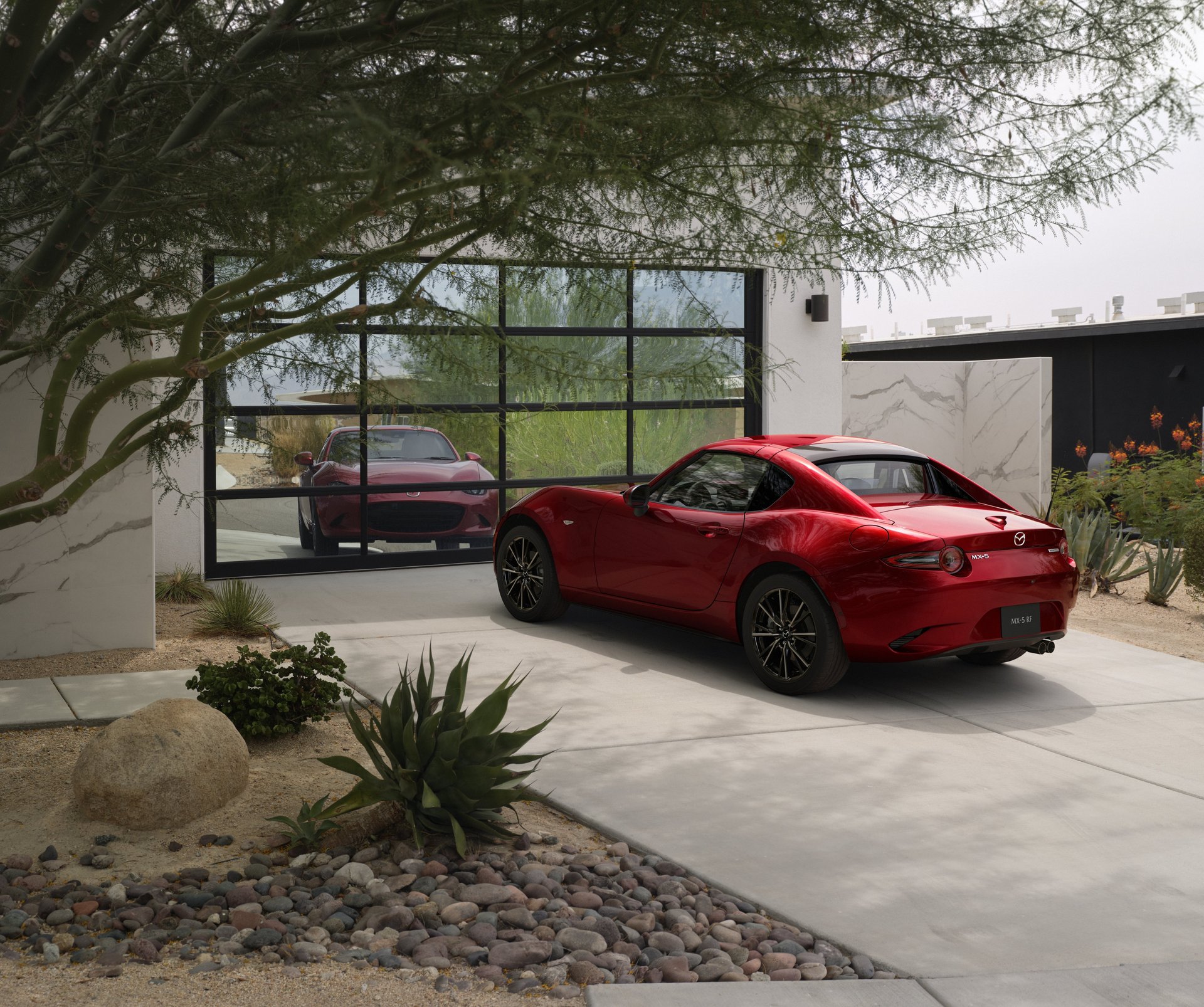
The sporty Miata convertible may not seem like an obvious choice for a cold weather car, but Edmunds says it rides easily through the snow with winter tires.
The RF version has a hard top that’s well-suited for chilly conditions and it starts at $38,195. The one drawback, Edmunds said, is it sits low to the ground, which can create problems in particularly bad storms.
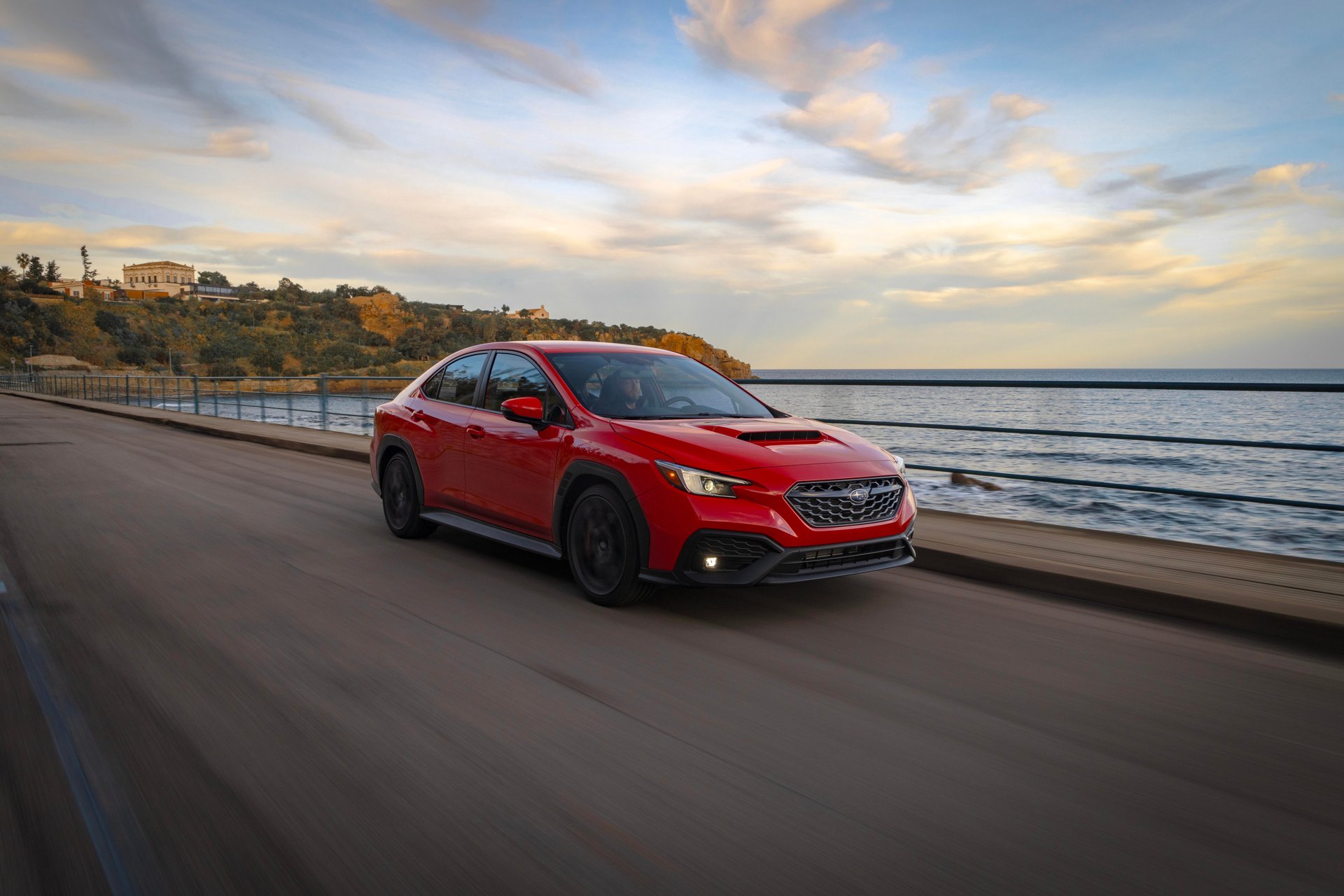
Subarus are known to handle winter conditions well and the WRX sedan is no exception. The premium version clocks in at $35,755 and Edmunds says it’s a great choice with impressive traction during any road conditions. The heated side mirrors and built-in windshield wiper de-icer are nice bonuses too.
The French drugmaker said the drug would not represent a meaningful improvement over existing treatments, including its own Dupixent
Sanofi announced Friday it will not seek regulatory approval for amlitelimab in atopic dermatitis, ending development of the eczema drug as new chief executive Belen Garijo conducts a broad review of the company's pipeline.
"The totality of efficacy and safety evidence generated to date does not support further development of amlitelimab in AD," Sanofi said in a statement. The drug "would not represent a meaningful improvement to the standard of care for patients," the company added.
The decision marks a significant retreat for a drug Sanofi had, as recently as March, said showed potential to be a meaningful treatment option, according to the Wall Street Journal. Some analysts had noted that amlitelimab's efficacy did not match that of Dupixent, Sanofi's top-selling product, which it developed jointly with Regeneron $REGN Pharmaceuticals.
Sanofi acquired amlitelimab as part of its $1.1 billion purchase of Kymab in 2021, according to Fierce Biotech. The drug had struggled in late-stage testing: September 2025 data from a phase 3 trial disappointed Wall Street, and a second phase 3 readout in January cleared its primary endpoint but stumbled on secondary measures. Even so, Sanofi had at that point pledged to pursue regulatory submissions using the aggregate clinical evidence.
The reversal came after Garijo replaced Paul Hudson as CEO. Hudson's exit was driven in part by a series of clinical setbacks that included amlitelimab, according to Fierce Biotech. Garijo subsequently replaced research-and-development chief Houman Ashrafian with former Roche executive Paulo Fontoura.
Data from the phase 3 ESTUARY long-term extension study indicated that patients aged 12 and older sustained their clinical responses without relapsing, and that the drug's safety profile continued to develop, Sanofi said. Results from the ESTUARY study and other amlitelimab atopic dermatitis trials will be presented at a future medical meeting, the company said.
Amlitelimab's development in other conditions is not entirely over. A midstage study of the drug in celiac disease remains ongoing, with results expected in the second half of 2026, the company said.
Sanofi said the decision leaves its full-year 2026 financial guidance intact. The company is scheduled to report second-quarter earnings next week.
The Dallas carrier used a Jones Act waiver to move 12.6 million gallons from Houston through the Panama Canal to Los Angeles
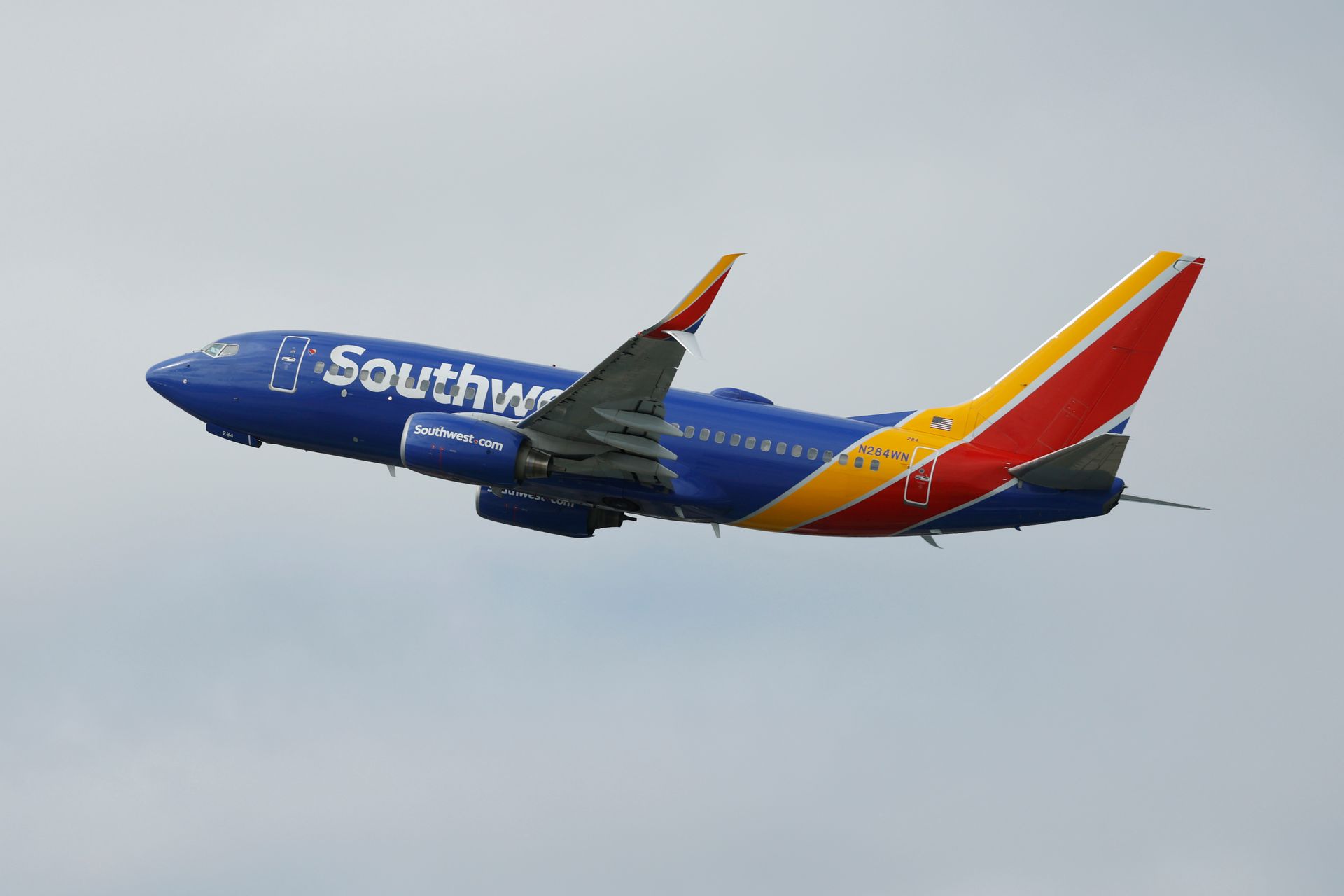
Southwest Airlines chartered a ship this spring to move jet fuel from Texas to California, where prices were higher and supply concerns had intensified — a first for the airline, Chief Financial Officer Tom Doxey told CNBC.
According to the company, the vessel left Houston, transited the Panama Canal, and docked in Los Angeles on May 28 with approximately 12.6 million gallons of jet fuel on board. To put that volume in perspective, Southwest burned through 564 million gallons of jet fuel during its most recent full quarter.
"It brought like a week's supply to the West Coast at a time when supply was most constricted ... when it was most at risk," Tom Doxey told CNBC.
Southwest secured a Jones Act waiver to make the move possible — that 1920 statute ordinarily mandates that any cargo transported between domestic ports must sail aboard a U.S.-flagged ship. President Donald Trump issued the waiver in March as fuel prices surged following the start of the conflict with Iran and shipping disruptions spread through the Strait of Hormuz. Southwest said concerns about West Coast supply have since eased.
Unlike most other regions of the United States, the West Coast draws heavily on imported fuel to meet its needs. Jet fuel prices have been volatile since the U.S. and Israel struck Iran in February, and Southwest said its fuel expenses rose nearly $900 million in the second quarter compared with the same period last year. Among airline operating costs, only labor exceeds jet fuel.
After moderating through late spring and into early summer, prices have pushed higher again in recent weeks as the standoff with Iran has flared back up.
The fuel crunch has reshaped how airlines operate across the industry. The International Air Transport Association now expects combined industry net profit to fall to $23 billion in 2026, down from $45 billion in 2025, as jet fuel prices average around $152 per barrel this year. North American airlines are forecast to earn $9.4 billion, compared with $12.4 billion in 2025.
United Airlines, which flies more internationally than any other U.S. carrier, said last week it is relying on the latest available fuel prices for its quarterly estimates because of the volatility. The airline said jet fuel added $575 million in costs, or a $1.12 hit to adjusted earnings per share, for the third quarter alone.
Over the past ten years or so, U.S. airlines largely stopped using futures contracts to hedge against fuel price swings, a strategy they felt less urgency to maintain when domestic supply was plentiful and prices remained relatively stable.
The European Commission says TikTok's account settings expose minors to predators and cyberbullying, risking a fine of up to 6% of global revenue
TikTok faces preliminary charges from European Union regulators over account settings that the commission says expose children to predators, cyberbullying, and unwanted contact, putting the ByteDance-owned platform at risk of a fine worth up to 6% of its global annual revenue.
The European Commission said Friday that TikTok's settings fall short of the safety standards required under the Digital Services Act. The commission found that minors can set their accounts to public, allowing anyone — including people without a TikTok account — to view their content. For users between 16 and 17 years old, public settings also allow their content to appear in other users' For You feeds, the commission said.
Even children with private accounts are not fully shielded, the commission said. Their accounts can be located through the follower and following lists of other users, and their profile photos remain visible to anyone outside the platform.
The commission said TikTok should change the default settings of minors' public accounts so that content is visible only to users the minor has accepted. Content from minors should under no circumstances be accessible to a global audience outside the platform, and TikTok should stop recommending minors' content through the For You feed, the commission said.
In response, TikTok said it would examine the commission's findings. "Teen accounts on TikTok have more than 50 preset privacy and safety features, informed by experts, from the moment they set up an account," the company said. "Under 18 accounts are private by default and we are one of the only platforms where younger teens cannot use direct messaging or have their content eligible to appear in the For You feed," it added, according to Reuters.
Henna Virkkunen, the E.U.'s tech chief, said in a statement that the law demands services be built with child safety baked into their architecture rather than treated as an optional feature. "A high level of protection should not be an opt-in; it should be the default," she said.
TikTok may now inspect the commission's investigation files before any decision is issued and submit a formal written response. The European Board for Digital Services will also be consulted. Should the commission ultimately issue a non-compliance ruling, it said any resulting penalty would have to reflect the seriousness, frequency, and length of the infringement.
Friday's charges are the fourth set of preliminary findings against TikTok under the DSA in roughly two years, according to Reuters. Earlier this year, the commission announced a separate set of preliminary findings targeting TikTok's use of engagement-maximizing mechanics such as autoplay and infinite scrolling, which regulators described as harmful to users' wellbeing. In two earlier cases the company made concessions that headed off potential penalties, and a fourth case is still pending resolution.
The formal investigation into TikTok's DSA compliance was launched in February 2024 and has also examined the platform's recommender systems and the risk of minors encountering age-inappropriate content through misrepresented ages, the commission said. Those aspects of the investigation remain ongoing.
Markets are pricing in a near-certain rate increase at the Fed's September meeting after Brent crude hit $100 and jobless claims hit the lowest level since 1969
Traders in fed funds futures markets now see roughly an 82% chance the Federal Reserve tightens policy at its September meeting — more than 29 percentage points above where that figure stood just one week earlier, according to CNBC. The shift comes as Brent crude, the global oil benchmark, crossed $100 a barrel on Thursday for the first time since late May.
For the meeting arriving next week, the Fed is widely anticipated to leave rates where they are, within the 3.50% to 3.75% range. Still, futures contracts now assign close to a 38% probability to a quarter-point increase at that same meeting, a figure that sat below 12% seven days prior.
AAA data showed the national average for a gallon of gasoline crossing the $4 mark this week, a level not seen in over a month. Separately, Thursday's jobs report gave the Fed additional latitude to prioritize the inflation fight: first-time unemployment filings fell to 187,000 for the week ending July 18, a count not recorded since 1969 — an era when the country had only about 60% of its current population.
"At the moment, the outlook for economic growth is showing some signs of overheating if today's weekly jobless claims figures can be believed," Christopher Rupkey, chief economist at FWDBONDS, said.
Ross Mayfield, investment strategist at Baird, pointed to the 2-year Treasury yield — which gained around 5 basis points on Thursday — as a window into the Fed's trajectory, adding that the September meeting is beginning to look like one where a move is genuinely on the table. On the prediction market platform Kalshi, contracts tied to a September quarter-point increase were trading at 48% by Thursday afternoon, having started the week near 30%, according to CNBC.
U.S. stocks sold off Thursday as the rate expectations shift added to pressure already building from the oil spike. The Dow Jones Industrial Average fell about 500 points, and the Nasdaq $NDAQ Composite dropped more than 2%. "You really just have a perfect storm of headwinds right now," Larry Tentarelli, chief technical strategist at the Blue Chip Daily Trend Report, said.
The broader rate outlook from economists remains less hawkish. According to FactSet, the prevailing view among economists still calls for no rate increases in 2026, with the expectation shifting to modest easing — roughly half a percentage point in cuts — sometime in 2027.
This week's market moves build on divisions that surfaced in June FOMC meeting minutes, which showed nine of 18 policymakers saw the case for at least one rate hike before year-end. The minutes noted that persistent inflation driven by Middle East energy disruptions was among the scenarios in which "some policy firming would likely be warranted." Total PCE price inflation rose to an estimated 4.1% in May, with core PCE estimated at 3.4%.
The Spectrum parent lost 172,000 internet customers in the second quarter, a steeper drop than the same period a year ago
Charter Communications reported second-quarter revenue of $13.5 billion on Friday, a 1.7% decline from the same period a year earlier, as the company continued to shed broadband subscribers.
Internet customers fell by 172,000 during the quarter, bringing Charter's total to 29.4 million. That loss was steeper than the 116,000 internet subscribers the company shed in the second quarter of 2025. The decline was driven by falling residential internet revenue, which dropped 3.2% year-over-year to $5.8 billion, the company said.
Total revenue has now declined for a fourth straight quarter, according to the Wall Street Journal. Rival offerings from fixed wireless and fiber providers have steadily eroded Charter's home-internet customer base, and ongoing cord-cutting trends are adding further pressure to its cable business.
Video customers dropped by 21,000 in the quarter to about 12.5 million, though that was an improvement from a decline of 80,000 in the same period last year. Charter attributed the improvement to simplified pricing and packaging and the inclusion of streaming applications in its expanded basic video packages.
Adjusted EBITDA fell 4.3% year-over-year to $5.4 billion, and free cash flow came in at $969 million, down $77 million from the prior year, the company said.
Net income attributable to Charter shareholders totaled $1.3 billion, roughly flat with the $1.3 billion reported in the year-earlier quarter. Net income per basic share rose to $10.76 from $9.41, reflecting a 13.1% decrease in basic weighted average common shares outstanding.
Charter's mobile business was a bright spot. The company added 406,000 Spectrum Mobile lines during the quarter, bringing its total to 12.5 million. Mobile service revenue climbed 18.9% year-over-year to $1.1 billion, driven by line growth and rate adjustments.
Capital expenditures totaled $2.9 billion in the quarter, in line with the prior year period. Charter said it continues to expect full-year 2026 capital expenditures, excluding impacts from its pending Cox transaction, to total approximately $11.4 billion.
"We operate in a competitive environment across all of our products, and our strategy for growing connectivity services is simple — deliver the best products, at the best overall value, with the best service," Charter President and CEO Chris Winfrey said in a statement. Winfrey also referenced the pending Cox acquisition, saying Charter looks forward to extending its services to Cox's customers after the transaction closes.
During the quarter, Charter bought back 4.0 million shares of Charter stock for $838 million and repurchased $1.2 billion in aggregate principal amount of debt notes for $1.0 billion in cash.
Tesla stock fell as much as 15% on Thursday, its worst intraday drop in more than a year, after second-quarter profit missed Wall Street expectations
Tesla $TSLA short sellers stood to collect about $4.12 billion in one-day mark-to-market profits on Thursday after the company's stock fell as much as 15%, according to Bloomberg. The drop was the worst intraday decline for Tesla stock in more than a year.
Investors sold off the stock after the earnings shortfall revived anxiety about how aggressively Tesla is directing capital toward artificial intelligence and robotics projects. Adjusted earnings per share came in at $0.33, well below the $0.51 analysts had expected. Revenue of $28.24 billion beat estimates but did not offset the profit shortfall.
About 3% of Tesla's outstanding stock is sold short, according to data from S3 Partners cited by Bloomberg. Ihor Dusaniwsky, managing director at S3 Partners, provided the profit estimate. Following Thursday's decline, Tesla stock is down nearly 30% in 2026, leaving short sellers with paper gains of roughly $8.92 billion for the year.
Among the Magnificent Seven, no member carries a larger short position than Tesla. Meta $META Platforms is the next most heavily shorted name in the cohort, yet only 1.6% of its float is sold short.
The earnings results showed a record delivery quarter of 480,126 vehicles and revenue that crossed $100 billion on a trailing twelve-month basis, but those gains were overshadowed by a sharp drop in profitability. GAAP operating income fell 57% year over year to $398 million, with operating margin narrowing to 1.4%. Capital expenditures jumped 142% to $5.79 billion as Tesla increased spending on AI infrastructure, and the company reported a free cash flow deficit of $1.09 billion for the quarter.
The AI conversation surrounding Tesla diverges from the one playing out at other large technology companies. Rather than fretting about overcapitalization, a portion of Tesla's shareholder base is concerned the company is lagging on commercializing robotaxis and humanoid robots, and weakening vehicle margins have prompted fresh scrutiny of whether the core automotive operation can bear the cost of those longer-term bets. BNP Paribas Analyst James Picariello kept his sell-equivalent rating and $280 price target in place, cautioning in a note that Tesla's "exceedingly aggressive capex timeline" raises concern about the pace of its AI progress relative to the expectations already priced into its shares, according to Bloomberg.
Not all market participants turned negative. Retail traders were net buyers of Tesla shares on Thursday to the tune of $42 million, making it the top retail purchase of the session.

Sotheby's and Christie's both reported their strongest first halves in years, with 8 lots selling for more than $50 million
Fueled by fortunes minted in artificial intelligence, technology IPOs, and surging equities, the world's leading auction houses collectively took in nearly $10 billion during the first six months of 2026 — among the most successful openings to a year on record — with demand spanning fine art, watches, classic cars, and other collectibles, according to CNBC.
Sotheby's achieved an all-time first-half record with $4.4 billion in sales, a 58% jump over the same period last year — a milestone for the house that has been operating for 282 years. Christie's matched that energy with $4.5 billion, a 71% increase that made it the firm's strongest opening half since 2021. Phillips, Heritage, and a range of smaller auction houses also turned in standout performances.
According to CNBC, citing Artnet, the first half produced eight individual lots that each commanded prices above $50 million — a sharp contrast to 2024 and 2025, when not a single lot crossed that threshold. Christie's headline lot was Jackson Pollock's "Number 7A, 1948," a drip painting that realized $181 million and had once belonged to media magnate S.I. Newhouse. A Constantin Brancusi sculpture from the same celebrated Newhouse collection brought $107.6 million.
"The wealth being created now is the number one factor in our business right now," Sotheby's CEO Charles Stewart said. "It's obviously very visible when you sit here in New York and talk about the SpaceX IPO and these different tech IPOs coming and the AI fever."
According to Brennan, Christie's first-half client base included 30% who had never previously bid at the house; of that newcomer cohort, nearly half — 47% — were millennials or members of younger generations, and 85% of all bids arrived through digital channels. Brennan added that one-third of buyers being new reflects confidence returning to the market after nearly three years of declines.
Watches have emerged as a particularly strong category, with Phillips in Association with Bacs & Russo tallying $235 million across its New York, Geneva, and Hong Kong sales — a figure that set a new first-half benchmark for the specialist. The most expensive watch sold was an F.P. Journe Souscription Résonance, which went for $13.9 million.
Dinosaur fossils have also drawn competitive bidding. A Tyrannosaurus rex skeleton nicknamed "Gus" went under the hammer at Sotheby's earlier this month, fetching $50.1 million and setting a new global record for any fossil sold at auction. The bidding drew seven participants and stretched across a full 10 minutes before the 38-foot, 67-million-year-old animal found its new owner.
Pop culture and sports memorabilia rounded out the market's breadth. A game-worn jersey from New York Knicks guard Jalen Brunson sold at Sotheby's for $1.024 million following the Knicks' NBA championship. A black Tom Ford $F leather jacket that Nvidia $NVDA CEO Jensen Huang wore to a Foxconn event in Taiwan in 2023 attracted a final bid of $960,000 — roughly 20 times its high presale estimate of $60,000 — with all proceeds directed to charity.
Novo says Lilly's ads for Zepbound and Mounjaro rely on outdated data and omit newer, higher-dose versions of Wegovy and Ozempic
Novo Nordisk announced Friday that it has asked a U.S. court to issue a preliminary injunction halting a series of obesity and diabetes drug advertisements run by Eli Lilly $LLY, marking a new front in the two companies' legal confrontation over weight loss treatments.
Novo announced earlier this week that it had sued Lilly, saying consumers were being misled about how the companies' drugs compare, and that it would pursue a preliminary injunction if Lilly did not remove the disputed ads on its own. Lilly declined to do so, the company said, prompting Novo to move forward with the injunction request.
In a statement, the company said: "Novo Nordisk is seeking a court order on an expedited basis to ensure people can access the accurate, complete picture of the treatments available to them today."
Novo's core complaint centers on ads that pit the highest approved doses of Lilly's Zepbound and Mounjaro against lower doses of Novo's Wegovy and Ozempic, while leaving out data on newer, higher-dose formulations of Novo's drugs, the company said. Novo contends that viewers of the ads would come away believing Lilly's drugs outperform its own. Through the lawsuit, Novo is asking the court for a permanent injunction that would force Lilly to take down the campaigns entirely and issue corrective advertising to consumers.
Lilly denied any wrongdoing when Novo filed suit earlier this week and said it would defend itself. The company did not respond to a request for comment on Friday.
When Novo filed the underlying lawsuit, one Lilly television commercial that has logged more than 700 million impressions since airing around the end of April states that patients on Zepbound lose 50 pounds on average compared to 33 pounds on the 2.4-milligram dose of Wegovy. Novo argues its recently approved 7.2-milligram high-dose Wegovy, which entered the market in March, showed average weight loss of 47 pounds — a result the company describes as comparable to Zepbound's performance in Lilly's own most recent trial. Novo's complaint extends the same argument to Lilly's diabetes advertising, alleging ads comparing Mounjaro with Ozempic similarly omit more recent data on a higher-dose version of Novo's drug.
Novo sent Lilly a cease-and-desist letter in April, and the lawsuit was filed in the U.S. District Court for the District of New Jersey under the Lanham Act alongside federal and state statutes governing unfair competition and false advertising.
The rivalry sits atop what analysts project will become a domestic obesity drug market exceeding $100 billion before the decade closes, according to CNBC, with both companies maneuvering aggressively to lead it. Though Novo entered the market first with Wegovy, Lilly has since taken the commercial lead across the category.
The card company posted second-quarter earnings of $4.53 per share, up 11% from a year ago, as card member spending rose 9%
American Express $AXP reported second-quarter earnings that beat analyst expectations on Friday, and raised its full-year revenue growth guidance to 10%, citing stronger-than-expected performance in the first half of the year.
Earnings per share reached $4.53 in the second quarter, an 11% increase compared with $4.08 in the same period last year. The result topped the $4.40 per share consensus estimate, according to Reuters. The company's full-year earnings per share guidance remains unchanged at $17.30 to $17.90, the company said.
Total revenues net of interest expense climbed 10% to $19.6 billion. Billed business — the company's measure of overall card volume — increased 9% to $455.8 billion.
"Six months into the year, we're seeing stronger momentum than we expected. The investments we made in our value propositions have driven accelerated spend and revenue growth," chairman and chief executive officer Stephen Squeri said in a statement.
American Express's consolidated provisions for credit losses totaled $1.1 billion in the quarter, compared with $1.4 billion in the year-earlier period. The decrease reflected a reserve release during the quarter compared to a reserve build in the prior year, the company said. The net write-off rate held at 2.0%, flat year-over-year.
Consolidated expenses rose 12% to $14.5 billion, driven by higher variable customer engagement costs from increased card member spending, the U.S. Platinum Card refresh, and greater use of card member benefits, as well as higher operating expenses, the company said.
American Express stock was down 1.4% in premarket trading on Friday.
The company said it plans to reinvest its first-half outperformance in growth initiatives. Squeri pointed to the Platinum card portfolio as the fastest-growing in the U.S. consumer business, and noted the company continued to attract new customers, with Millennials and Gen-Z cardholders representing the largest share of new additions.
Among other developments disclosed Friday, American Express announced a proposed acquisition of TheFork, a European restaurant booking platform operating across 11 countries with 50,000 restaurants. The company said closing the deal remains subject to regulatory approvals and completion of a labor consultation process.
The wireless carrier added 184,000 postpaid phone net subscribers in the second quarter, well above analyst forecasts
Verizon $VZ Communications reported second-quarter postpaid phone net additions of 184,000 on Friday, surpassing analyst expectations and prompting the company to raise its full-year financial guidance for the second consecutive quarter.
That result stood in contrast to the year-ago quarter, when Verizon was shedding postpaid phone subscribers rather than adding them, according to MarketWatch. Analyst consensus had forecast 106,000 postpaid phone net additions.
Along with the guidance increase, the company said it expanded its full-year share buyback target to up to $4.5 billion.
Verizon CEO Dan Schulman attributed the results to the company's efforts to reduce customer churn and lower acquisition costs. "We are gaining subscribers and earning long-term retention based on real value rather than subsidized promotions," Schulman said in a statement. "Our second-quarter results provide clear, compelling evidence that this transformation is driving a structural inflection point across our entire business."
Schulman, who also cited the emergence of AI infrastructure revenue as a factor reshaping the company's growth trajectory, pointed to recent product updates including new Simplicity plans, Verizon One converged offerings, and a loyalty program as contributors to subscriber gains.
Verizon stock rose on Friday following the results.