
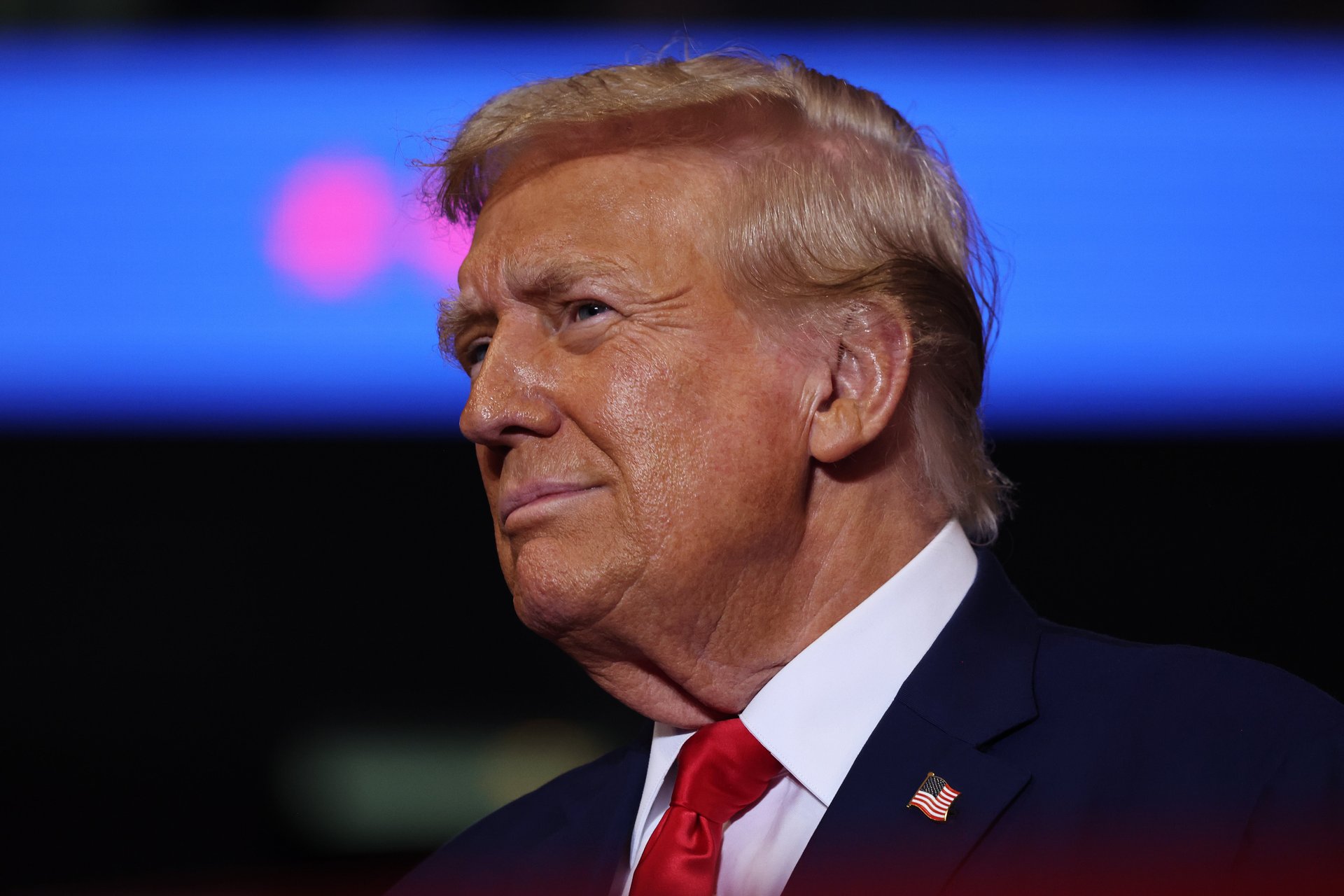
Trump Media stock is in a free fall
Shares hit an all-time low for a second consecutive day
By
Shares hit an all-time low for a second consecutive day
Trump Media & Technology Group stock hit another post-merger low on Tuesday, extending its decline for a second consecutive day of all-time lows.
The company behind former President Donald Trump’s social media network Truth Social saw the value of its shares fall as much as 4% Tuesday to a new low of $21.33. In less than five months, Trump Media’s shares have plunged roughly 63%, giving the company a market capitalization of $4.29 billion.
After years of delays, Trump Media debuted on the Nasdaq $NDAQ under the ticker DJT on March 26 upon completing its merger with Digital World Acquisition Corp., a special purpose acquisition company, or SPAC.
Since then, its stock has been especially volatile, fluctuating wildly from day to day and adding — or cutting — billions from the company’s market value. Trump Media stock has been labeled a “meme stock,” like GameStop $GME, AMC, and Reddit $RDDT, because of the way its shares are traded largely on sentiment rather than the company’s actual operating results or prospects.
At the height of the hype just after its debut, Trump Media had a market value of roughly $8 billion — almost double what it is today.
In recent months, Trump Media has fluctuated wildly based on its ties to the former president and Republican presidential nominee, who is a majority shareholder in the company. The stock spiked and sunk on the conviction in his New York hush money trial and his debate performance against President Joe Biden in June, as well as last month’s assassination attempt at a campaign rally in Pennsylvania.
But shares have been trending downwards for the last several weeks since the company reported a $16.4 million net loss and a 30% drop in revenue in the second quarter.
They continued to free fall Monday, as the Democratic National Convention kicked off in Chicago, with Vice President Kamala Harris set to formally accept the party’s presidential nomination on Thursday. Shares closed at $22.24 Monday.
Verizon CEO Dan Schulman said the company expects to announce additional AI infrastructure deals by year-end worth multiple billions of dollars
Verizon $VZ Communications signed a dark fiber agreement with Alphabet $GOOGL's Google worth more than $1 billion, the company announced Friday, positioning the telecom carrier as a connectivity provider for AI data center buildouts.
CEO Dan Schulman disclosed the deal during Verizon's second-quarter earnings call. Under the agreement, Verizon will provide dark fiber to connect Google's data centers. "The build out of AI infrastructure across the United States is one of the largest capital cycles of our lifetime, and Verizon is uniquely positioned to participate in it," Schulman said.
Verizon stock was up more than 3% in Friday's opening trade. Shares of Alphabet and Verizon both moved on the news, with Alphabet's Class A stock up about 1%.
Schulman described the Google deal as the start of a broader push into AI infrastructure connectivity. He said Verizon expects to announce additional agreements by year-end that would generate multiple billions of dollars in revenue over the next several years. He framed those future contracts as stable, extended-term arrangements with some of the most technically rigorous customers in the infrastructure space.
Schulman used the word "consequential" to describe the announcement, saying it offers a preview of the direction Verizon's revenue trajectory is headed.
The company is tapping its long-haul and metro fiber assets to meet demand from hyperscalers racing to build out AI infrastructure. Schulman said that network, though originally built for a different technological era, now fits precisely what is needed to link AI data centers, compute clusters, and geographic regions together.
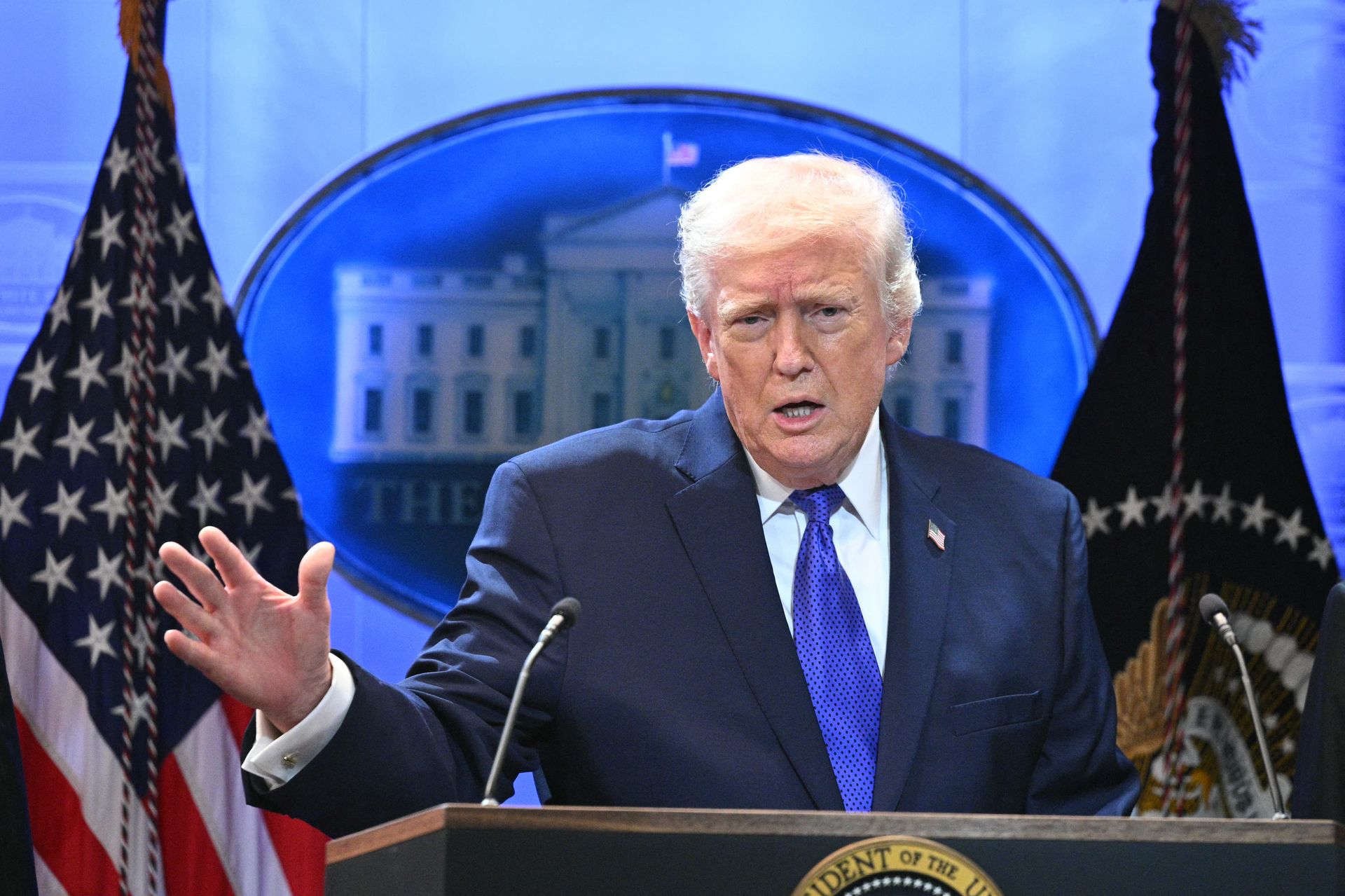
The president said the U.S. will launch a trade probe under Section 301 and expects "substantial" tariffs on the bloc
President Donald Trump threatened new tariffs on the European Union on Friday after Brussels fined Alphabet $GOOGL's Google $1 billion over violations of the bloc's Digital Markets Act.
Trump posted on Truth Social that the U.S. would conduct a trade investigation "into the practice of 'ROBBING' American Companies and, in turn, the American Taxpayer." He said the probe would proceed under Section 301 of the Trade Act. "The penalties will be entirely reversed and, we anticipate, a substantial TARIFF to be placed on them at the earliest possible moment," Trump wrote.
The president also criticized past European fines against Apple $AAPL, Meta $META, and Amazon $AMZN, calling the pattern an "illegal and highly discriminatory practice," according to Bloomberg.
The E.U. imposed two separate fines on Google on Thursday totaling €890 million ($1 billion): €460 million for self-preferencing in search results and €430 million for restricting how app developers direct users to offers outside Google Play. Regulators found that Google elevated its own services — including shopping, hotels, and travel — above competing results, and that fees it charged developers for steering-related activity exceeded what the DMA permits. Google has 60 days to come into compliance, after which penalties could reach 5% of the company's global annual turnover.
Kent Walker, Google's president of global affairs at Alphabet, criticized the decisions. "This implementation of the DMA continues to break everyday products. To comply, we are having to strip away real-time Search features Europeans love — like instant pricing and direct availability for hotels, flights, and restaurants — and dismantle safety protections on Google Play," Walker said in a statement. Google said it is reviewing the decisions and evaluating whether to appeal.
E.U. antitrust chief Teresa Ribera defended the fines. "The best products should succeed because they're better, not because they're owned by the company running the search engine," she said in a statement.
The latest threat comes against a backdrop of existing trade friction. The U.S. and E.U. reached an agreement last year capping American tariffs on most imports from the bloc at 15%, according to Bloomberg. Separately, Trump has levied tariffs of no less than 10% on goods from roughly 60 countries, the E.U. among them, invoking Section 301 authority on the basis of forced labor concerns.
The duties replace a temporary 10% global tariff that expired Friday, covering 99.4% of U.S. imports under more durable legal authority
The Trump administration imposed new tariffs of 10% to 12.5% on 60 trading partners Friday, citing their failure to ban imports made with forced labor, with the duties stepping in at the moment the administration's temporary 10% global tariff expired.
The Office of the U.S. Trade Representative brought the action under Section 301 of the Trade Act of 1974, covering 99.4% of U.S. imports. Partners judged to have enacted or pledged forced-labor bans are assessed at 10%; the remaining economies pay 12.5%. The new duties step in where a Section 122 stopgap tariff expired Friday after reaching its statutory 150-day ceiling. Because Section 301 authority has a stronger record in court, legal experts consider the new duties less vulnerable to the kind of judicial reversal that ended Trump's "liberation day" tariffs in February, according to CNBC.
U.S. Trade Representative Jamieson Greer said in a statement that "decades of moral suasion have not eradicated forced labor from global supply chains" and that the action "will begin to correct what is both a human rights abuse and distortive trade practice."
Trading partners largely rejected the rationale while signaling they would continue talks rather than retaliate. Australia, placed in the 12.5% tier alongside China, Hong Kong, Singapore, and South Korea, called the tariffs inconsistent with its free trade agreement with the United States. Australian Trade Minister Don Farrell said in a statement that "Australia's measures to combat forced labor and modern slavery are among the strongest in the world." Brazil, also hit with 12.5%, called the tariffs "arbitrary" and "unjustified." President Luiz Inácio Lula da Silva said Brazil would seek other markets if it could not sell into the United States. As of Friday, none of the affected economies had announced retaliatory measures.
Canada drew the more favorable 10% rate, with goods qualifying under the U.S.-Mexico-Canada Agreement carved out entirely, and its government responded with notably restrained language. Canada's Minister for Canada-U.S. Trade Dominic LeBlanc, describing the tariffs as something Ottawa had anticipated, said his government would "continue engaging constructively" with Washington over the coming weeks.
As signaled earlier this week by Greer, the administration had been working to replace the expiring Section 122 authority with more durable Section 301 grounds. A separate Section 301 investigation into excess manufacturing capacity by 16 economies has not yet been finalized. Certain goods are exempt from the new tariffs, including products already subject to Section 232 steel and aluminum duties, raw materials whose taxation could threaten domestic supply, and goods that cannot be produced in sufficient quantities in the United States.
The Peterson Institute for International Economics, writing earlier this week, characterized the probe as "not a labor-standards exercise but a mechanism for exporting America's import ban on Chinese goods, as well as an attempt to recreate the tariff regime struck down by the Supreme Court," according to CNBC.
South Korea's presidential policy chief says the agreements will involve "very large" figures and include long-term supply contracts and strategic investment partnerships
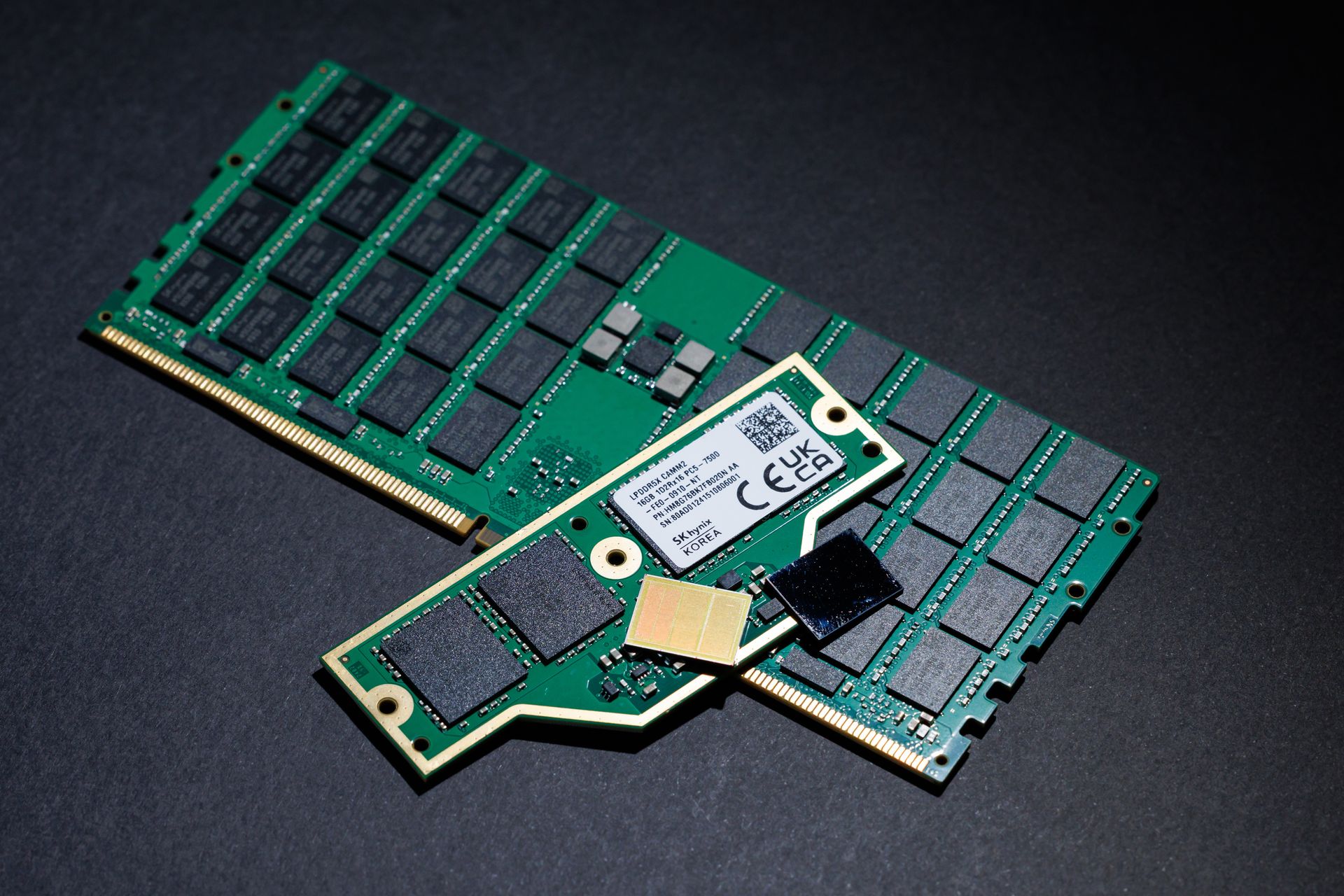
Samsung Electronics and SK Hynix are set to announce major memory chip supply agreements with leading U.S. technology companies during South Korean President Lee Jae Myung's visit to San Francisco, a senior presidential official said Thursday.
Kim Yong-beom, the president's policy adviser, told reporters Thursday that the deals to be unveiled would cover areas including long-term memory chip supply, strategic investment partnerships, and memorandums of understanding with technology partners around the world. "We expect a lot of very large and meaningful figures to be announced," Kim Yong-beom said, according to Reuters. He declined to disclose specific values ahead of the company announcements.
Kim Yong-beom described President Lee's visit as a "catalyst" that gave stalled talks between the Korean chipmakers and their American partners the push needed to reach agreement, according to Bloomberg. Global technology companies are also expected to announce strategic investments in artificial intelligence data centers, though Kim Yong-beom did not provide details.
President Lee arrived in San Francisco on Friday for an AI summit, where he is scheduled to hold separate meetings with Nvidia $NVDA Corp. CEO Jensen Huang, OpenAI CEO Sam Altman, Anthropic CEO Dario Amodei, and Broadcom $AVGO CEO Hock Tan. Samsung Electronics Executive Chairman Jay Y. Lee and SK Group Chairman Chey Tae-won are among the Korean business leaders attending the summit.
Kim Yong-beom said more than half of the government's planned roughly 8 gigawatts of first-phase AI data-center capacity is expected to take shape during the visit. In contrast to the earlier, more preliminary announcement, the incoming projects will name the actual customers, locations, and Korean engineering firms involved, according to Bloomberg. He also said U.S. technology companies account for 80% to 90% of the underlying orders driving the latest expansion plans.
Earlier this month, Commerce Secretary Howard Lutnick urged Samsung and SK Hynix to expand memory chip production in the United States. Kim Yong-beom said Washington had issued no formal demands for further semiconductor investment on U.S. soil, framing Lutnick's remarks as the kind of domestic manufacturing encouragement one would expect from a commerce secretary.
The San Francisco deals build on a run of recent commitments by the two chipmakers. Samsung and SK Hynix pledged a combined 800 trillion won, equivalent to roughly $520 billion, last month to construct new fabrication plants in southwestern South Korea as AI-driven memory demand continues to outpace existing supply capacity. Separately, SK Hynix reached a multi-year technology partnership with Nvidia covering memory supply for Nvidia's Vera Rubin AI supercomputers and other platforms.
The updated assistant, powered by Meta's Muse Spark 1.1 model, is launching first in select markets via the Meta AI app and meta.ai
Meta $META announced Friday that its Meta AI service is gaining capabilities that let the assistant handle certain tasks on a user's behalf, without requiring step-by-step instructions.
Among the new capabilities, the assistant — running on the company's Muse Spark 1.1 model — can generate morning briefings that pull from a user's calendar and take on repeating jobs like putting together weekly meal plans or surfacing trend updates, Meta said. Meta is starting the rollout in a limited set of markets, accessible through the Meta AI app and meta.ai, and intends to bring the features to more countries and additional platforms, WhatsApp among them.
"This is our next step toward personal superintelligence: an AI that knows your context, is there for you whenever you need it," Meta said in a blog post. Meta also noted that people can customize the degree to which the assistant acts on their behalf, and that an incognito mode is still on offer for anyone who wants their conversations kept private.
The new features arrive as Meta has been moving to position Muse Spark 1.1 as a model built for agentic and task-execution use cases. The model, which launched earlier this month alongside a public developer API, was developed by Meta Superintelligence Labs and came bundled with API pricing that the company said is roughly 25% of what Anthropic and OpenAI charge for comparable models.
Separately on Friday, Meta launched a dedicated app called Seller for merchants on its Facebook Marketplace platform. Through the app, sellers can oversee their active listings, respond to interested buyers, and monitor how individual items are performing, all in one place. Listing creation in the app uses Meta AI to suggest titles, descriptions, prices, and categories based on uploaded photos, the company said. Seller is available on the App Store for users 18 and older in the United States, with a web experience currently in testing, according to TechCrunch.
The platform processes upward of 430 million listings each month and counts over 1.1 billion active users.
Meta is scheduled to report second-quarter results after market close on July 29, the company said.
More than 20 companies signed a letter warning that premature limits on open-weight AI could stifle competition and push innovation overseas
A coalition of more than 20 technology companies, including Nvidia $NVDA, Meta $META, Microsoft $MSFT, and Palantir $PLTR, released a joint letter on Friday urging policymakers to avoid placing restrictions on open-weight artificial intelligence models.
Open-weight AI models are systems whose weights are publicly released, allowing anyone to deploy, examine, and adapt them on hardware they control. The letter argues that such models expand access to the AI economy, strengthen competition, and give organizations greater control over the technology they use.
"Our AI leadership will be judged not by one frontier AI model, but by whether the United States builds a strong, open ecosystem that diffuses into every sector," the letter said.
The signatories warned that relying only on closed models carries its own dangers. "Relying solely on closed models is not inherently safe: they can be breached, misused, or fail in ways that outsiders cannot detect," the letter said. "And concentrating advanced AI capabilities behind a small number of closed models compounds that risk."
The letter also addressed concerns about AI distillation — a technique in which a smaller model is built using outputs from an existing, stronger model. The companies called for any concerns about unlawful distillation to be handled through "targeted legal and commercial frameworks" rather than restrictions on the technique broadly.
Nvidia CEO Jensen Huang and Microsoft CEO Satya Nadella both shared the letter on their personal social media accounts, according to CNBC.
The letter comes amid a wider debate over Chinese open-weight AI models. Moonshot AI, a Chinese startup, sharpened those concerns earlier this month when it unveiled a model called Kimi K3 that has beaten several U.S. competitors on various industry benchmarks. U.S. Treasury Secretary Scott Bessent said on Tuesday that the Trump administration would examine whether Chinese companies were stealing American intellectual property.
White House advisor Michael Kratsios alleged on Wednesday that Kimi K3 was built by distilling outputs from Anthropic's models, according to CNBC. Kratsios argued that while the technique has legitimate uses that support open innovation, deploying it covertly at scale to misappropriate American technology crosses a line he called "unacceptable."
OpenAI and Anthropic did not sign the letter. OpenAI president Greg Brockman said Thursday that he had not taken part in any White House discussions about restricting access to Chinese open-weight models. "I think that, fundamentally, AI and AI usage is something that is actually very important to democratize," Brockman said.
Other signatories include Andreessen Horowitz, CrowdStrike $CRWD, Dell $DELL Technologies, Hugging Face, IBM $IBM, Mistral, Mozilla, Perplexity, Replit, ServiceNow $NOW, and Y Combinator.

The new model costs $5 per million input tokens and $25 per million output tokens, matching the price of its predecessor, Opus 4.8
Anthropic unveiled Claude Opus 5 on Friday, billing it as a model that comes close to matching Claude Fable 5's capabilities at half the price — $5 per million input tokens and $25 per million output tokens, the same rates charged for its predecessor, Opus 4.8.
Claude Opus 5 is rolling out across all of Anthropic's platforms, where it takes over as the default on Claude Max, the company's top consumer subscription, and claims the top spot among models offered on Claude Pro. Fable 5, launched in June, is priced at $10 per million input tokens and $50 per million output tokens.
On coding and knowledge work benchmarks including Frontier-Bench and GDPval-AA, Anthropic says Opus 5 sets new performance highs, though the company acknowledges it remains behind Mythos 5 on cybersecurity tasks. On Frontier-Bench v0.1, Opus 5 scored 43.3%, compared with Opus 4.8's 18.7% and Fable 5's 33.7%, the company said. On OSWorld 2.0, a computer-use benchmark, Anthropic says Opus 5 surpassed Fable 5's top result at roughly a third of the cost.
Anthropic is positioning the model as suited for daily professional use rather than the longest autonomous tasks, for which the company says Fable 5 remains the stronger choice. Customers can tune an effort dial built into the model, dialing back output quality in exchange for faster responses and reduced token consumption.
Early-access customers cited efficiency gains with unusual specificity. Niko Grupen, head of applied research at legal AI firm Harvey, reported that Opus 5 matched the output quality of Opus 4.8 running at maximum reasoning while cutting average token usage by 26%. Wade Foster, chief executive of Zapier, said the model completed a full churn-prevention workflow end to end on his company's AutomationBench — a task prior models failed — without spending more tokens than earlier Claude models.
According to Anthropic's internal behavioral audit, Opus 5 scored better on alignment measures than any prior model, including Opus 4.8, Sonnet 5, and Fable 5, showing the fewest instances of deceptive outputs and the greatest resistance to manipulation attempts. Anthropic said it deliberately withheld cyber-focused training from Opus 5 — a decision mirroring its approach with Opus 4.8 — yet the model's cybersecurity performance rose anyway, a byproduct of broader capability improvements. In Anthropic's OSS-Fuzz tests, Opus 5 found vulnerabilities 79.4% of the time — nearly level with Mythos 5's 80% — but when it came to turning those findings into working exploits, the model succeeded in just 4 of the challenges where Mythos 5 cleared 13.
Anthropic said Opus 5's safety classifiers are expected to intervene roughly 85% less often than those on Fable 5. When a classifier flags a request in Claude.ai, Claude Code, or Claude Cowork, the query falls back to Opus 4.8 by default, the company said.
The launch follows a turbulent stretch for Anthropic's top models. The U.S. government lifted export controls on Fable 5 and Mythos 5 earlier this month, ending an 18-day shutdown triggered by a government directive over cybersecurity concerns stemming from a technique Amazon $AMZN researchers documented for eliciting dangerous outputs from Fable 5.
Friday's release also brings several supporting features: a Fast mode that runs at about 2.5 times the standard speed for double the base price, automatic fallback routing built into the API, and support for swapping tools mid-conversation without busting the prompt cache. Developers can access the model as claude-opus-5 on the Claude API.
Tech IPO fortunes keep landing in the same zip codes, with the AI boom expected to pack 12,000 new millionaires into San Francisco alone
The conventional story about tech wealth is that it spreads. A company goes public, employees scatter, secondary cities benefit, and the money radiates outward.
Three decades of data tell the opposite story. IPO-driven wealth pulls money, talent, and services into a tighter and tighter footprint, and each cycle narrows the geography further.
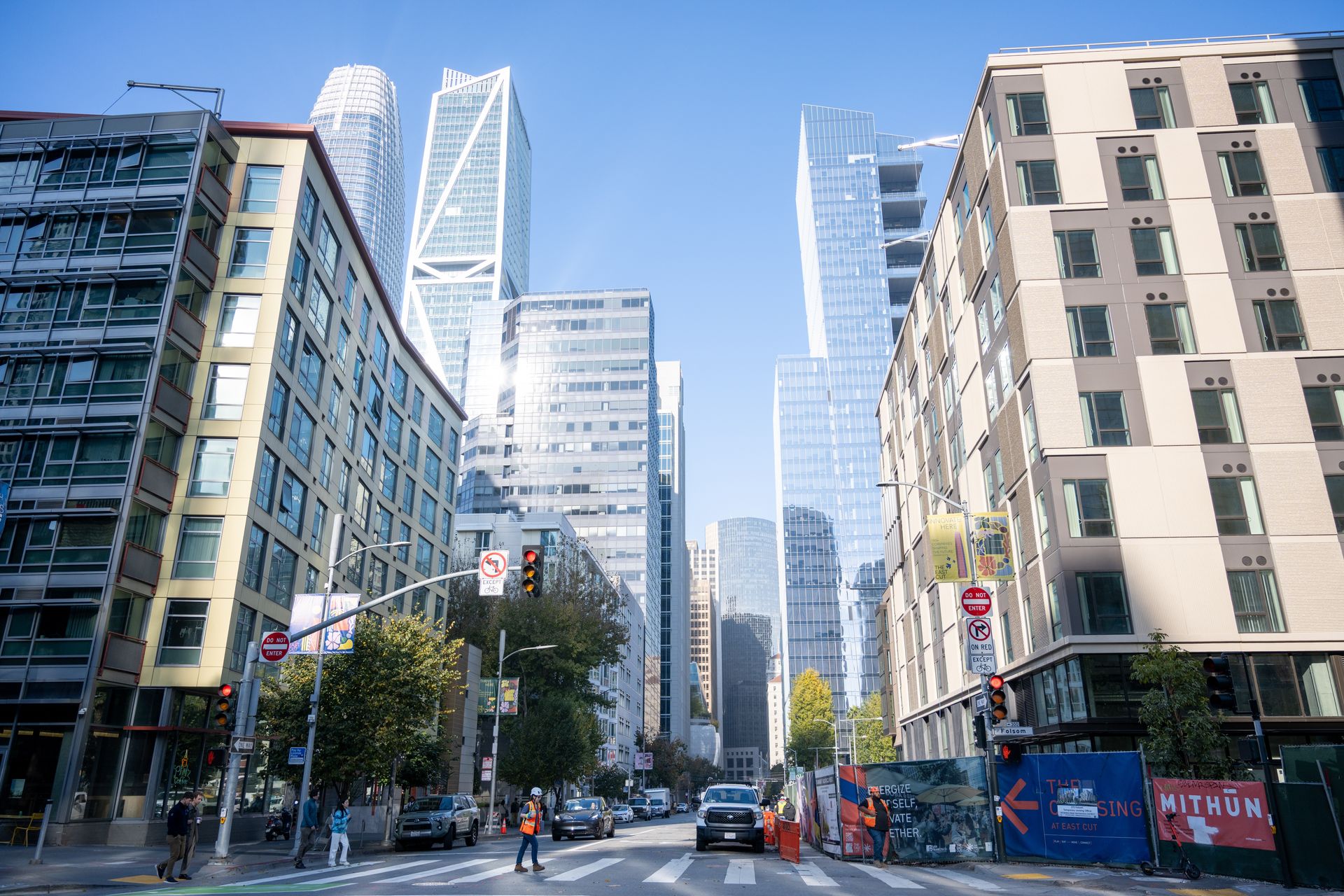
The next wave is already arriving. SpaceX's IPO earlier this year sent billions to employees based in the Bay Area, and OpenAI and Anthropic are expected to follow, together creating about 12,000 new millionaires concentrated almost entirely in San Francisco.
Every previous round of tech IPO wealth has concentrated in the same few cities rather than diffusing outward. The AI boom, which is larger than any of its predecessors, is following the same path.
Between 2005 and 2017, five cities absorbed more than nine-tenths of all new innovation-sector jobs in the United States, according to a Brookings Institution report produced with the Information Technology and Innovation Foundation. Boston, San Francisco, San Jose, Seattle, and San Diego captured nearly all of the growth while the rest of the country's tech sector barely expanded.
The funding pipeline reinforces the same pattern. In Q2 2025, major hubs accounted for roughly three-quarters of all venture funding even though they hosted only about half the deals, according to the PitchBook-NVCA Venture Monitor. The Bay Area's share has only grown sharper in the AI era. The region's portion of domestic venture investment jumped from 55% in 2025 to more than 80% in the first quarter of 2026, with OpenAI's single $122 billion round representing 45% of the entire national total by itself.
Economist Enrico Moretti of UC Berkeley has studied the mechanics behind this pull. His research, presented in The New Geography of Jobs, found that every new innovation job in a city generates five additional jobs in the same metro area, two professional and three in local services. High-tech employment creates three times more local service work than traditional manufacturing. The effect is self-reinforcing. Places that already have educated workers and innovative companies draw more of each, and the gap between winning cities and everyone else widens with every cycle.
AI firms are physically concentrating in San Francisco at the fastest pace in years. They leased more than 800,000 square feet of office space in the first half of 2025, three-quarters of it through new leases rather than renewals, according to CBRE data, as reported by Bisnow. Tenants occupied more new space in Q2 than in any quarter since 2018, and another 39 AI companies were actively searching for space totaling 1.4 million square feet, roughly 1 million of which represented expansion rather than relocation, Colin Yasukochi, executive director of CBRE's Tech Insights Center, said. "San Francisco and Silicon Valley remain the epicenter of the AI boom," Yasukochi added in a May 2026 CBRE report, "and that leadership is translating directly into office demand."
The concentration is happening despite a remote work shift that was supposed to break the cycle. San Francisco's office vacancy climbed past 36% during the pandemic, and tech workers scattered across the country. Remote work has since stabilized at about 21% of paid workdays, according to a Stanford and Federal Reserve Bank of Atlanta survey released in March 2025, with only 12% of executives planning any further return-to-office mandate. Hybrid work is durable, but it hasn't dislodged the physical clustering of AI companies.
Even the broader tech-job dispersal that began during the pandemic may not extend to AI. A 2023 Brookings analysis found that generative AI job postings remained heavily concentrated, with a quarter posted in the Bay Area and 60% clustered in just 20 metro areas.
Thousands of AI workers are arriving in a city that has struggled to support the demand before. Previous tech booms have driven up home prices within months of each hiring surge. During the dot-com boom, a 10% rise in local tech company valuations pushed Bay Area home prices up 1% to 2% over the next two years, the Federal Reserve Bank of San Francisco found. Swings in tech stock prices explained roughly 30% of the variation in the region's home prices two years out.
The pattern survived the bust. Between 2000 and 2004, more than 140,000 high-tech jobs disappeared from Silicon Valley, according to the Bureau of Labor Statistics. But the region held its core talent and industry strengths. By 2008, high-tech workers in the Valley were earning 61% more than their peers elsewhere in the country, and six of 11 high-tech industries had increased their local employment concentration since 2001.
The inequality embedded in this cycle is now visible in the data. Bay Area families in the lowest income brackets earn more in absolute terms than similar families elsewhere in the state, but they fall further behind their own neighbors, according to the Public Policy Institute of California. Income inequality in Santa Clara and San Mateo counties, measured in fixed dollar terms, also climbed 44% between 2010 and 2023, the 2025 Silicon Valley Index shows. The top 10% of households now hold 71% of the region's wealth, up from 70% the year before. The bottom half holds 1%.
San Francisco tried and failed to tax its way into a fix. In 2019, the city tabled a proposed tax on stock-based compensation that would have raised the rate on that form of pay from 0.38% to 1.5%. The city's Office of Economic Analysis had estimated it would generate $50 million to $150 million per year for affordable housing, family programs, and small business stabilization. A separate "overpaid CEO tax" passed in 2020. A California billionaire tax initiative is being prepared for the 2026 ballot.
The track record for local tax fixes isn't encouraging. Cities have spent decades offering tax breaks to draw jobs into struggling neighborhoods, and most of those efforts have failed, according to a National Bureau of Economic Research review of the research. A 2017 federal tax break that was supposed to pull investment into low-income areas hasn't generated meaningful job growth, either.
One program offers a partial counterpoint. Tulsa Remote, which pays remote workers to relocate, generated $4.31 in local economic benefits for every dollar spent, according to a study cited by Bloomberg in May 2025. But programs like Tulsa Remote move hundreds of workers, and the AI IPO cycle is about to move billions of dollars into a few zip codes.
The Pharmacy Compounding Advisory Committee voted 8-6 to recommend BPC-157, KPV, TB-500, and MOTS-c for compounding pharmacy access
The Food and Drug Administration's Pharmacy Compounding Advisory Committee voted Thursday to recommend easing restrictions on four peptides, overriding objections from the agency's own career scientists who said the evidence did not support the move.
The panel voted in favor of adding BPC-157, KPV, TB-500, and MOTS-c to a list of substances that specialized compounding pharmacies are permitted to produce. The votes on BPC-157 and KPV were 8-6 in favor, with one abstention, according to NPR. The committee will take up three additional peptides — emideltide, epitalon, and semax — on Friday.
The recommendations do not make the compounds FDA-approved drugs. They would allow the peptides to be produced by compounding pharmacies, with the FDA's final decision to come in the form of a rule proposal, according to NBC News. The FDA retains authority to reach its own conclusion and is not obligated to adopt the committee's recommendations, though it generally does so.
FDA scientists repeatedly raised concerns throughout the session, telling the panel that evidence for the compounds' safety and effectiveness was limited or absent. FDA official Russell Wesdyk described a "foundational challenge" shared by all seven peptides on the agenda: the agency cannot pin down a definitive chemical identity for any of them, which he said makes meaningful quality review nearly impossible, according to NPR.
Of the panel's voting members, eight had joined the committee through appointments made under Health Secretary Robert F. Kennedy Jr., and six of those eight run practices where peptides are administered, according to NBC News. For BPC-157, KPV, and TB-500, all eight of those new appointees voted yes.
Supporters of the recommendations pointed to the compounds' existing presence in an unregulated gray market, noting that online sellers routinely attach disclaimers such as "for research use only" as a workaround to distribute products not cleared for human use. Bringing them into the compounding pharmacy system, proponents said, would give patients access to safer products under physician supervision.
Several panel members who voted no pushed back on that framing. Dr. Elizabeth Rebello, an anesthesiologist at the University of Texas MD Anderson Cancer Center, said the argument that patients are already obtaining the peptides "actually goes against the Hippocratic oath." Dr. Brian Lee, an associate professor at the Keck School of Medicine of USC, explained his no vote by saying that committee approval carries the risk of signaling to the public a level of confidence in these compounds that the underlying data simply does not support.
Kennedy has publicly endorsed easing restrictions on peptides. The advisory panel was recently overhauled, and several newly added members have ties to the peptide industry, which has drawn criticism about potential conflicts of interest.
The French drugmaker said the drug would not represent a meaningful improvement over existing treatments, including its own Dupixent
Sanofi announced Friday it will not seek regulatory approval for amlitelimab in atopic dermatitis, ending development of the eczema drug as new chief executive Belen Garijo conducts a broad review of the company's pipeline.
"The totality of efficacy and safety evidence generated to date does not support further development of amlitelimab in AD," Sanofi said in a statement. The drug "would not represent a meaningful improvement to the standard of care for patients," the company added.
The decision marks a significant retreat for a drug Sanofi had, as recently as March, said showed potential to be a meaningful treatment option, according to the Wall Street Journal. Some analysts had noted that amlitelimab's efficacy did not match that of Dupixent, Sanofi's top-selling product, which it developed jointly with Regeneron $REGN Pharmaceuticals.
Sanofi acquired amlitelimab as part of its $1.1 billion purchase of Kymab in 2021, according to Fierce Biotech. The drug had struggled in late-stage testing: September 2025 data from a phase 3 trial disappointed Wall Street, and a second phase 3 readout in January cleared its primary endpoint but stumbled on secondary measures. Even so, Sanofi had at that point pledged to pursue regulatory submissions using the aggregate clinical evidence.
The reversal came after Garijo replaced Paul Hudson as CEO. Hudson's exit was driven in part by a series of clinical setbacks that included amlitelimab, according to Fierce Biotech. Garijo subsequently replaced research-and-development chief Houman Ashrafian with former Roche executive Paulo Fontoura.
Data from the phase 3 ESTUARY long-term extension study indicated that patients aged 12 and older sustained their clinical responses without relapsing, and that the drug's safety profile continued to develop, Sanofi said. Results from the ESTUARY study and other amlitelimab atopic dermatitis trials will be presented at a future medical meeting, the company said.
Amlitelimab's development in other conditions is not entirely over. A midstage study of the drug in celiac disease remains ongoing, with results expected in the second half of 2026, the company said.
Sanofi said the decision leaves its full-year 2026 financial guidance intact. The company is scheduled to report second-quarter earnings next week.