Former acting US attorney general Sally Yates was traveling to catch a flight when she learned through news reports of president Donald Trump’s executive order restricting travel from seven majority-Muslim countries.

Former acting US attorney general Sally Yates was traveling to catch a flight when she learned through news reports of president Donald Trump’s executive order restricting travel from seven majority-Muslim countries.

The next time painful or stressful feelings threaten to overwhelm you, here is what you do: get something to write with. Get something to write on. Write down a word that describes the emotion you’re experiencing. It doesn’t have to be comprehensive. Just a word or two will do.

In September of 2015, Mari Andrew was recovering from the loss of her father, a painful breakup, and some serious health issues. She was suffering, badly, when a line from Cheryl Strayed’s advice column leapt off the page: “This is how you get unstuck… You reach.”

Trust falls are passé. Paintball leaves bruises. The best way to bond with coworkers now is doing an “escape room,” a game in which participants are given a set amount of time (usually an hour) to solve a series of puzzles and free themselves from a locked space. A theme or conceit gives the game urgency—players are told they have an hour before a killer virus wipes out their city, for example, or they must break out of prison before the warden returns. One particularly meta room in Florida has corporate participants escape from an office.

Facebook’s $122 million fine from the EU for making misleading statements during its 2014 purchase of WhatsApp doesn’t look too damaging for a company that posted $8.03 billion in revenue last quarter.

There are reams of academic studies on the highs and lows of workplace relationships: the value of a mentor, the damaging effects of a toxic colleague. But the literature is largely silent on the coworkers who make up the vast majority of our office interactions—the ones we barely know, and rarely work with directly. Like that lady who sits by the copier, with the plant on her desk. Or that guy in sales. No, the other one. Tim? Tim. Or Tom.

You have likely at some point heard the saying known as Murphy’s Law: Everything that can go wrong will. The phrase has a dour fatalism to it—if everything’s bound to fail, why bother trying? But time has distorted the law’s intended meaning entirely. There really was a Murphy, and the law that bears his name is not an admission of defeat. It is a call to excellence.

Recently, economists had students at an elite MBA program answer questionnaires about their ideal job placements: salary, hours worked, and so forth. One group was told that individual responses would be discussed in class; the other was told the answers would be kept anonymous.

As founder of the agency Ogilvy & Mather, David Ogilvy reinvented advertising in the 20th century. His sweeping vision of marketing extended to the ways in which his company should market itself.

Multitasking is more stressful than doing one activity at a time. It’s also less productive and, technically, not even possible. What looks like several simultaneous actions is really a series of frantic cognitive switches in the brain, each slurping from the same reserves of oxygenated glucose that we need to complete the tasks at hand.

Bryan Roberts, a partner at the venture capital firm Venrock, has a portfolio most investors would envy. Nine companies in his health- and biotech-focused portfolio have reached a valuation of $1 billion or more. This year he is 58th on the Forbes Midas list of the top 100 venture capitalists.

Whole Foods CEO John Mackey is a devoted adherent of healthy eating principles similar to those articulated in journalist Michael Pollan’s famous mantra: “Eat food. Not too much. Mostly plants.”

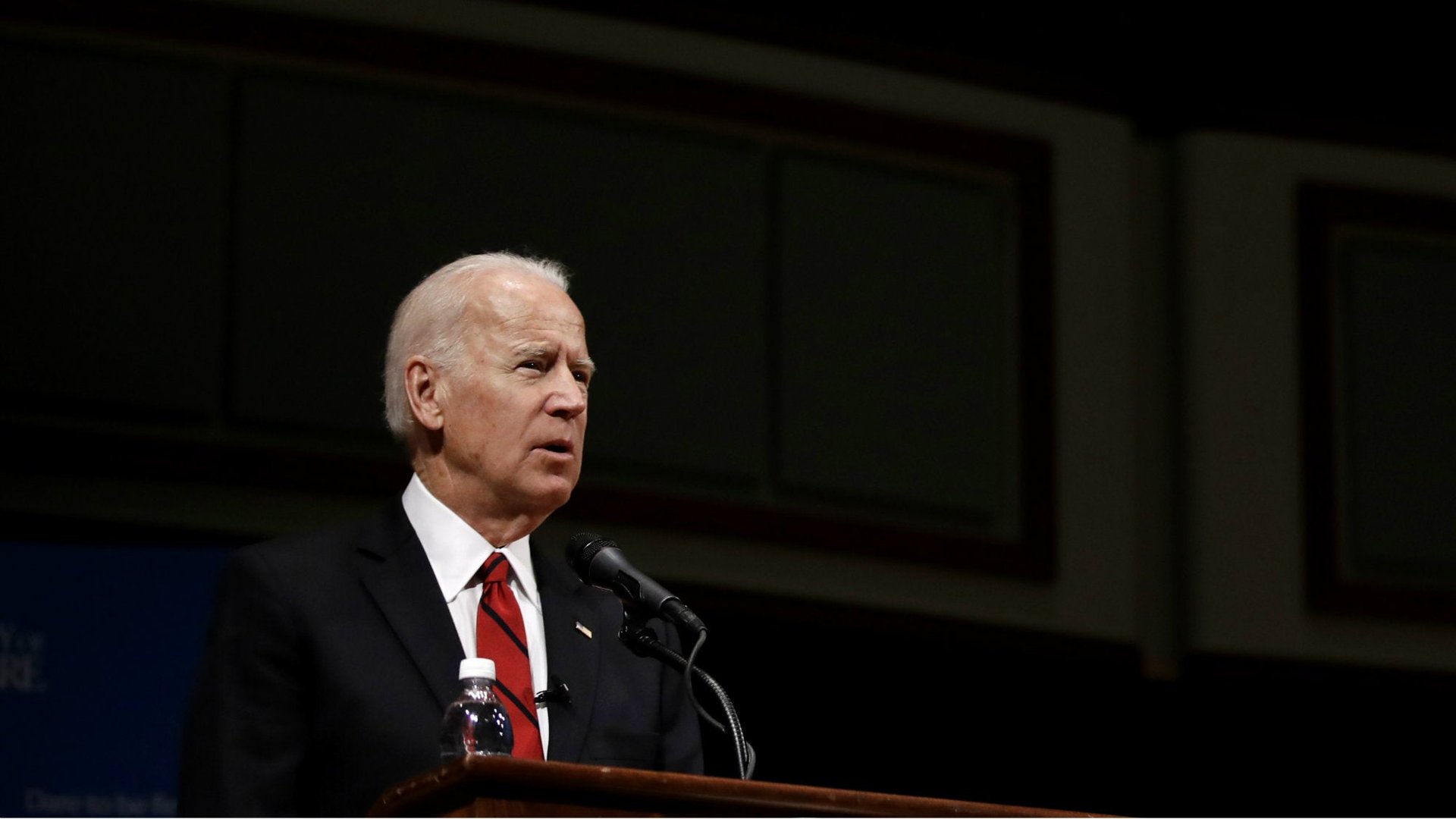
After losing his son Beau to a brain tumor in 2015, former US vice president Joe Biden launched the White House Cancer Moonshot Taskforce the following year to accelerate efforts to cure the disease. Hillary Clinton asked him to continue the work at the White House level in the event she won the presidency. After Donald Trump’s unexpected win, Biden offered to help the incoming administration continue fighting cancer, an issue he described as “the only non-partisan thing left out there.”

Any neurologist can list off the physical symptoms a patient with Parkinson’s disease will report, such as tremors, involuntary motions, and fatigue. But not every doctor is capable of empathizing with the life-altering affects those symptoms have on the patient’s life. Multiple studies have found that the patients of empathetic doctors fare better in the treatment of diseases from diabetes to depression. When doctors don’t empathize, patients suffer.

Hosts of the White House Correspondents’ Dinner have one of the toughest gigs in comedy. They have to find a genuinely funny way to skewer the current administration while their target—one of the most powerful individuals on the planet—sits arm’s length away.

In 1976, a professor of economic history published an essay outlining the fundamental laws of a force he perceived as humanity’s greatest existential threat

Bill Gates is an avid tennis fan. On Saturday (April 29), the world can check out the entrepreneur and philanthropist’s game live when he plays alongside tennis champion Roger Federer in a match benefiting Federer’s charity for education in Africa.

A large-scale study looking at the much-discussed relationship between autism and antidepressant use in pregnancy has found no evidence of a link between the two.

In a recent New Yorker profile, the decorated Canadian writer Margaret Atwood shared the secret of her productivity. She does not have a special chair, or engage in a morning ritual, or limit her writing to particular hours of the day. She just sits down and writes.

In the end, it was an old-fashioned letter that took down Klaus Kleinfeld.

When companies commit fraud, lawmakers and regulators usually start at the top when looking for problems in the corporate culture. US senators excoriated former Wells Fargo CEO John Stumpf personally in a September hearing on the banks’ widespread practice of opening fraudulent customer accounts. “It’s gutless leadership,” senator Elizabeth Warren told Stumpf. “This is about accountability. You should resign.”

For all that can be said about this remarkable chapter of history, one thing is certain: we are living in a golden age of protest signs.

Jessica Zitter is a critical care physician and palliative care specialist who wants to change the way we die. The subject of Extremis, an Academy Award-nominated documentary about end-of-life decisions in the critical care unit, Zitter advocates honest discussions between doctors and patients about options beyond life-support machines that keep patients tethered to hospital beds. By confronting the reality of death, and recognizing the resources available to them in the form of of hospice and palliative care, patients are more likely to be able to die at home, free of pain, with the support of those they love.

We don’t live in a post-truth era, despite claims to the contrary. Facts exist as stubbornly as they did before. But we do live in a time when highly-placed people in government and media are actively undermining the idea that there is such a thing as verifiable truth by propagating untruths at dizzying speeds. You can call these falsehoods “weaponized lies,” as the psychologist Daniel J. Levitin does. Or you can call them what the late astronomer Carl Sagan might have: baloney.