Algorithms today dictate our credit scores, our favorite music playlists, and, of course, what shows up in our social media feeds. So shouldn’t the public know what code and mathematical equations go into making them work?

Algorithms today dictate our credit scores, our favorite music playlists, and, of course, what shows up in our social media feeds. So shouldn’t the public know what code and mathematical equations go into making them work?

People in Britain are more scared of the artificial intelligence embedded in household devices and self-driving cars than in systems used for predictive policing or diagnosing diseases. That’s according to a survey commissioned by the Royal Society, which is billed as the first in-depth look at how the public perceives the risks and benefits associated with machine learning, a key AI technique.

London’s transport authority is overhauling the licensing fees it charges private car hire companies like Uber. It launched a public consultation April 20, proposing new fees that would add millions of pounds to Uber’s licensing bill.

The London pub—historic haunt of revolutionaries, writers, and politicians—is under threat. Its numbers have fallen by a quarter since 2001, with the steepest drops in central London. Yesterday, London’s mayor launched an audit of the city’s public houses to figure out ways to stem the losses.

Alibaba is pushing competitive video gaming, or eSports, to the next level. It struck a partnership with the Olympic Council of Asia to get eSports included as a medal sport when the Asian Games are held in Hangzhou in 2022. The e-commerce giant is headquartered there and it seems keen to make its mark on the Games, the world’s largest multi-sport event after the Olympics.

Travelers who give up their seats on an overbooked Delta flight can now get up to $9,950 in compensation, thanks to a higher limit established by the airline on Friday. Delta has been lauded for the move, which comes in the wake of the violent removal of a United passenger last week.

On Friday, a cache of hacking tools allegedly developed by the US National Security Agency was dumped online.

Sweden’s cool climate and forest-covered interior have allowed the country to build its economy on primary industries, like pulp and paper production and metalworks, for decades. Now those same factors are helping it cater to a new kind of industry that could become just as vital to its economy in the years to come: the perfect real estate for data centers.

London, England

Bitcoin mining has become a multi-billion dollar industry. Bitcoin miners have collectively earned over $2 billion in revenue since the cryptocurrency was established in 2008, according to an estimate from a new report published by the Cambridge Centre for Alternative Finance.

The web has an inclusion problem: it overwhelmingly caters to speakers of the English language. That’s most clearly seen in the fact that over half of all websites are in English. But there’s a more insidious issue at work—even the way people navigate to websites is set up to exclude non-English language users, according to a new report from ICANN, the non-profit that governs internet addresses.

There’s a new social network in town. It’s Mastodon, a six-month-old microblogging service that’s more than a little like Twitter—although it promises not to serve you ads, and is open-source instead of being owned by a corporation. If you’re fed up with trolling, fake-news saturated feeds, and algorithms you can’t fathom, take a look at Mastodon.

A startup that has just graduated from the accelerator run with the help of GCHQ, the British government’s intelligence agency, wants to lure hackers into computer networks using a form of fake news, while secretly observing them to gather intelligence.

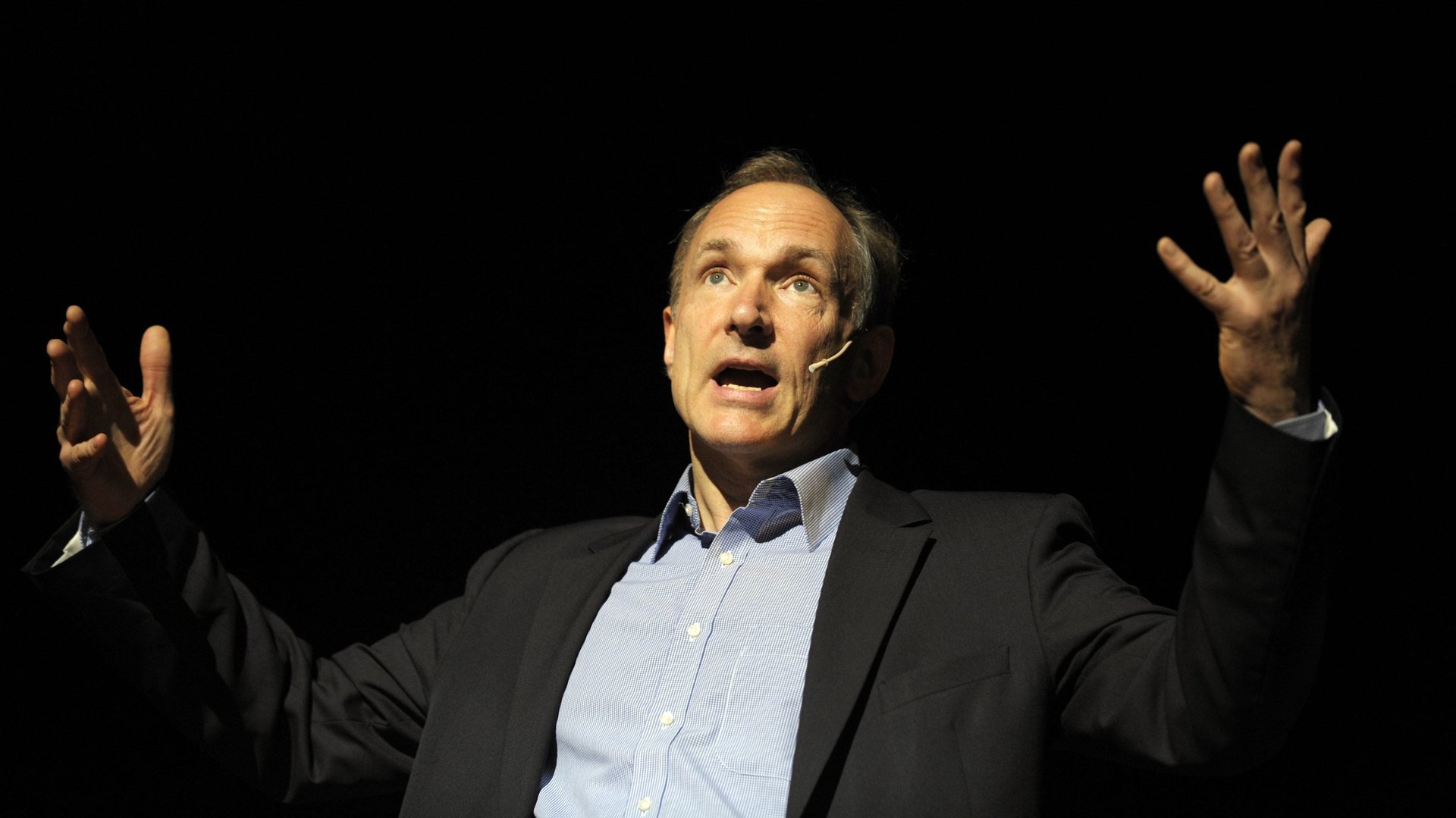
Tim Berners-Lee just won the most prestigious prize in computer science, the AM Turing Award, given each year by the Association for Computing Machinery. Berners-Lee, of course, invented the world wide web, the technology that enables you to read this article in your web browser.

Bitcoin’s price has been soaring, and if entrepreneur and provocateur Kim Dotcom’s latest scheme takes off, it’ll rocket even higher. The founder of Megaupload, who the US government has called a fugitive from copyright infringement charges, is creating a payments platform called Bitcache, which will let people get paid for digital content with bitcoin.

Keeping track of who owns what pieces of land is still a low-tech affair, involving mountains of hand-signed documents, envelopes, and couriers. That is, if a country is lucky enough to have a functioning land registry—the World Bank estimates that 70% of the world’s population lacks access to land titling. Getting everyone to agree on every stage of a property transaction, and to record it permanently somewhere, is a feat of security, coordination, and trust.

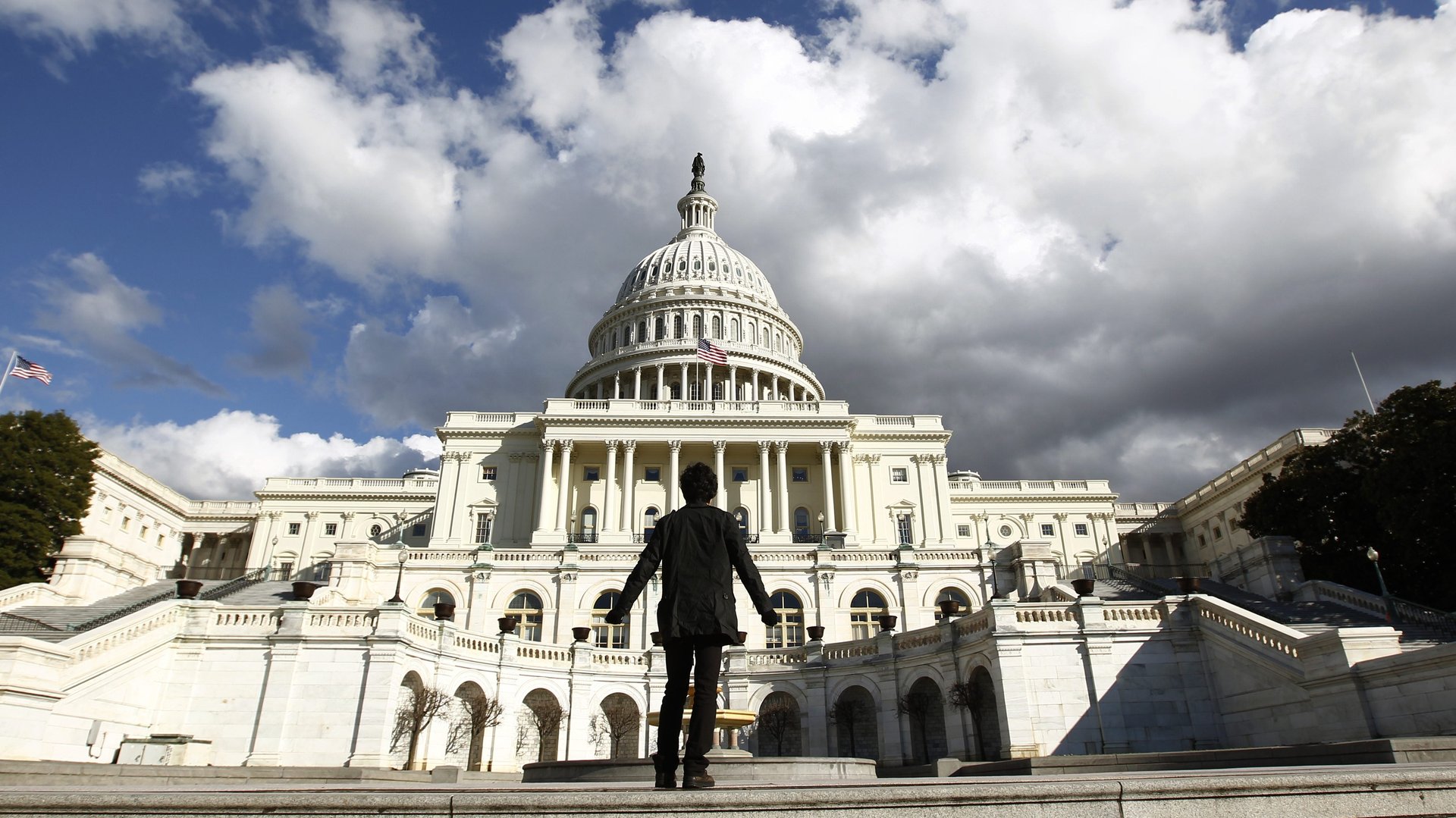
The internet is fuming over this week’s Republican-led vote in US Congress to repeal Internet privacy protections carried over from the Obama administration’s final days. Angered internet users are rallying behind Max Temkin, creator of the ”Cards Against Humanity” card game, who retaliated on Twitter by threatening to buy and publish the web browsing history of members of Congress.

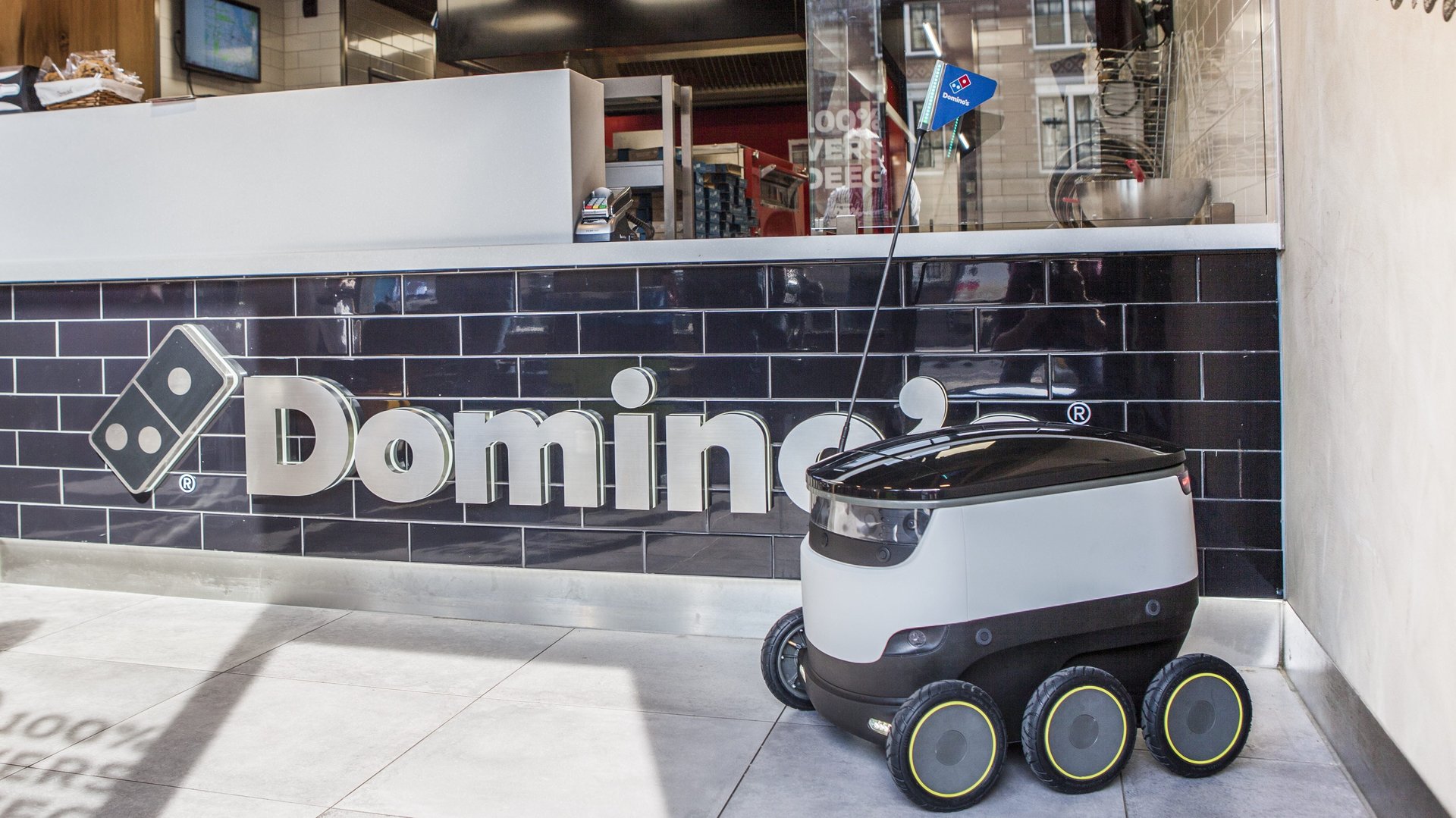
Over the last decade, the stock price of Domino’s Pizza has crushed that of Apple, Google, Amazon, and Facebook mainly because it stopped making pizza that tasted like cardboard. Now it’s innovating on the labor front with plans to test robots as substitutes for your friendly pizza delivery guy. “With our growth plans over the next five to 10 years, we simply won’t have enough delivery drivers if we do not look to add to our fleet through initiatives such as this,” Domino’s chief executive said in a statement announcing the pilot program.

Most cities with a cluster of tech companies can offer those workers either a short commute or low rents—but not both, according to a study by property consultancy Savills. Berlin is the exception to that rule. Savills found that the German capital offers tech workers some of the lowest rents and among the shortest commutes of 22 cities it surveyed.

Google’s hate-speech headaches won’t go away. The search giant has already apologized twice to advertisers for placing their ads on YouTube channels that promote terrorism and other hate speech, but big brands in the US are still pulling their campaigns from the platform, and media agencies are asking for discounts.

US lawmakers voted yesterday to loosen rules governing how internet service providers—companies such as AT&T and Comcast—can mine their customers’ data for advertising. The vote means the broadband and cable companies that deliver internet to homes and offices won’t have to get customer consent before using geolocation, web browsing history, and other information for ads and marketing.

It is not uncommon for a new technology still finding its footing to undergo periods of tumult—witness the long ago war over videotape formats VHS and Betamax.

Earlier today, an attacker in London ran over several people with a car on Westminster Bridge and, in a seemingly related incident, a police officer outside of Britain’s parliament building was attacked by an assailant with a knife. The police have confirmed that four have died, including an officer and the attacker, and at least 20 have been injured during the attack, which is being treated as a terrorist incident.

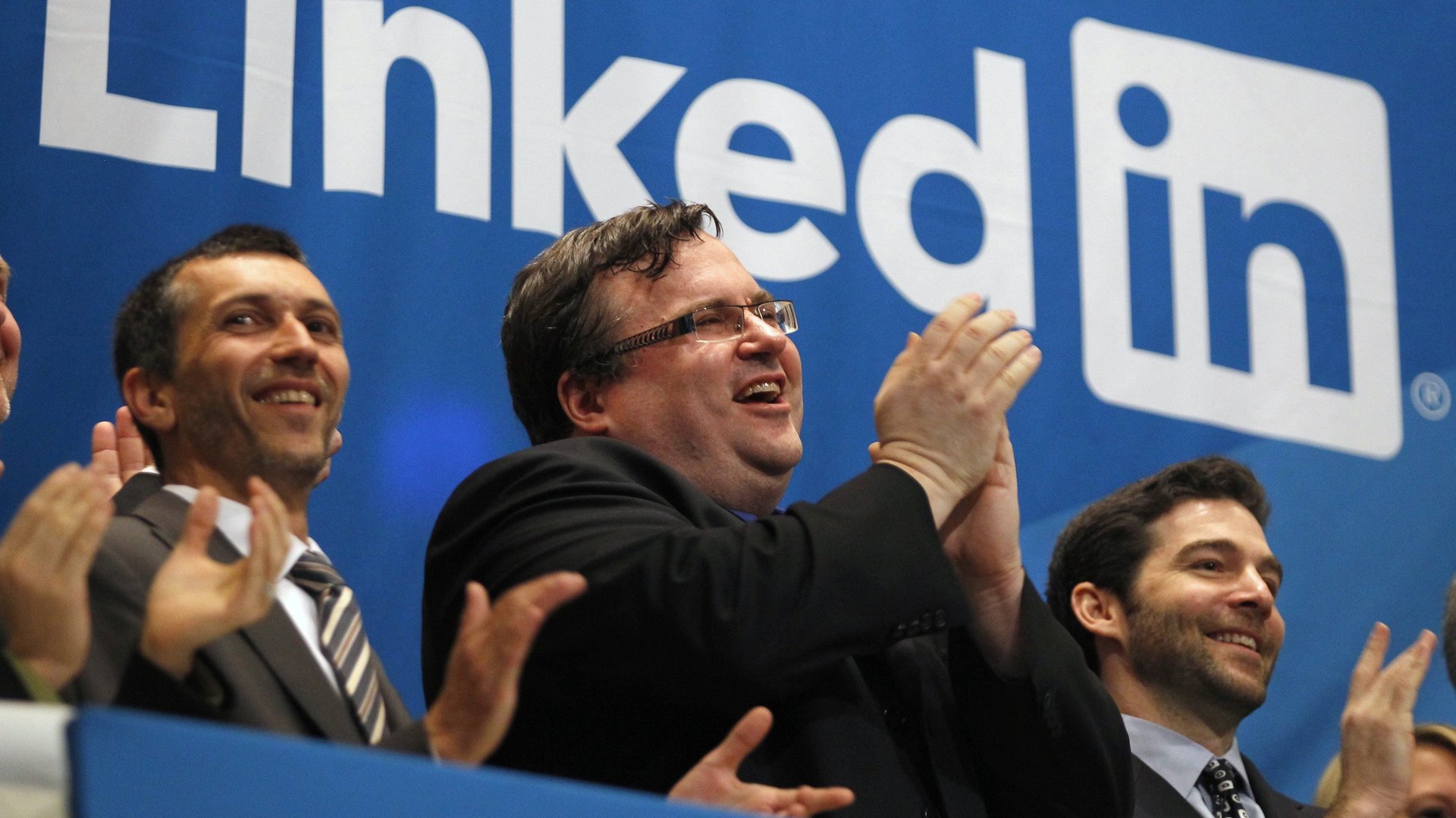
LinkedIn is putting a bigger price tag on its user data. Today (March 21) it launched a new subscription for its Sales Navigator product, used to contact prospective customers, for $1,600 per user annually. That’s compared to $960 annually for the cheapest Sales Navigator subscription.