Spotify may be losing $200 million a year, but QQ Music, China’s version of the global music streaming service, appears to be turning a profit.

Spotify may be losing $200 million a year, but QQ Music, China’s version of the global music streaming service, appears to be turning a profit.

Joan MacDonald isn’t a Korean teenybopper—not in the slightest. She is 68 years old, she lives in New York, and works as a writer. Yet she’s obsessed with Korean pop stars.

It seems counterintuitive at first: keeping kids from misbehaving by not suspending them for misbehavior.

Two things about the latest tech trend of virtual reality: 1. The world is going crazy for it. 2. It’s actually an utter hassle.

This post has been corrected.

You know the old aphorism: “If you can’t beat ’em, join ’em.”

All week, the Republic National Convention has been raising the ire of musicians who say they don’t want their work associated with the party or its nominee for president.

“Spectacle” would be one of the politer words to use in describing the Republican National Convention taking place in Cleveland this week. The convention has thus far been a flurry of protests, plagiarism scandals, and straight-up satire—and while some Americans are embracing the absurdity, others are trying to make their disapproval abundantly clear.

There you were, naively thinking the dark recesses of your listening history were between you and Spotify alone.

In the aftermath of a failed military coup last Friday, July 15, the government of Turkey is pointing fingers wherever it can.

Personalization is the future of music streaming. At this point, it’s not a question of who first had the idea of winning listeners’ hearts with killer playlists, but who’s now going to do it best.

Don’t bother with heated, punch-pulling arguments over music anymore. Science says there just isn’t a point.

Last summer, a team of American teenagers bucked the stereotype of the country being much worse than others at math by taking home first place in the International Mathematical Olympaid, the world’s most prestigious high school problem-solving competition.

Imagine ”American Idol” crossed with “The Bachelor.” Add in a bit of “The Apprentice,” and you might arrive at Apple’s newest gander: an unscripted reality TV show about app developers jockeying for venture capital funding.

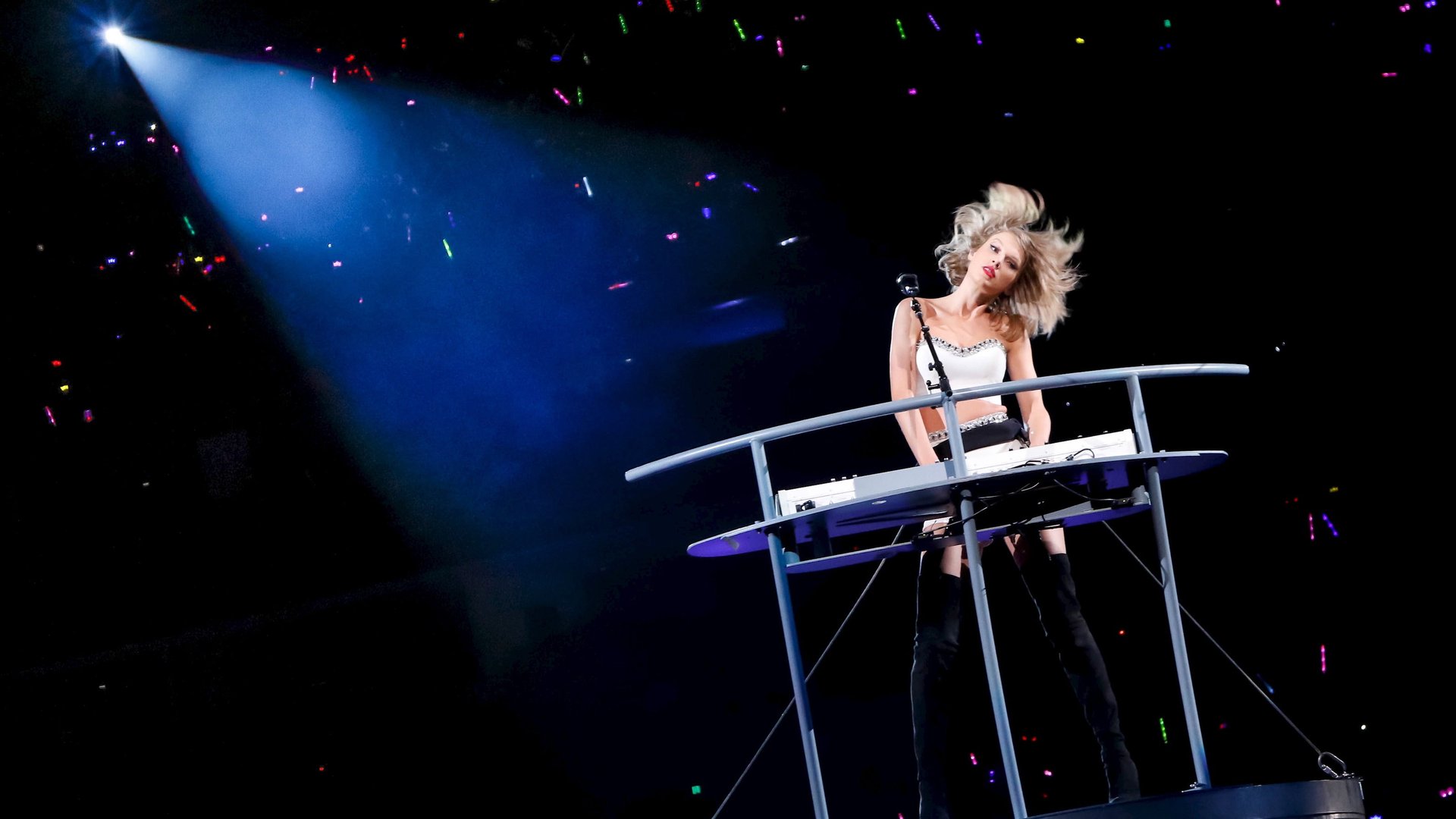
Pop princess Taylor Swift, according to new numbers from Forbes, took home a cool $170 million last year. The figure—which is more than double the $80 million the singer made the previous year—puts her as the highest-paid celebrity in the world right now, beating out actors, socialites, authors, fellow musicians, and more.

In the novel “The Godfather,” Mario Puzo writes: “The lawyer with the briefcase can steal more money than the man with the gun.” And it turns out to have a bit of truth to it. It seems even members of the mob get an income bump from higher education.

If budgets reflect values, the US has made its priorities quite clear.

Universities attract new applicants based on their reputations. What happens when those reputations take a beating?

Up till now, Hillary Clinton has dismissed Bernie Sanders’ plan for tuition-free college as expensive and unnecessary, going as far to quip that she doesn’t “think taxpayers should be paying to send Donald Trump’s kids to college.”

As nasty jibes go back and forth between Spotify and Apple Music, don’t forget about Google, which—in celebration of the July 4 weekend—is offering four whole months of ad-free music to new customers in the US for free.

Times of civility in music streaming are over. Open war has begun.

A lot of people have been struggling to explain the rage being felt around the world towards the “elites.” In the US, a new report might suggest why people are so angry in a world that should be experiencing much less turmoil as it recovers from the Great Recession.

Birthday wishes are in order today for Apple Music.

Calling out Apple Music for poor design is one thing. Asking whether its business model is fully legitimate is a much, much more serious criticism.