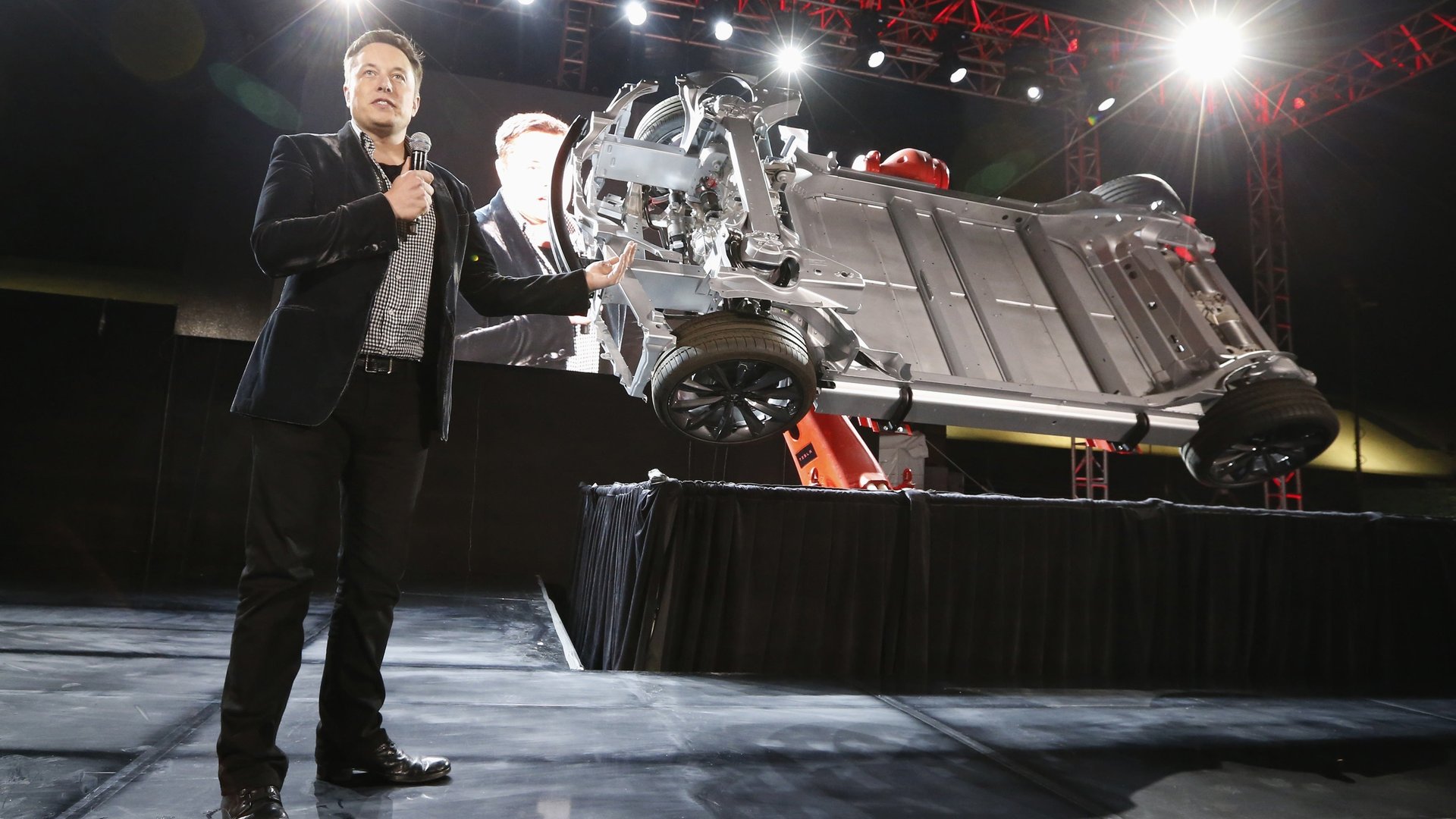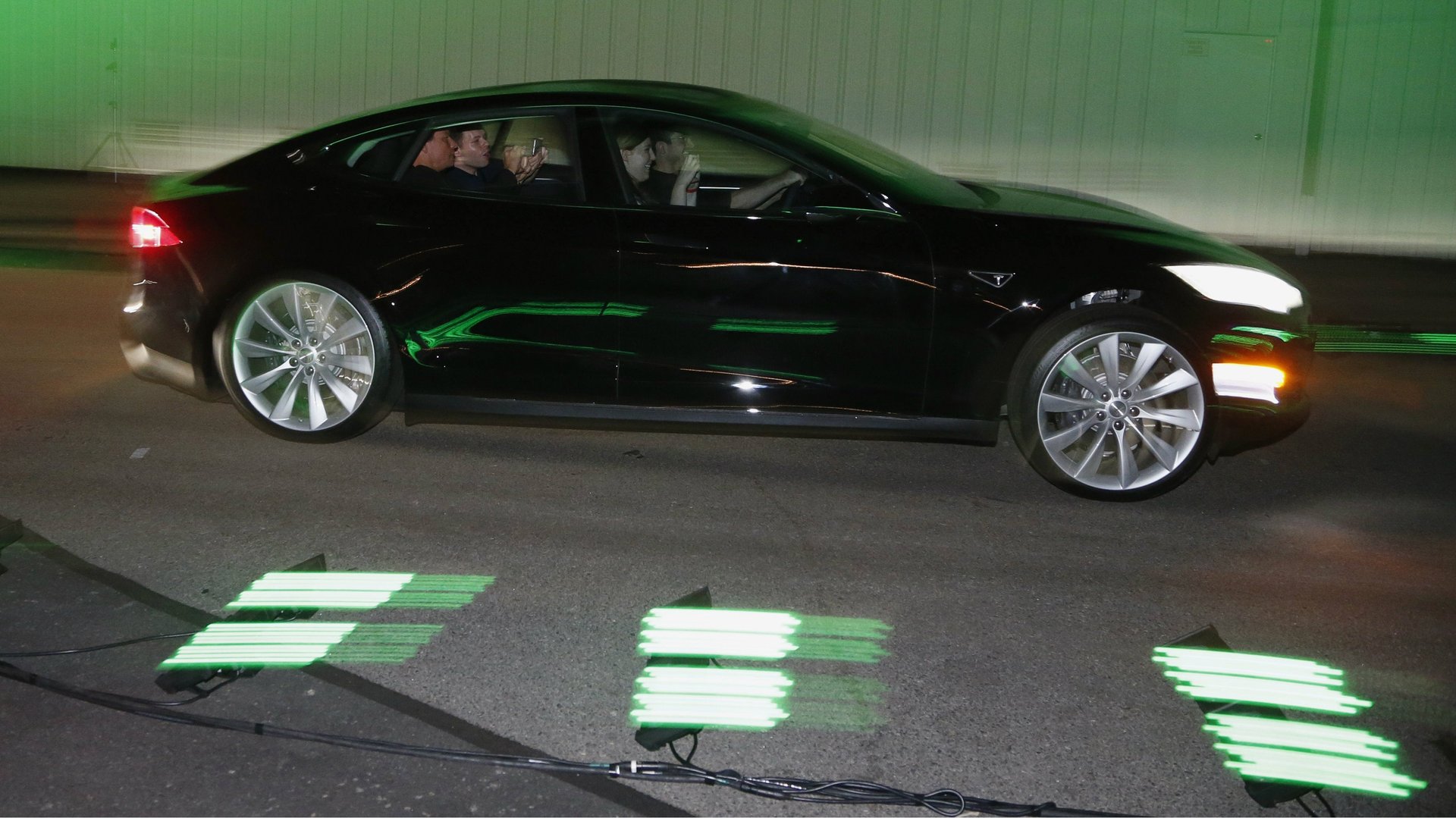
For a couple of years now, Elon Musk has done everything but get on his knees and beg rivals to produce cool, competitive electric cars. He even essentially open-sourced the technology underpinning Tesla, his own electric car company.

For a couple of years now, Elon Musk has done everything but get on his knees and beg rivals to produce cool, competitive electric cars. He even essentially open-sourced the technology underpinning Tesla, his own electric car company.

Oil prices have surged since dipping to the mid-$40s last month, with internationally traded Brent at $58 a barrel in Europe today. Many see this as evidence that the price plunge is over, and that OPEC has prevailed.

AUSTIN, TEXAS—The chances are you have never heard of—nor, until looking at this page, ever seen—John Bannister Goodenough. But you know his work. In fact, you almost certainly own some.

The Obama administration official in charge of sanctions on Iran, Russia, and ISIL, is leaving the US Treasury Department for the No. 2 job at the Central Intelligence Agency. And in an exit interview with the Wall Street Journal, David Cohen suggests his change in roles indicates the elevated importance that sanctions now hold in US foreign policy and national security issues.

Over the last couple of years, Wall Street analysts, energy experts, consultants, and journalists have fallen over one another creating new superlatives to describe the impact of the US shale boom. It was producing a “manufacturing renaissance” in the US, would “supercharge the US economy,” and was generating a veritable “shale gale.”

Years before Russian president Vladimir Putin was pilloried by the West for invading Ukraine, he was accused of complicity in the most sensational story of 2006—the hideous death of a KGB defector named Alexander Litvinenko in London.

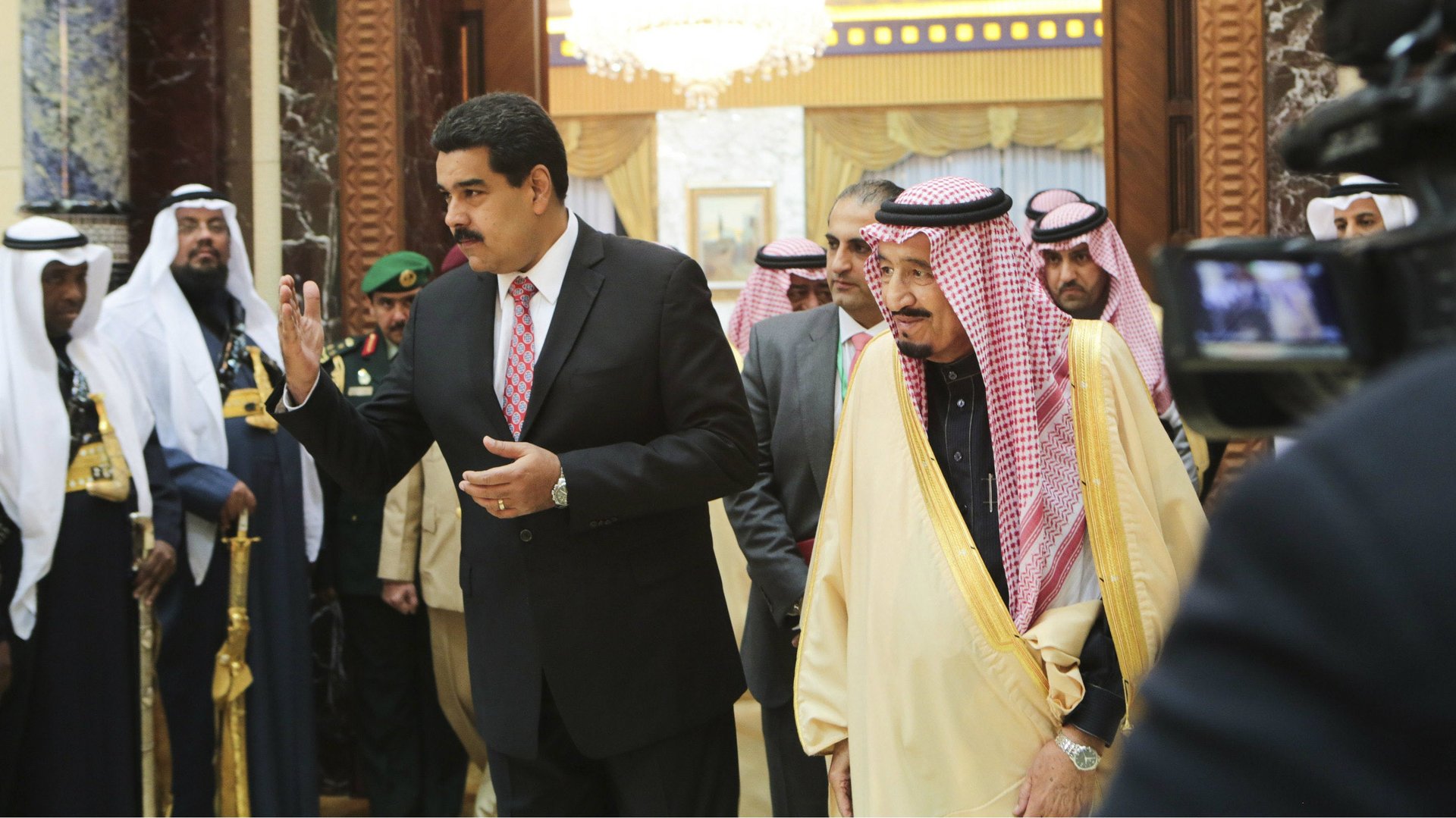
Succession to the throne was smooth in Saudi Arabia, still the most important oil-producing country on the planet. But beyond that, the ascent of crown prince Salman after the death of king Abdullah does not inspire confidence.

Guar, a gummy legume extract whose value is inextricably tied to shale drilling, has returned to its humble roots. From a peak of $11,135 a metric ton in 2012, the price of guar gum keeps plunging. It’s now down to $186, one-sixth the price in its El Dorado days, and back near pre-boom levels.

There’s an upside to dressing the first lady of Nigeria. And it’s not what you think.

Oil prices are surging today on a report that the suffering of oil-producing nations may be coming to an end. But the report—from the International Energy Agency—is more notable for what it says about US shale oil, which is that it will remain remarkably resilient against the breathtaking six-month plunge in oil prices.

While Moscow continues to be hammered by low oil prices and western-led sanctions, it is doubling down on hard-edged political and financial retribution: Russia is preparing to absorb a province of neighboring Georgia, and delivering an ultimatum to Europe that it could lose much of the Russian gas on which it relies.

After plunging below $50 per barrel, oil has just a few hours later pushed on without resistance and seems headed for the $30s, a price not seen since the doldrums of 2008.

The world looks more unruly than in recent memory: oil prices are in free fall, and stock markets are gyrating; brutal rebel armies have created broad swaths of mayhem—in eastern Ukraine, northern Nigeria, Democratic Republic of Congo, Somalia, Afghanistan, Iraq, and Syria; the US is disinterested in taking charge, and no recognized figure has stepped in to take its place.

This story has been updated with a photograph of the GM Bolt, released today.

General Motors will on Monday unveil a long-awaited electric car with a 200-mile range per charge and roughly $30,000 pricetag, creating an inflection point in which electrics appear likely to shift into the mass market.

The price of Brent crude oil briefly dipped below the psychologically important $50-per-barrel mark in early trading today, extending its recent rout. And for any suffering oil-producing countries that are hoping that China’s energy-intensive economy might provide some relief: don’t hold your breath.

HALIFAX, Canada—In 2007, Sandy MacMullin was sitting across from his boss, a deputy minister in Nova Scotia, on Canada’s east coast. They had struck a windfall—enough natural gas royalties to pay $500 to every man, woman and child in the province, with cash to spare.

Oil started the first full week of 2015 by plunging through its third price threshold in a little over a month. The US-traded benchmark, known as WTI, punched through $50 a barrel–half the $100 price sold at which it sold in September.

It’s time to take stock of our geopolitical predictions for 2014, which we published a year ago. We got enough things right; but, like many others who play the prognostication game, we were blindsided by a year that seemed more unpredictable than any other in recent decades.

You can count on two things in the new year: oil prices will occasionally rise—as they have today. And one million barrels per day of new supply will join the already gushing global surplus, guaranteeing that prices also will dive, as they did last week and generally have been doing since June.

One of the most dramatic economic shifts currently taking place in the world is in the oil-producing countries of the Persian Gulf—until recently swimming in excess cash but now, as oil plummets, turning to a chronic trade deficit. Their misery, however, is to Europe’s benefit. Because of those lower oil prices, there is a very real possibility that the European Union will become the world’s largest surplus economy next year.

Is oil’s long and deep plunge over, now that prices have bounced back a bit? Probably not—the trend line suggests that the bloodletting has only paused. But even if the decline has already run its course, many US shale drillers will be ok if oil stays around $60 a barrel or less—even if their cost structures seem right now to imply a higher break-even point.

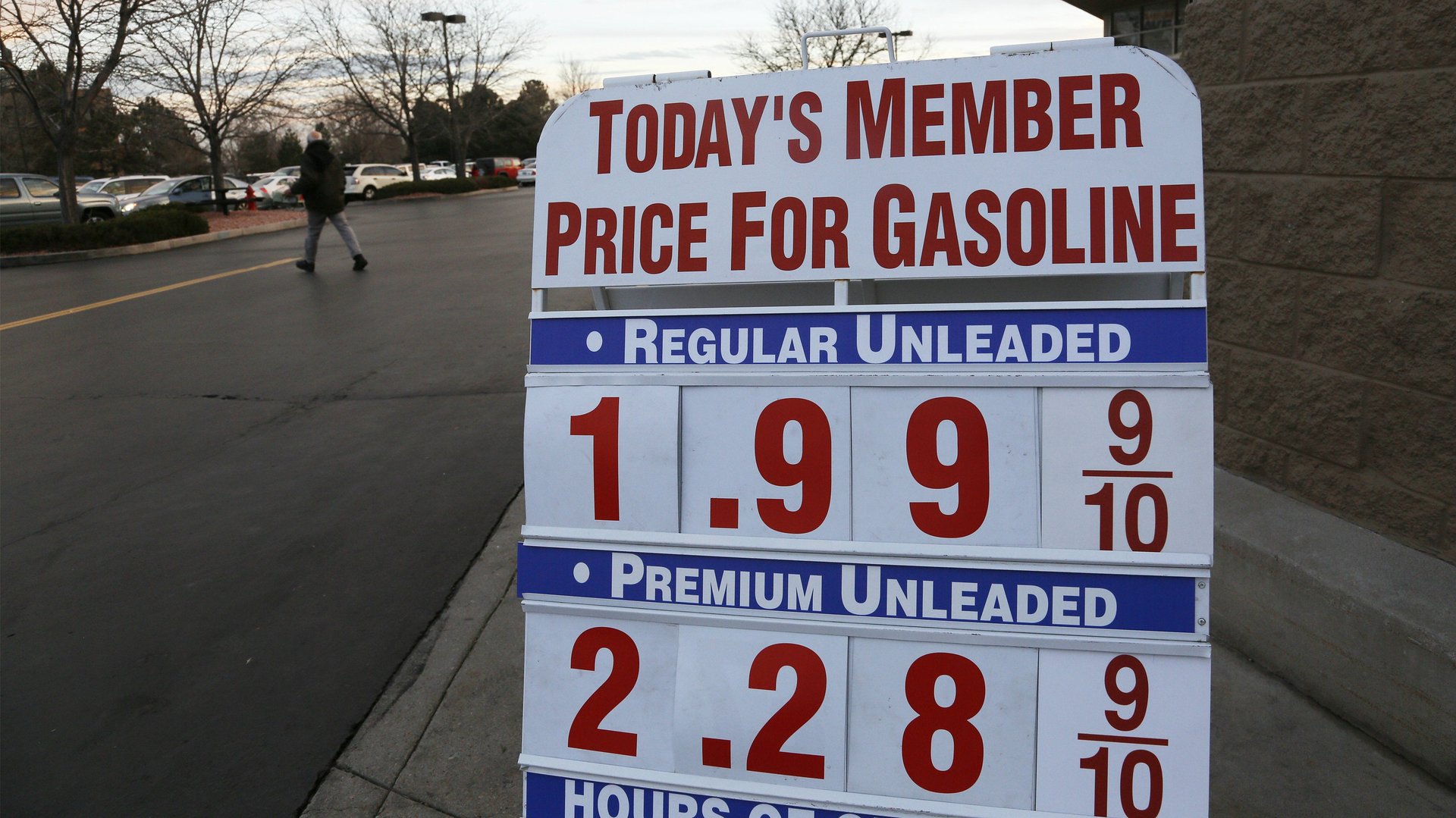
One thing confounding the much-delayed electric car revolution is that its antagonist—the gasoline engine—is a moving target. Under dogged pressure from electric competitors and government emissions standards, the combustion engine keeps becoming more efficient, making it harder for electrics to compete on price. In its 2040 outlook last week, ExxonMobil—admittedly not a company that is predisposed to be bullish on electric vehicles—cast doubt on whether electrics will make much headway for the next quarter century.

Here’s how bearish the oil market is: Libya—where rising production has been one of the main reasons for the six-month price plunge—declared force majeure at two major oil ports, taking some 300,000 barrels a day off the market, yet crude prices plunged to a new low in early trading today. The price of international benchmark Brent crude has since recovered a bit, but the dive shows the market’s chronic dark mood.