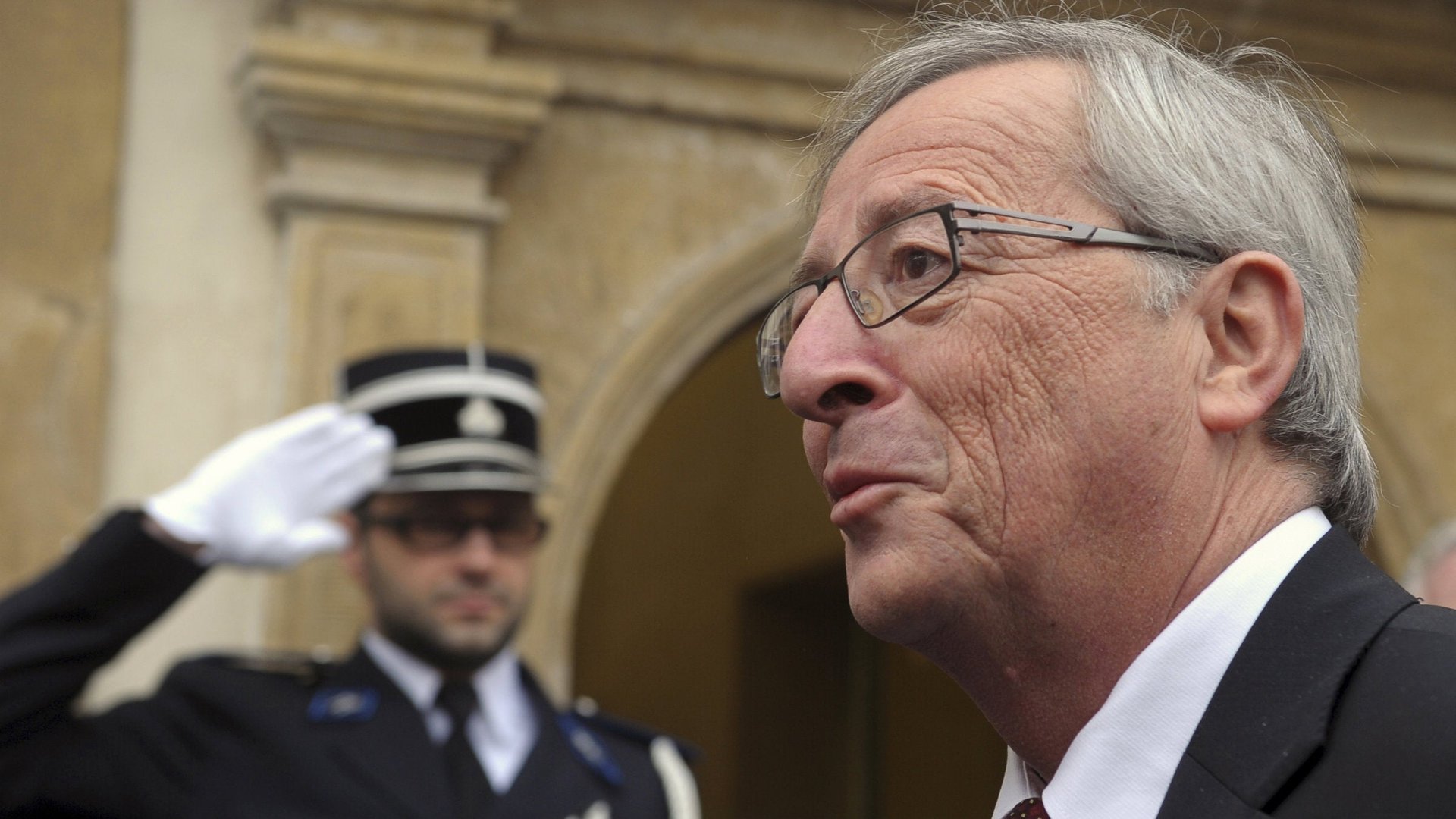
Jean-Claude Juncker was the prime minister of Luxembourg for more than 18 years. He officially stepped down on Dec. 4, unseated by a three-party coalition that won a narrow majority of seats in October elections.

Jean-Claude Juncker was the prime minister of Luxembourg for more than 18 years. He officially stepped down on Dec. 4, unseated by a three-party coalition that won a narrow majority of seats in October elections.

The European Commission broke its previous record for a penalty against a cartel by fining a group of eight banks and brokers €1.7 billion ($2.3 billion) today. It is the latest in a series of settlements over the rigging of various benchmark interest rates—in this case, euro- and yen-denominated interbank rates.

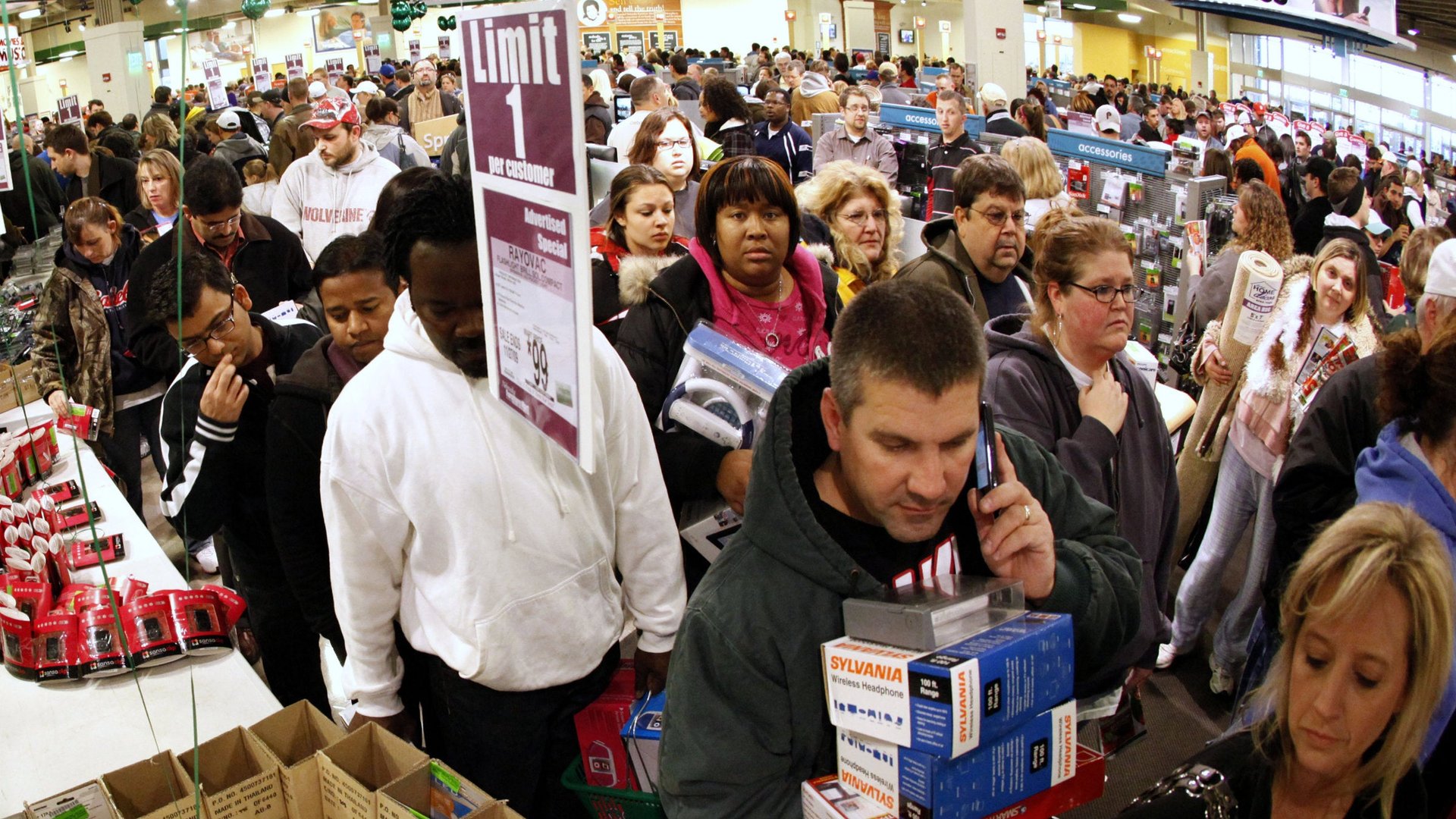
In America, retailers are fretting about one of the shortest Christmas shopping seasons in recent history—there are six fewer days between Thanksgiving and Christmas this year than last. Given the fanfare around the holiday shopping season in the US, you could be forgiven for thinking that the weeks leading up to Christmas are a matter of life or death for retailers in the country.

If you follow market watchers on Twitter or read Barron’s, El Mundo and any number of stock traders’ blogs, you’ve probably seen this chart in recent days:

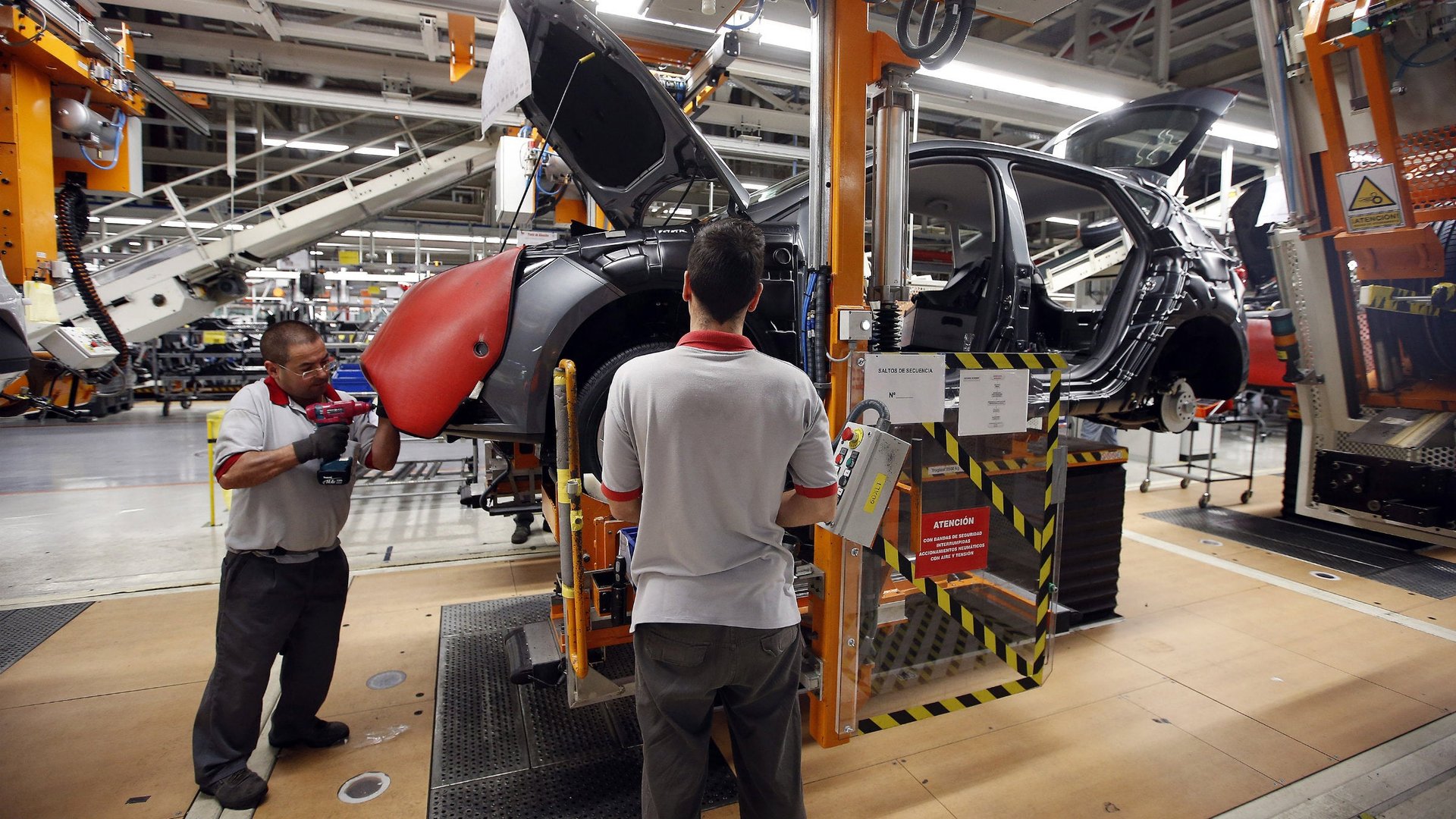
The latest poll of manufacturing purchasing managers—a key leading indicator of economic growth—in the euro zone was the strongest in more than two years (pdf). The index, at 51.6 for November, implies that the bloc’s factories are humming along at a decent clip—a quarterly rate of growth of around 0.6% for the current quarter, according to Markit, the research company that administers the survey. A reading above 50 suggests output is growing, and the index has been above this level for five months in a row.

Standard & Poor’s stripped the Netherlands of its AAA credit rating today. This ignominy means that the Dutch, now rated merely AA+, are considered less creditworthy than the Germans, on a par instead with the Americans.

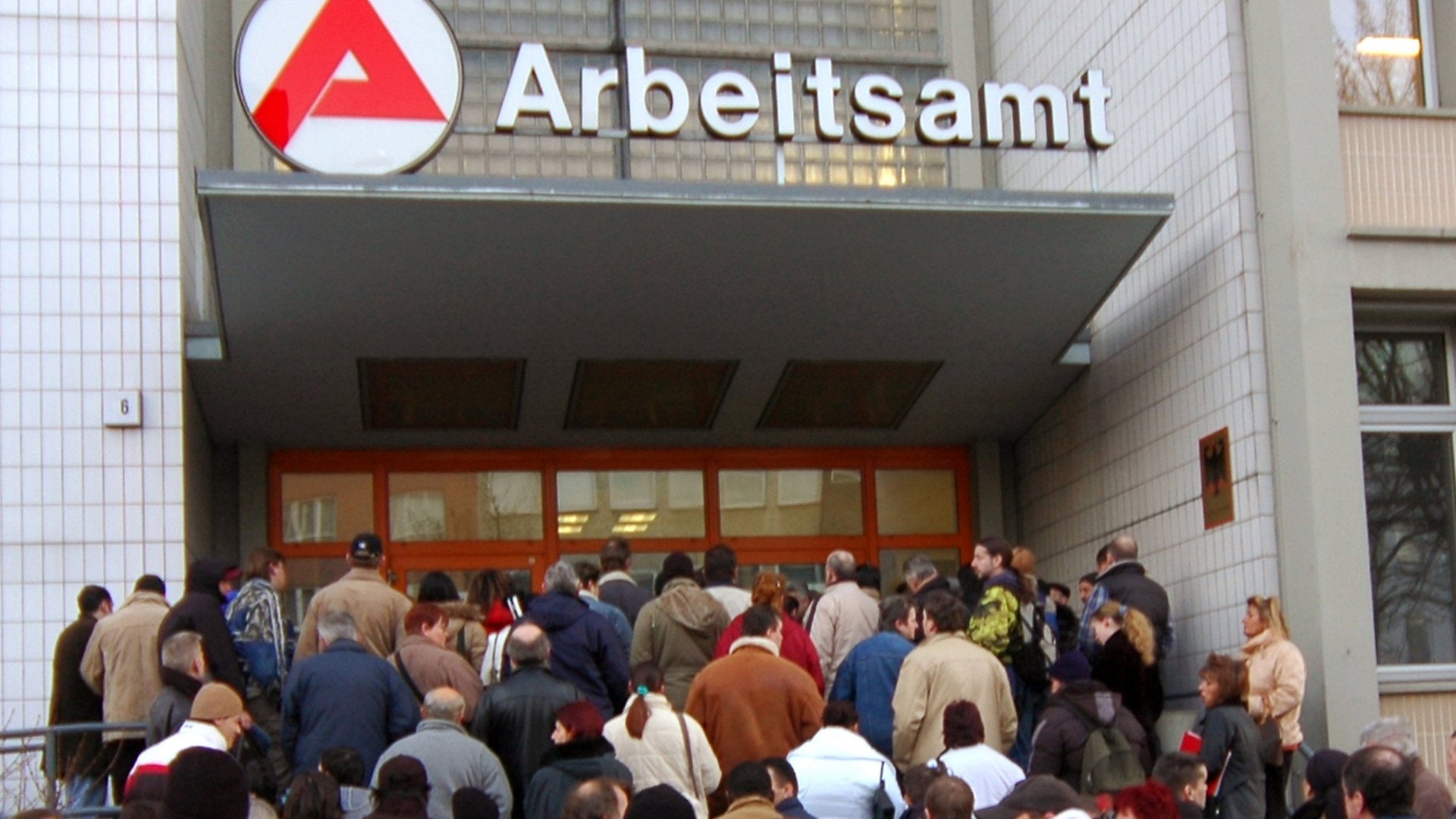
For those pinning their hopes on a strong German economy to pull the euro zone out of its malaise, some bad news: Germany’s job market is in a bit of a slump.

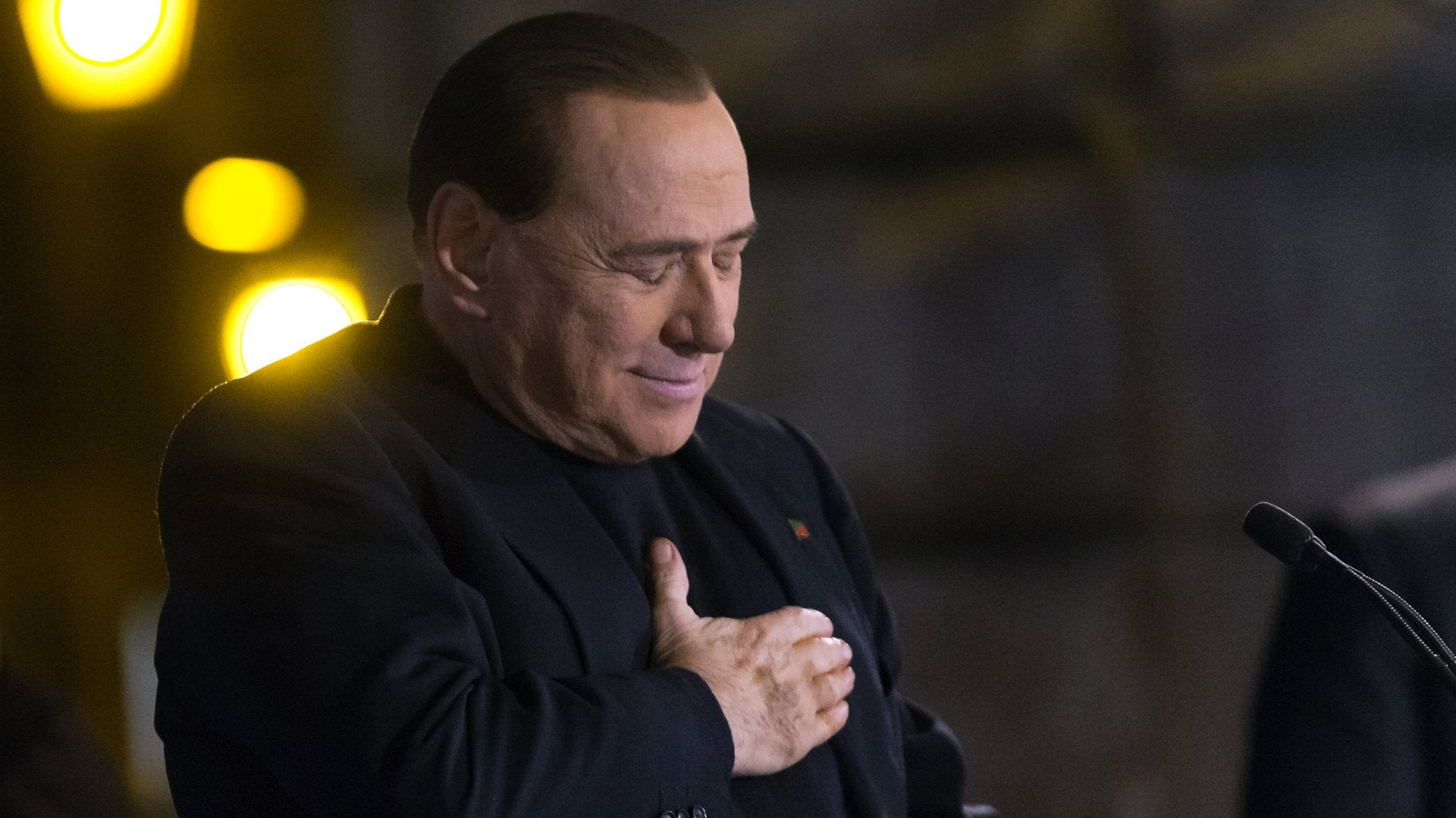
After 19 years in parliament and nine years as prime minister, it looks like the end of the road for Silvio Berlusconi. Today Italy’s Senate voted to expel the 77-year-old billionaire due to his conviction of tax fraud last year. At a rally with supporters, the former prime minister, with typical bluster, called it “a day of mourning for democracy.”

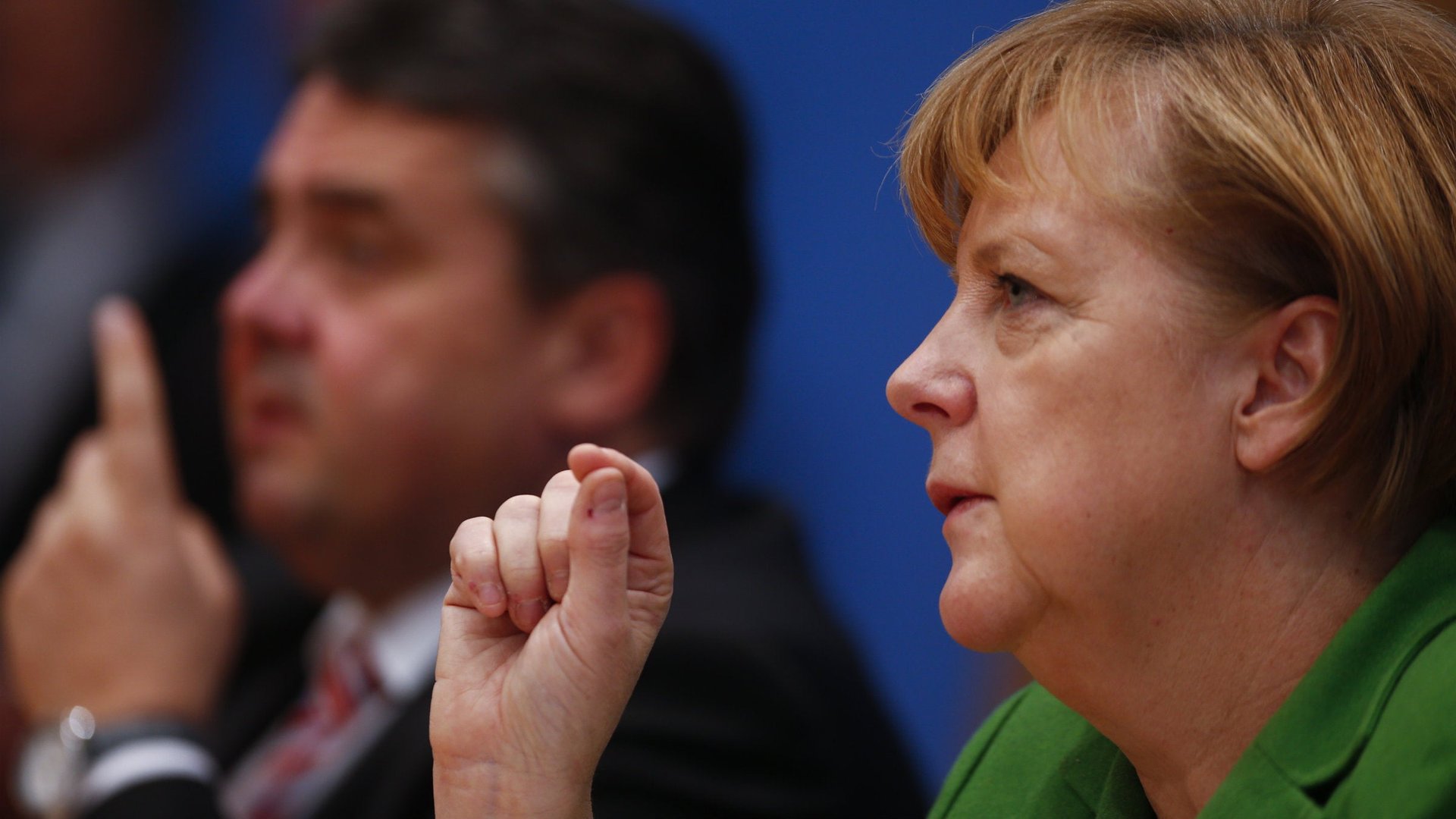
After an all-night bargaining session, early this morning Germany’s two largest political parties announced a provisional deal to form a coalition government. This comes two months after Angela Merkel’s Christian Democrats recorded a resounding victory in the federal election, but fell just short of enough seats to govern alone. Now they will form a “grand coalition” with the left-leaning Social Democrats, as in Merkel’s term as chancellor in 2005-09.

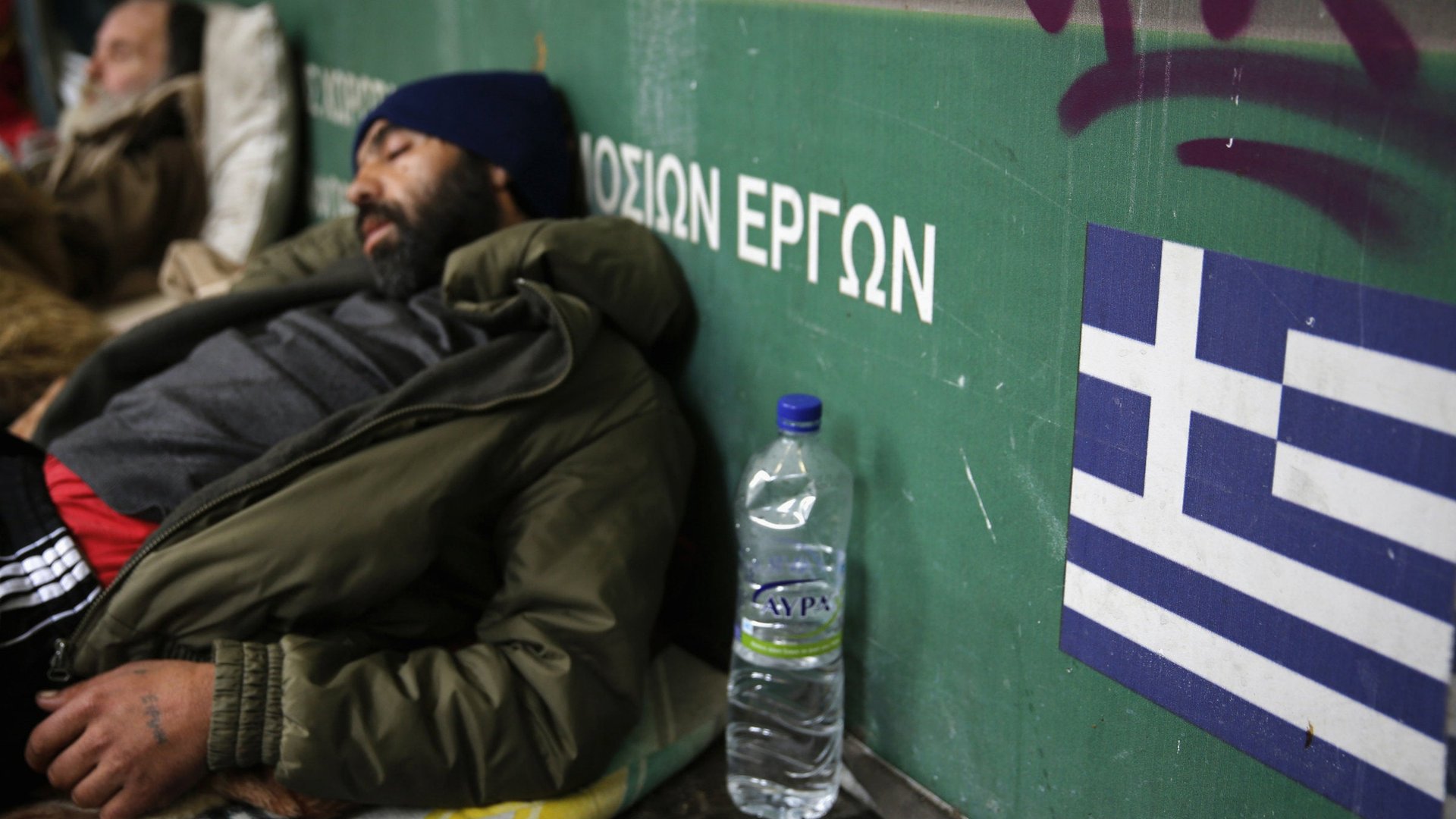
No, hundreds of Greeks aren’t giving themselves HIV to claim government benefits. This claim made for plenty of eye-catching headlines yesterday and today, but it was soon debunked by cursory internet research.

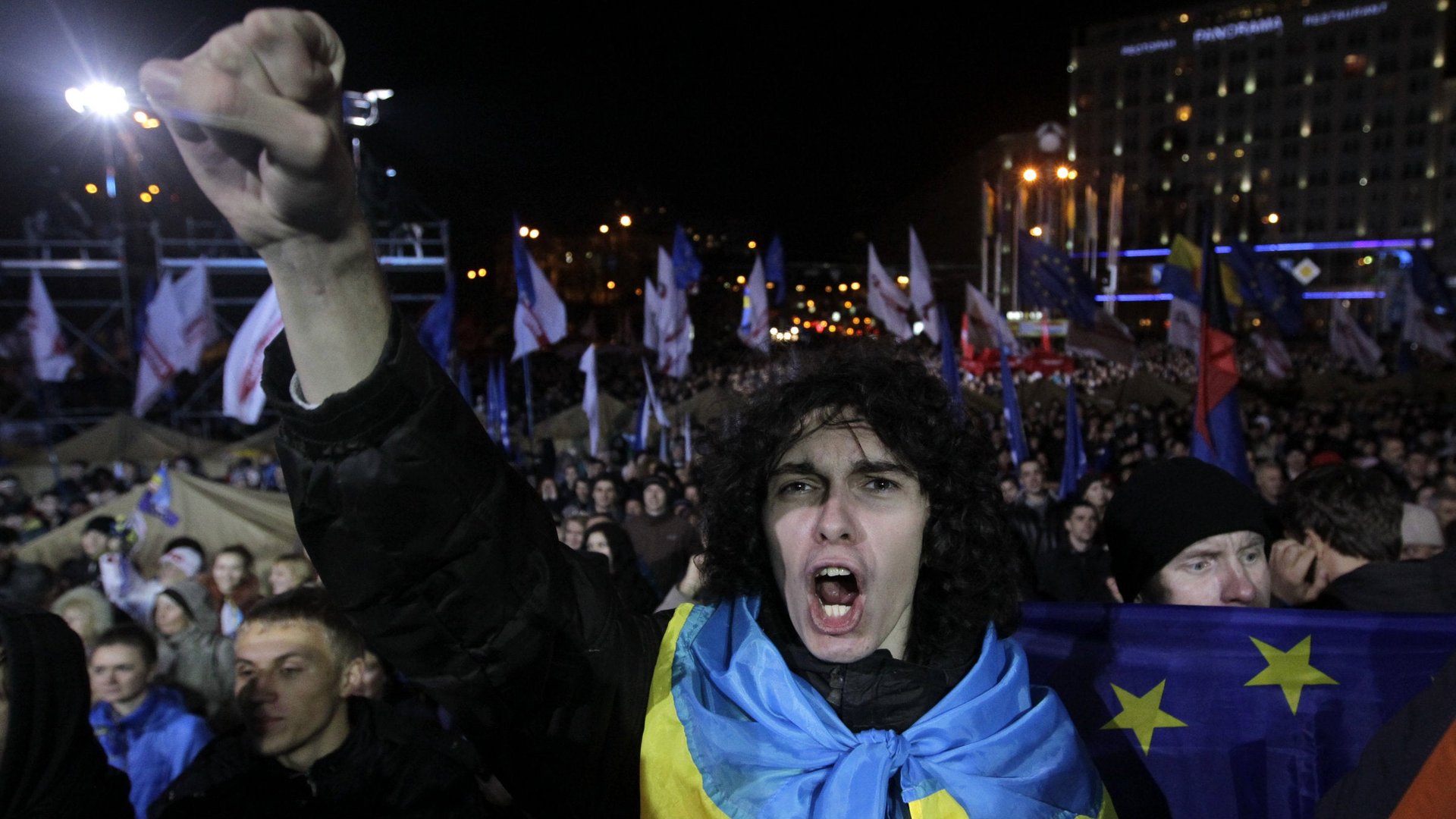
Where does Europe end? Geographically, this is an easy question to answer. Geopolitically, not so much.

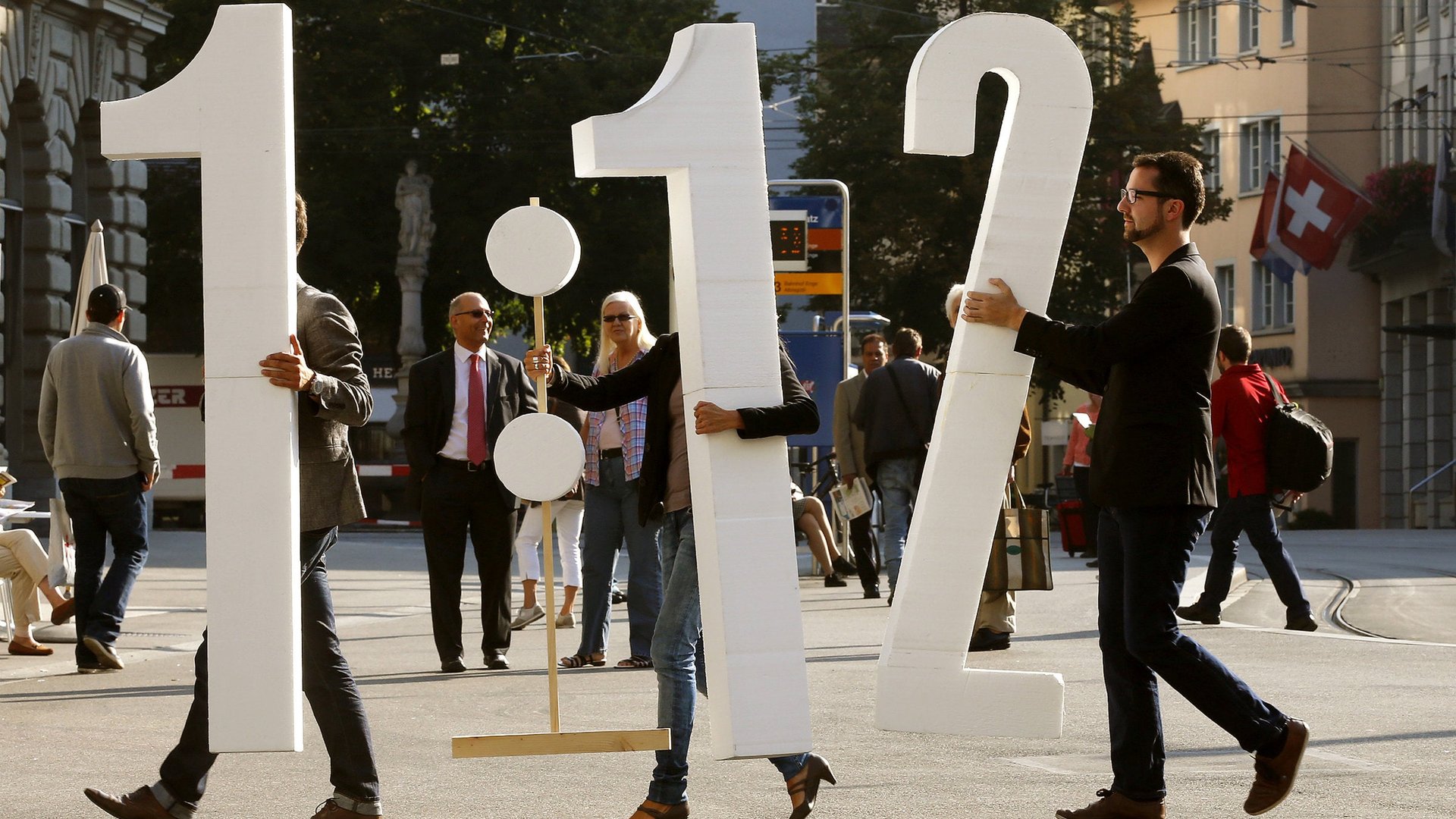
Swiss voters yesterday rejected a proposal to cap the pay of top executives to no more than 12 times that of the lowest-paid workers. And they did so resoundingly: around two-thirds of voters opposed the measure in a referendum, with a relatively high turnout of more than 50% of the electorate.

Retirement is a rather abstract concept to a 20-year-old. In an international survey of twenty-somethings by insurer Aegon, only a quarter of young people polled said they always made sure to save for retirement.

Live sports is one of the few remaining ways for broadcasters to guarantee a large, captive audience, and they’re willing to pay big money to secure the rights to air popular games.

Bankers don’t usually get much sympathy after the financial crisis and subsequent series of scandals. But bankers are people too. And the human toll on financiers called in to clean up the mess is particularly acute.

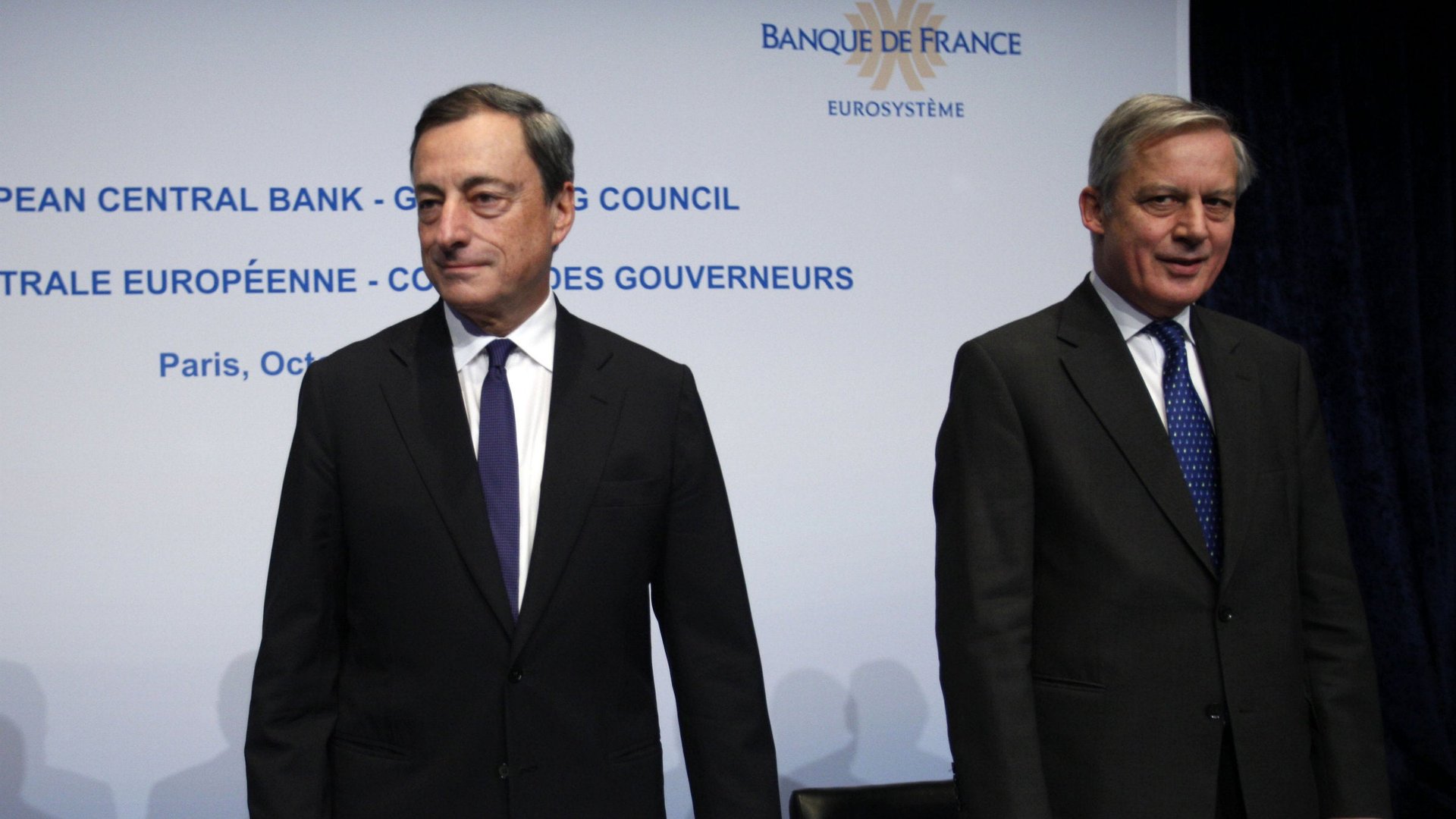
There are few fights less dramatic than one launched over the drab subject of macroeconomic policy. But even if the latest infighting and backbiting between rival camps at the European Central Bank isn’t all that thrilling, it is significant.

The listing of theme park operator Merlin Entertainments in London was hardly the biggest IPO news this week. The group that runs Legoland, Madame Tussauds, the London Eye and other theme parks raised £957 million ($1.5 billion) in an IPO on Nov. 8, valuing the company at £3.2 billion. Its shares rose by around 10% on the first day of trading.

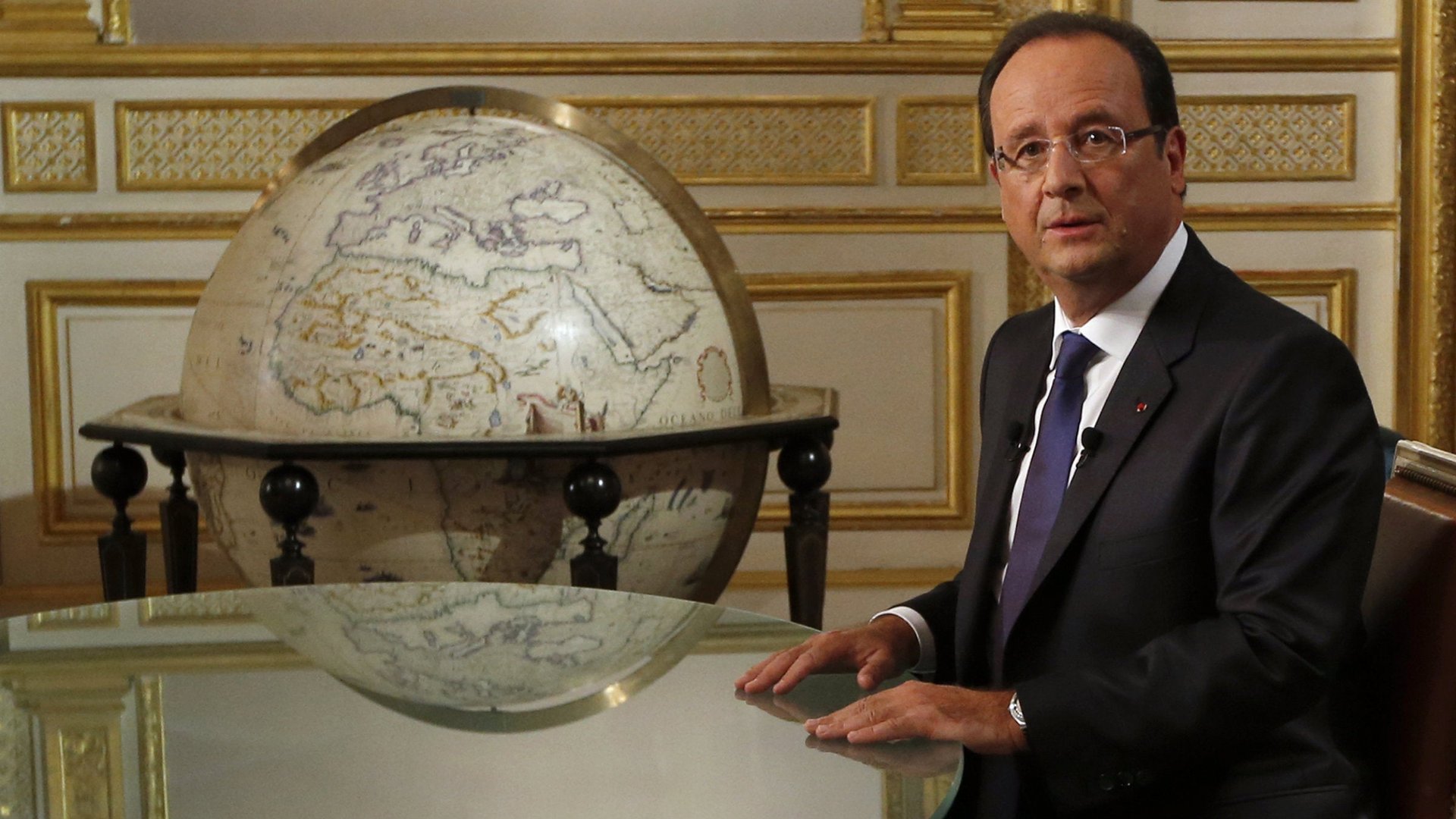
Standard & Poor’s cut France’s credit rating by one notch, to AA from AA+. Of course, government officials immediately labeled the downgrade “inaccurate,” as finance minister Pierre Moscovici said today.

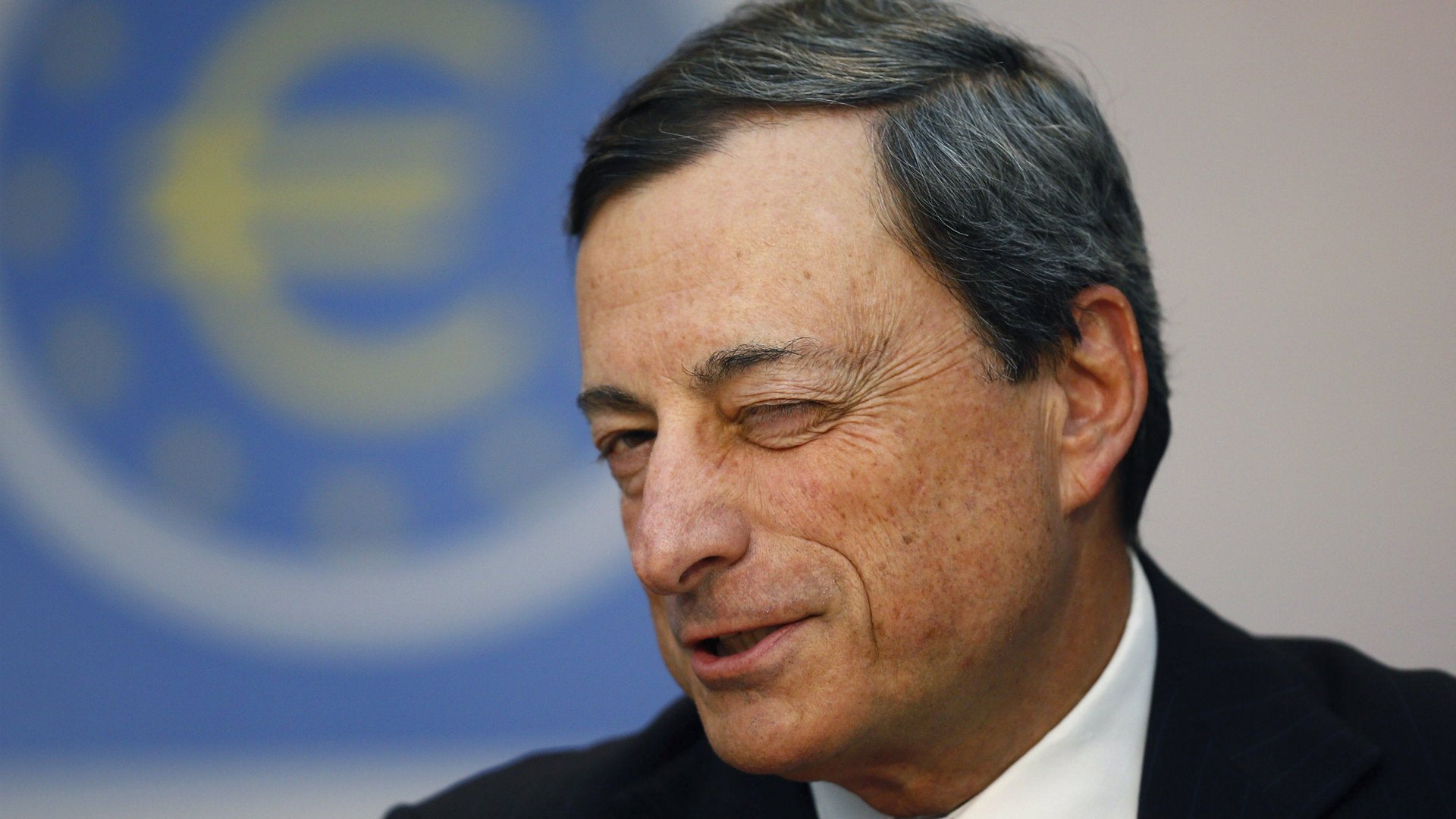
Ben Bernanke is doing it. Mario Draghi and Mark Carney are doing it, too—as are most of the world’s most powerful central bankers.

The European Commission’s latest economic forecast is sobering reading for anyone who thinks the euro-zone economy is turning the corner. The commission has steadily trimmed its forecasts for GDP growth (see chart above); two years ago, it thought the 17 countries of the euro area would collectively grow by more than 1% this year, but over time it has brought this down to a 0.4% decline. The outlook for 2014 is better, but this too has been cut in successive editions of the commission’s semi-annual forecasts.

The body is a complex and mysterious machine. This is not lost on pharmaceutical firms, which sometimes stumble onto winning drugs when the unanticipated side-effects of a new medicine prove more useful—or lucrative—than its original aim.

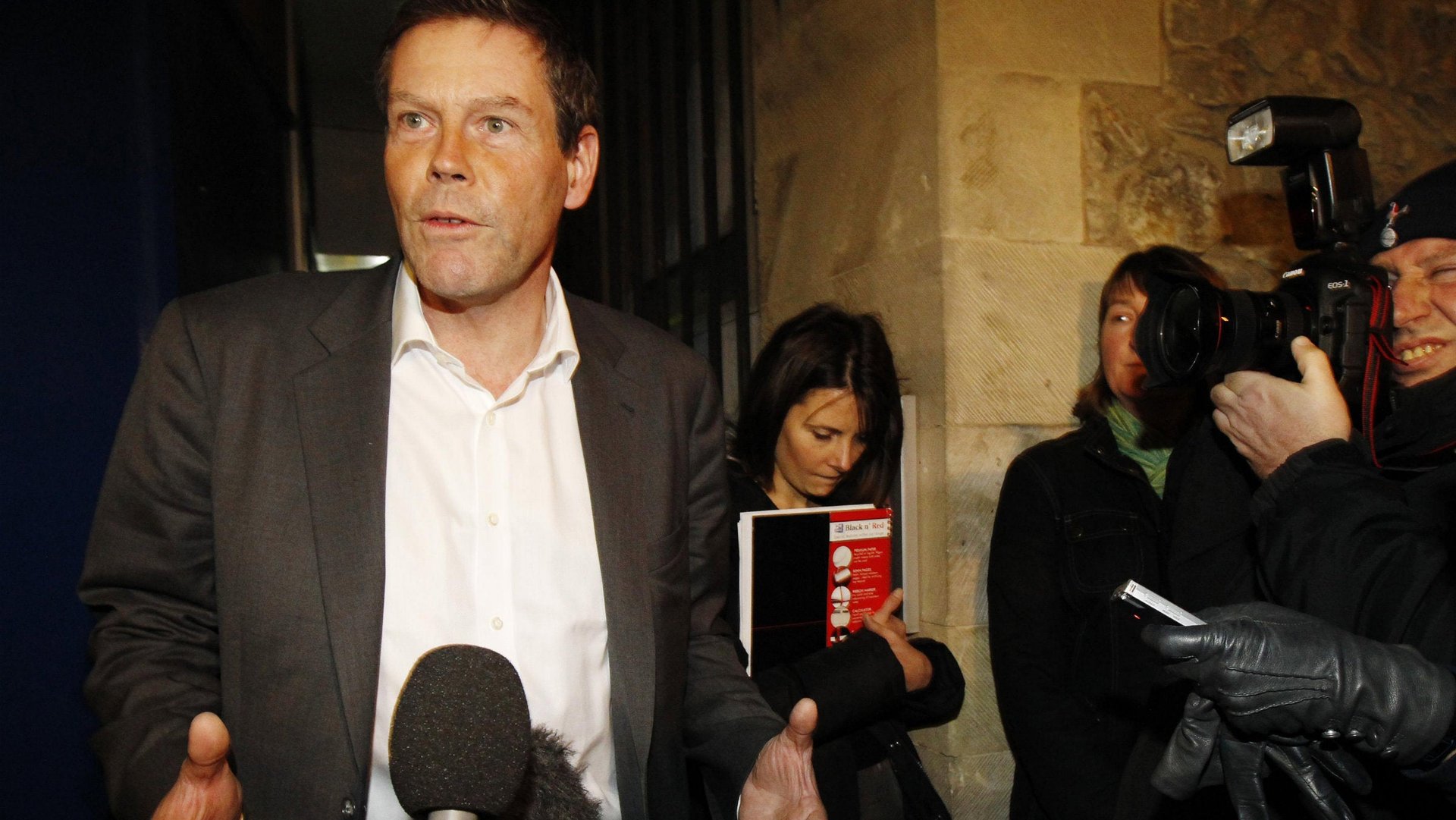
The August suicide of Pierre Wauthier, the CFO of Zurich Insurance Group, rocked the staid Swiss insurer. Yesterday, Zurich released a terse statement on its investigations into Wauthier’s death. Overseen by Swiss authorities, the company found no evidence of “undue or inappropriate pressure” placed on the CFO, nor any management failings or financial irregularities at the firm. “We are still deeply saddened by the loss of Pierre Wauthier and we are unable to explain the motivation behind his tragic decision,” said Zurich chairman Tom de Swaan.

What happens to a no-frills airline when it’s forced to add frills? We are about to find out, after Ryanair today announced its second profit warning in as many months.

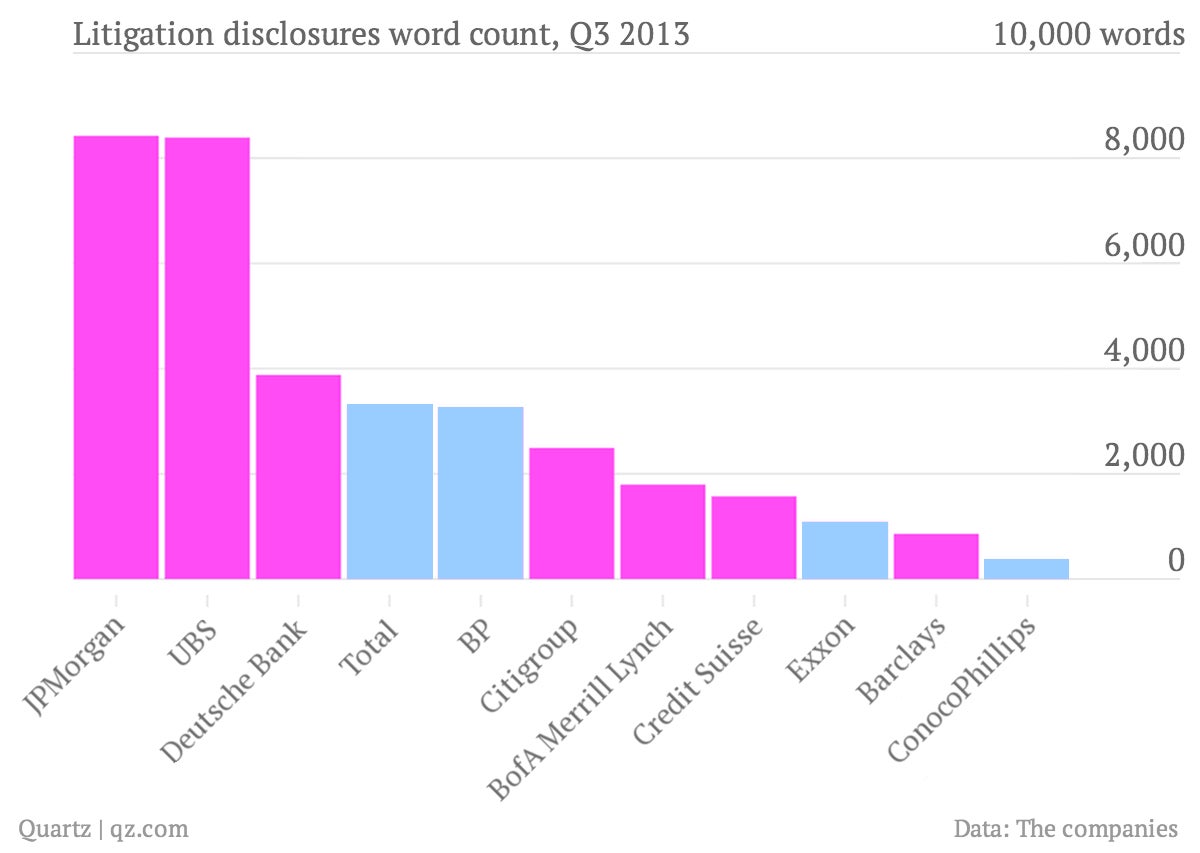
Subprime mortgages generate more ire than subsea oil spills, according to one rough measure of large companies’ legal woes.