The IMF tries to put it nicely in its latest update (pdf) on the state of Spain’s financial health, but the truth is that the Spanish economy looks awful today.

The IMF tries to put it nicely in its latest update (pdf) on the state of Spain’s financial health, but the truth is that the Spanish economy looks awful today.

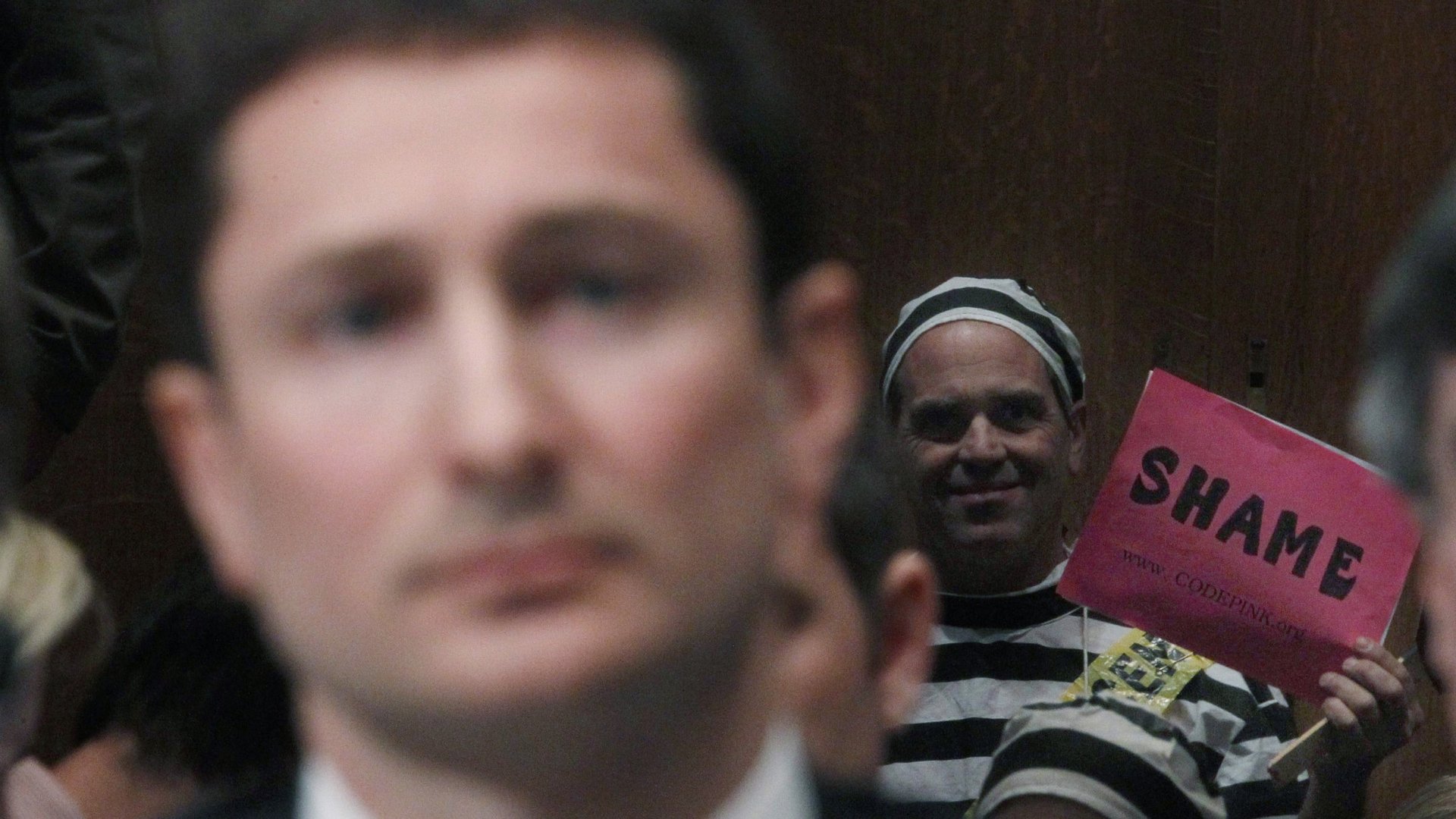
Shortly after Mary Jo White took the helm of the US Securities and Exchange Commission (SEC) earlier this year, she vowed to usher in a new era at the agency, forcing more financial wrongdoers to admit to guilt (paywall). Today, at the very least, she was vindicated. A court found Fabrice Tourre, a former investment banker for Goldman Sachs, liable for defrauding investors after a civil trial. In fact, it found him liable for six of the seven counts the SEC had filed against him.

Europe is finally showing inklings of recovery after a painful six years. Data on manufacturing and services suggest that the euro area may report positive GDP growth next quarter. Banks, meanwhile, are slightly more open to lending to small businesses, which are seeing slightly lower interest rates on their loans. And after two years of rising, the aggregate euro zone unemployment rate finally fell in May.

Standard & Poor’s might be back at it again, at least if we’re to trust an analysis from Commercial Mortgage Alert and the New York Times. Apparently, it’s been giving higher ratings to certain mortgage-backed securities than have rival credit ratings agencies Moody’s and Fitch.

We’re more than halfway through the second-quarter corporate earnings season. And while the results for US companies show corporate growth, it’s been slower than normal—even the last few years’ normal. For the last four years, the “surprise percentage” of the S&P 500—the percentage by which all companies beat analyst expectations this quarter—has been 7.0% at the end of earnings season. Right now, it’s at a measly 2.3%. By this measure at least, that makes this one of the softest earnings seasons since 2008.

There’s finally some relief for euro-area small businesses—but it’s paltry at best.

Today, Barclays announced that it was raising £5.8 billion ($8.9 billion) in new money by issuing common stock. That equity will help fill a £12.8 billion capital hole created by new regulations that force UK banks to hold more equity against their total assets. It will also issue some £2 billion in contingent capital, which would turn into shares if its stock price fall below a certain level.

Five years after the financial crisis, some economists and politicians are heralding an end to the euro zone’s economic doom. Based on a handful of recently published economic indicators, they predict the region could return to positive economic growth as early as this quarter.

Wild weather has already taken an $85 billion toll on the world so far in 2013. Believe it or not, that’s actually a pretty typical sum for the first six months of the year. In fact, the tally of expensive disasters—that includes flooding in central Europe ($22 billion), a 6.6-magnitude earthquake in China’s Sichuan Province ($14 billion), tornadoes and other severe weather in the US ($4.5 billion from May 18-22 alone), and droughts in Brazil ($8.3 billion), China ($4.2 billion), and New Zealand ($1.6 billion)—is actually 15% lower than the 10-year average.

At the height of the global financial crisis, Barclays narrowly avoided taking bailout money like many of the UK’s other largest banks. It issued new stock to the private sector multiple times in 2008, but then in January 2009 executives penned a letter promising, “we are not seeking subscription for further capital, either from the private sector or the U.K. government.” (New issues—whether to the private or public sector—dilute the value of individual shares.)

A year ago today, European Central Bank president Mario Draghi made a market-moving promise: “Within our mandate, the ECB is ready to do whatever it takes to preserve the euro. And believe me, it will be enough,” he said in a speech in London.

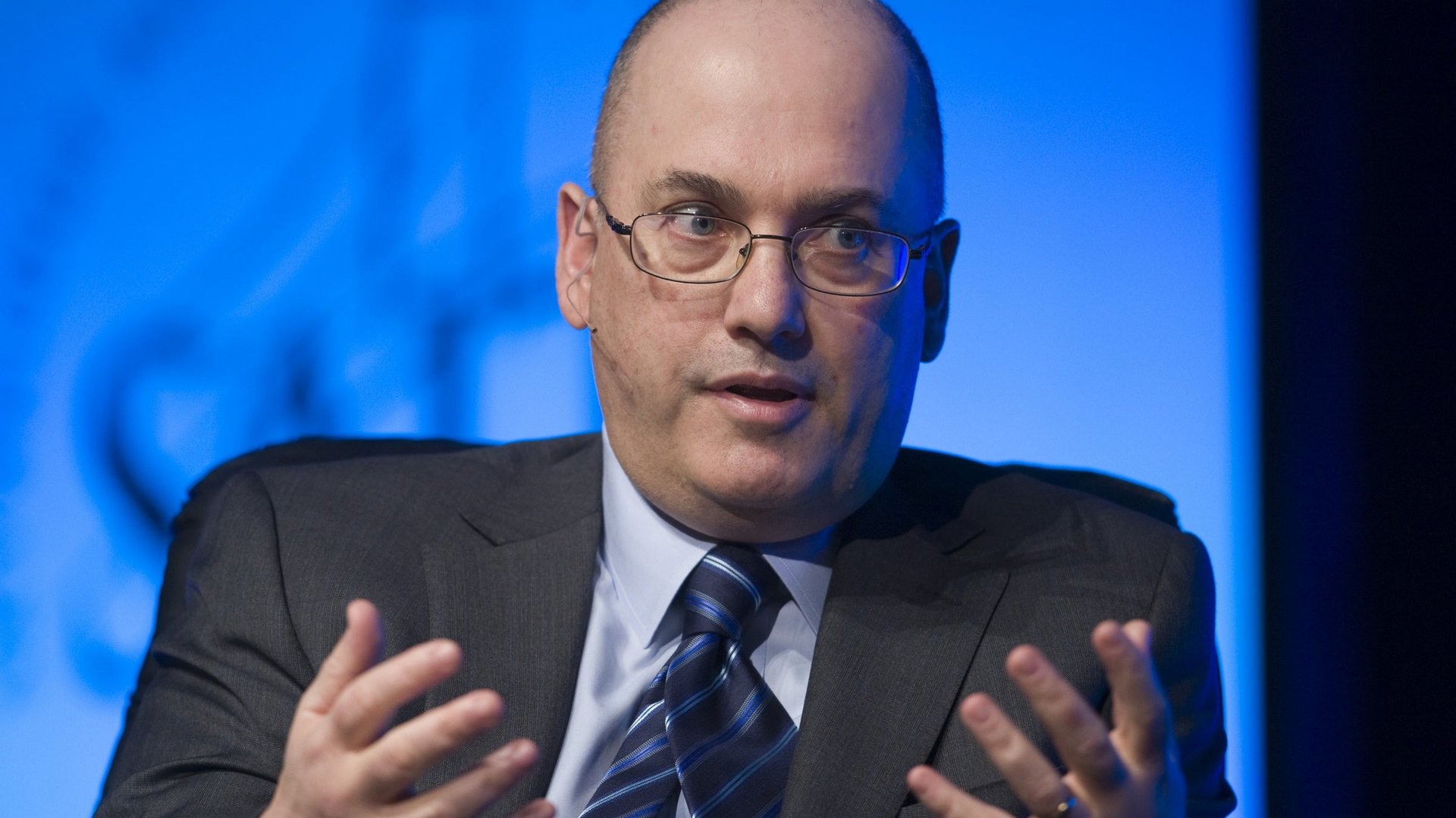
A federal grand jury in New York has issued an indictment (pdf) against SAC Capital, meaning that the firm–though not CEO Steve Cohen himself–will face criminal charges over practices that allegedly encouraged insider trading.

Wells Fargo has stolen the title (paywall) of world’s largest bank by market capitalization from the Industrial & Commercial Bank of China (ICBC). Wells now wields a market capitalization of $236 billion. But the bank’s gains aren’t limited to size alone; the bank has emerged from the financial crisis a powerhouse, without even getting up on its soapbox.

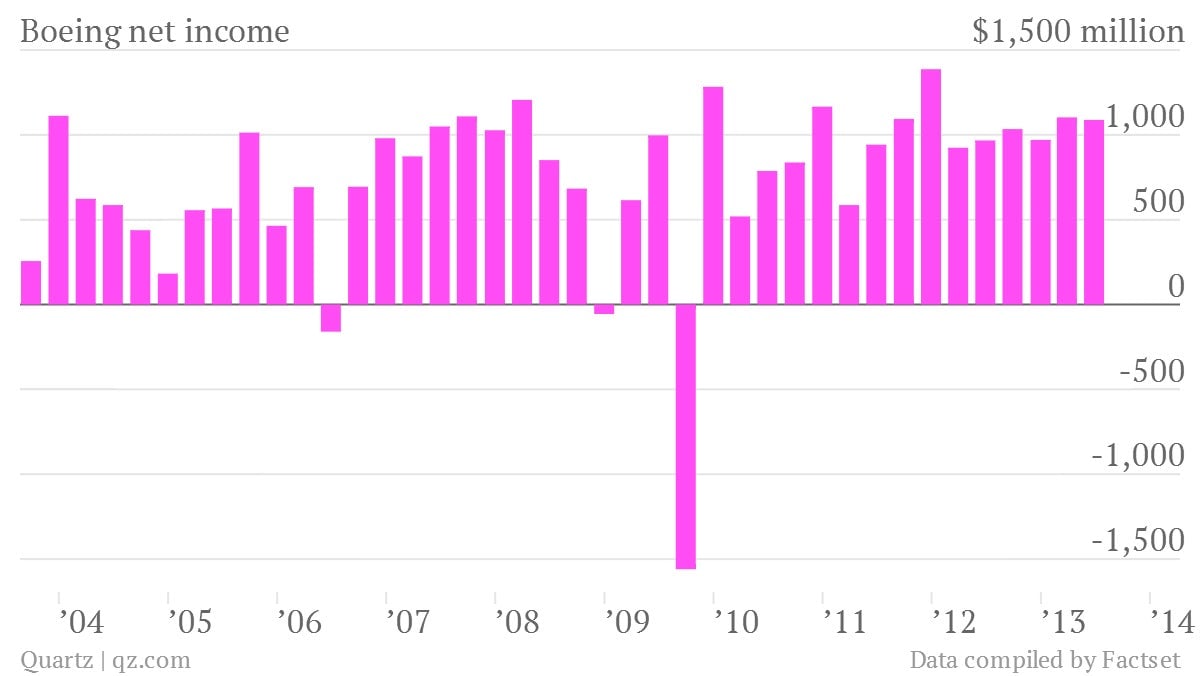
The numbers: Boeing exceeded Wall Street’s expectations by about $0.10, reporting earnings of $1.67 per share. Revenue in the second quarter was 9% higher than it was a year ago, and profits (net income) rose by 13%.

Last week, the US Securities and Exchange Commission (SEC) accused hedge funder Steve Cohen, the founder of SAC Capital, of failing to properly supervise his employees who engaged in insider trading. Today, Cohen’s lawyers refuted the civil charges with a 46-page white paper. This passage caught our eye (emphasis added):

The world is enjoying a decline in global piracy. By mid-last year, there were 177 attacks or attempted attacks on commercial vessels; this year there have been 138.

It’s been a volatile few weeks for yields on Portuguese 10-year bonds (essentially the interest rate the Portuguese government would have to pay if it borrowed money for 10 years). Today, they plunged dramatically, hitting 6.5%, from 6.99% on July 19. That’s after nearing 8% on July 3, and again on July 12.

The longrunning insider trading investigation of Stephen A. Cohen and his hedge fund, SAC Capital, has finally come to a head.

All the major Wall Street investment firms have reported earnings, and now it’s time to decide who deserves the bragging rights. Although not all of the big investment banks that report stats on trading do it exactly the same way, we can more or less figure out which of the big five Wall Street investment banks (the sixth, Wells Fargo, doesn’t break down trading revenue) did the best last quarter. In this case, we’re only concerned with the total, unadjusted revenues from the banks’ fixed income, commodities, and currency execution (FICC) and equities trading teams.

An innocuous high rise in downtown Los Angeles, California, just sold for a record $437.5 million. That’s 2.5 times the price per square foot of comparable buildings in the area, which might seem surprising, given that there’s nothing special about the building itself. But there is something special about its tenants.

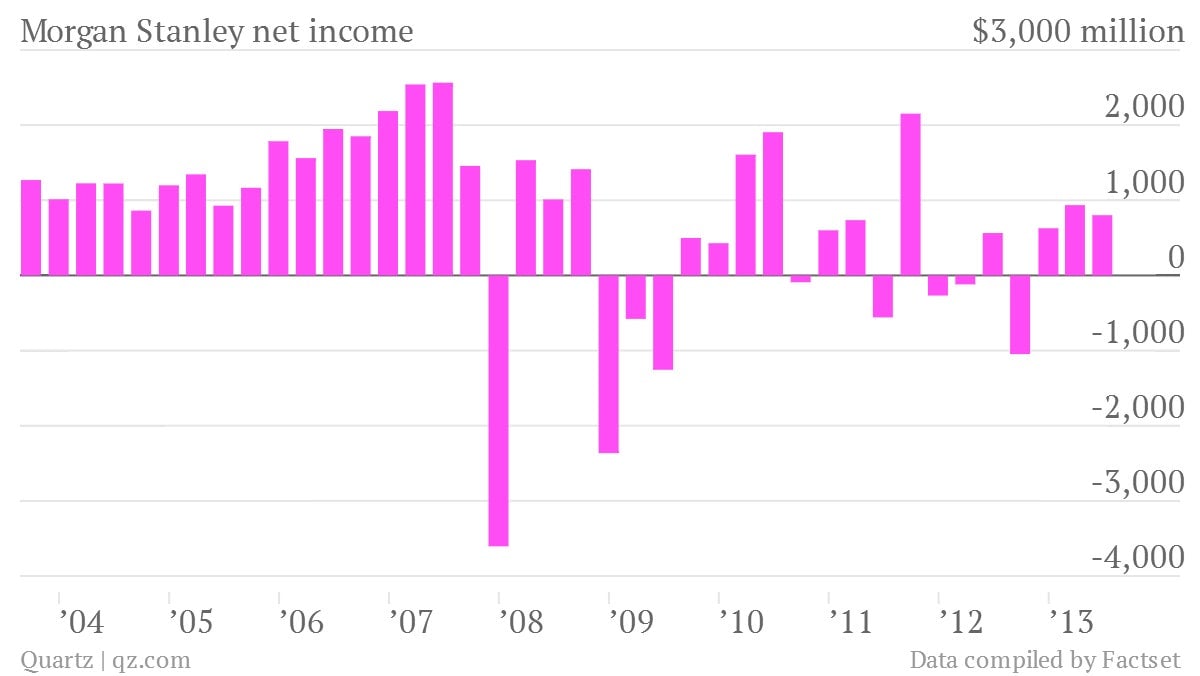
The numbers: Great. Morgan Stanley profits were up 42% from a year ago. The bank reported earnings of $0.45 per share, excluding charges from buying out the rest of its wealth management business and another related to credit spreads. Those earnings were two cents better than Wall Street expected.

Almost 90% of the world’s financial exchanges believe that cyber-crime poses a systemic risk to the securities industry, according to a report (pdf) published by the International Organisation of Securities Exchanges (Iosco) and the World Federation of Exchanges this week. More than half of those exchanges have faced cyber attacks in the last year, and financial firms have had to invest huge sums of money to maintain their security. At least so far, they seem to have been mostly effective at warding off hackers.

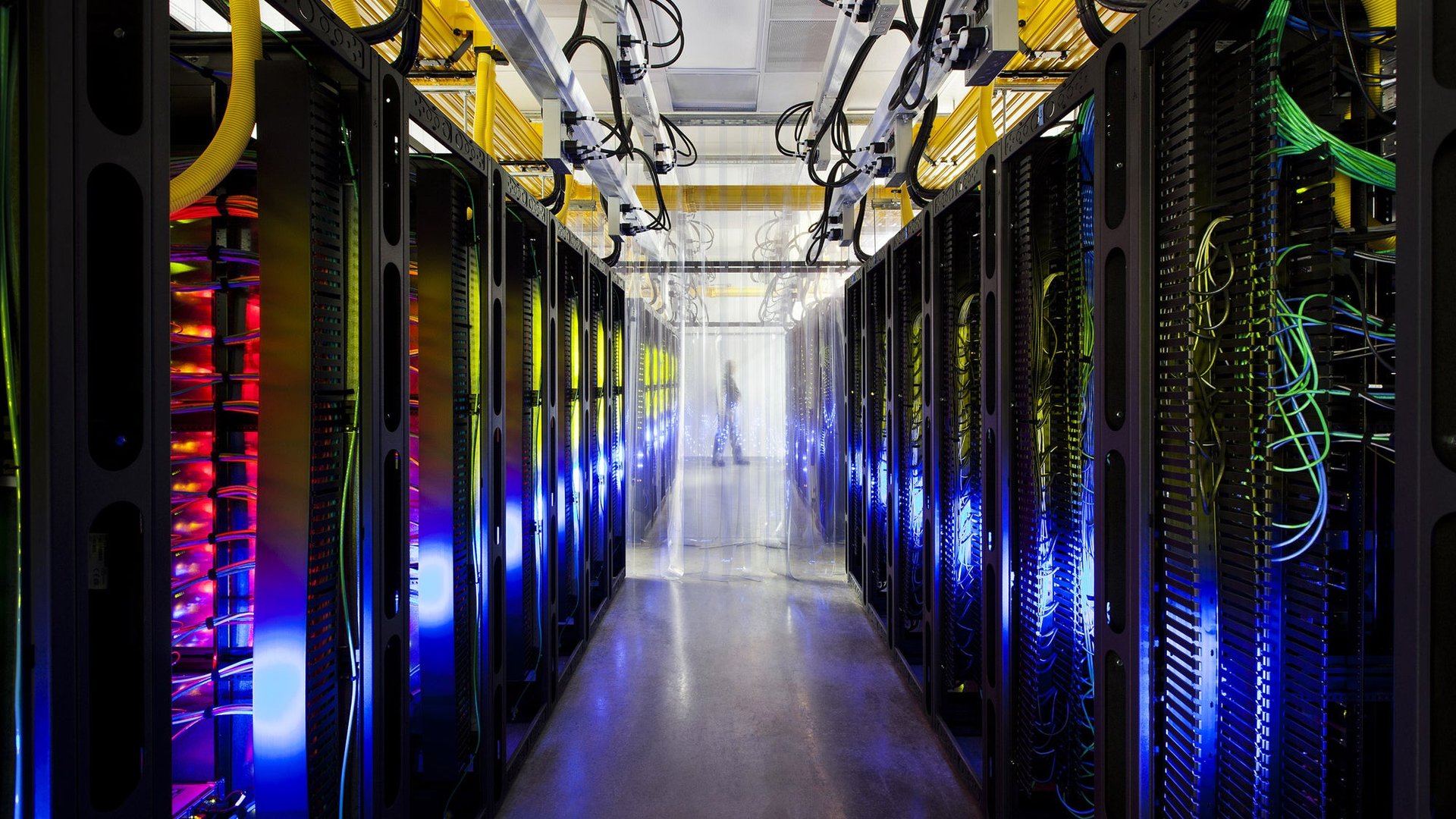
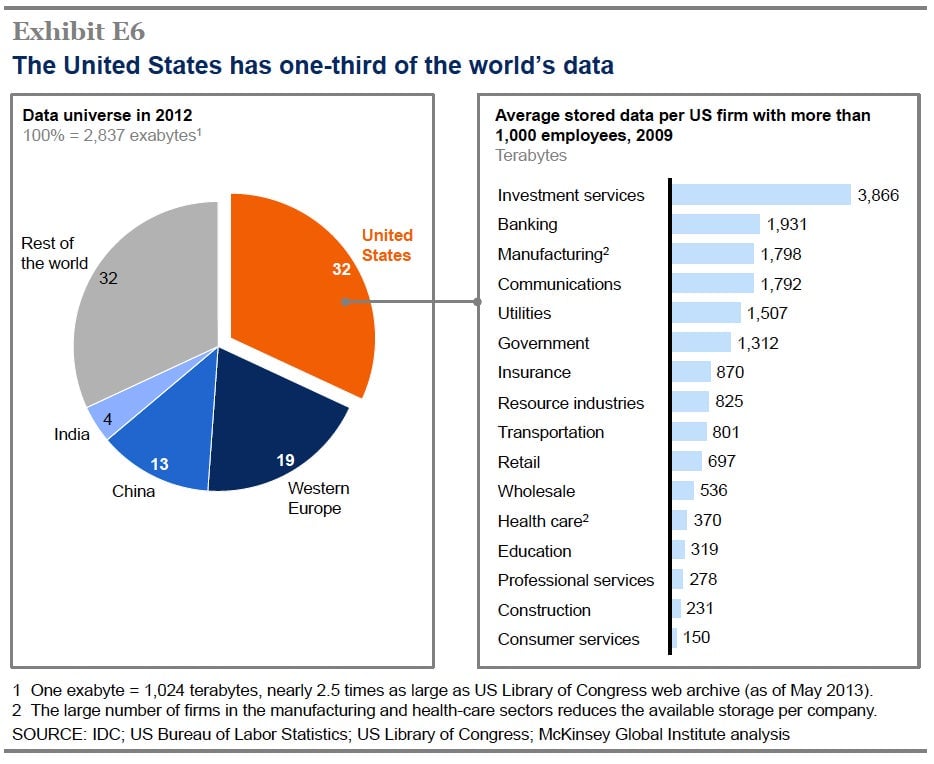
So much of what we do today leaves a digital trail: we swipe credit cards, check in on Foursquare, tweet links and thoughts, connect on LinkedIn, shop on our iPads, and more. Every bit of that information is being stored—but by whom?

The numbers: Bank of America’s profits soared to $4.0 billion in the second quarter, up 63% from the second quarter of 2012 and 171% from the first quarter of 2013. That’s equal to earnings of $0.32 per share.