In the hyper-competitive world of finance, Wall Street banks have certain characteristics for which they are known. JP Morgan has the biggest balance sheet. Bank of America and Citigroup are major retail banks. Goldman Sachs is, well, Goldman Sachs.

In the hyper-competitive world of finance, Wall Street banks have certain characteristics for which they are known. JP Morgan has the biggest balance sheet. Bank of America and Citigroup are major retail banks. Goldman Sachs is, well, Goldman Sachs.

Automated trading is here to stay, and with it has come the demise of traditional stock exchanges. Although traders still walk the floor of the world’s largest exchanges—and the exchanges themselves profess that floor traders will always be welcome—the last few years have made clear that trading floors aren’t all that necessary. Floor traders have gradually disappeared, as more and more trades can be conducted with keystrokes rather than shouts and hand signals.

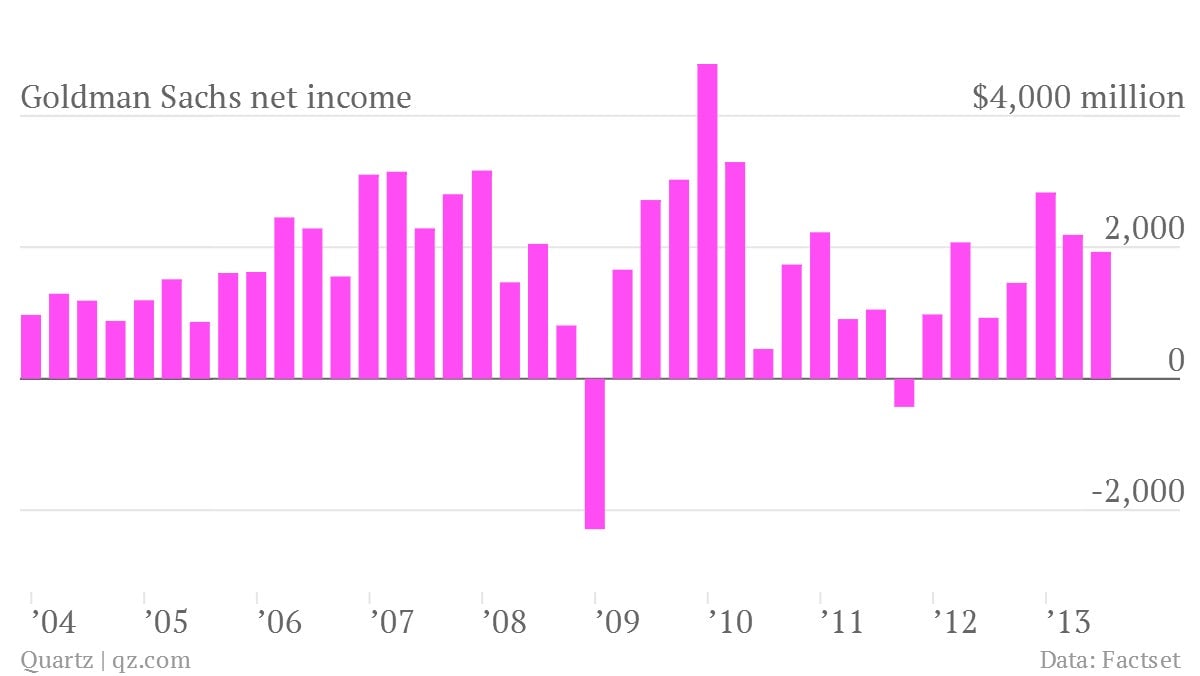
The numbers: Goldman Sachs whooshed past analyst expectations, with earnings of $3.70 per share—trumping analyst predictions of $2.83—and revenues of $8.61 billion. The firm’s profits fell slightly from last quarter to $1.93 billion.

Kuwaiti officials worrying about how to bring down the gulf state’s unemployment rate, estimated at more than 3%, may have another resource to tap besides crude oil: Instagram. The photo-sharing service is becoming popular among local entrepreneurs selling everything from makeup to Manga comics. The American University of Kuwait held an event in April featuring entrepreneurs who could teach others how they grew their businesses and “made it” on Instagram.

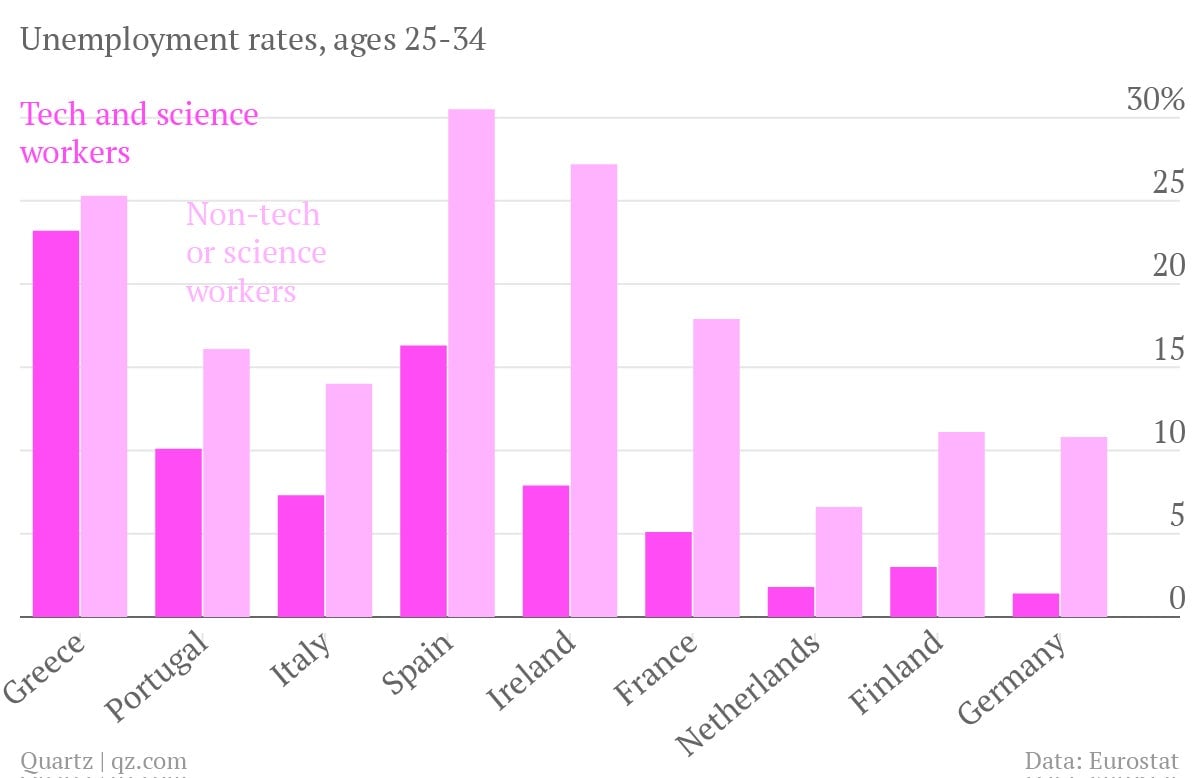
Despite the fact that economists regard high and rising unemployment as the biggest problem facing the euro zone, no one really knows why unemployment has spiked so high, so quickly in southern Europe, particularly among young workers.

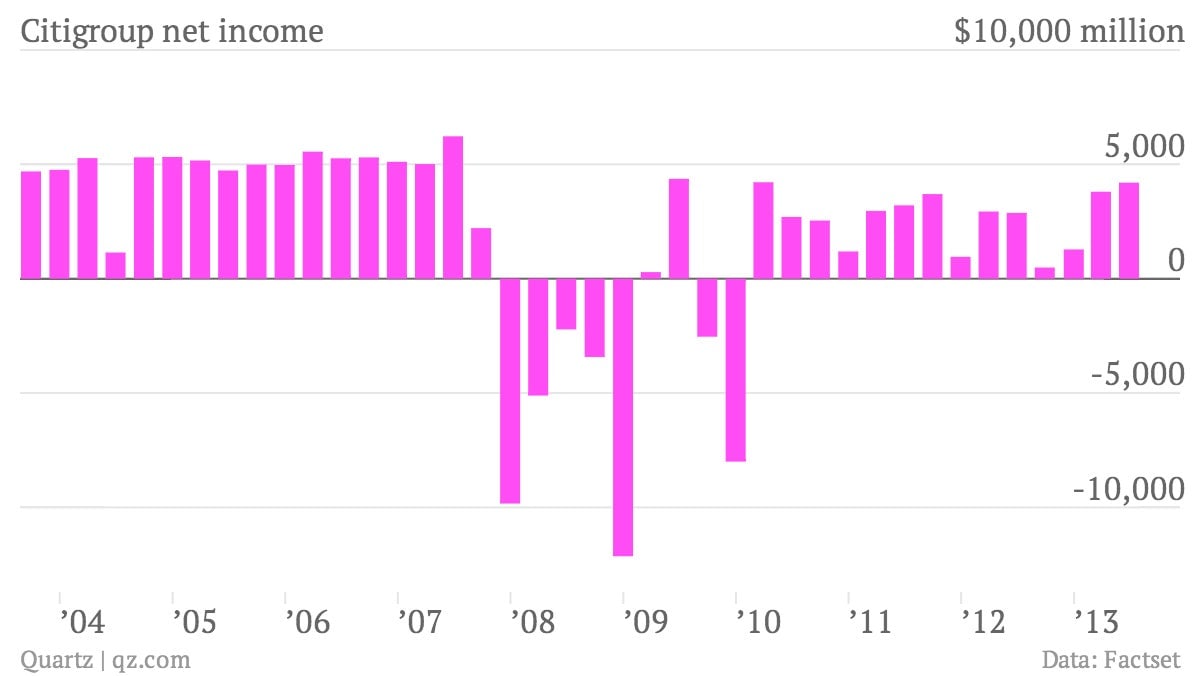
The numbers: Citigroup soundly beat Wall Street’s expectations, reporting (pdf) net income of $4.2 billion and earnings of $1.34 per share. Revenues–$20 billion in the second quarter–were up 8% from the same period last year.

UBS has become synonymous with wealth management, recently beating out Bank of America for the title of world’s largest private bank. Meanwhile, the company’s investment banking business has taken a hit. It has been scarred both by losses during the financial crisis and the scandal over manipulating Libor, the London inter-bank lending rate. Accordingly, the bank has signalled that it’s no longer interested in leading the investment banking sector. Instead it intends to focus the remains of its investment banking division on client services.

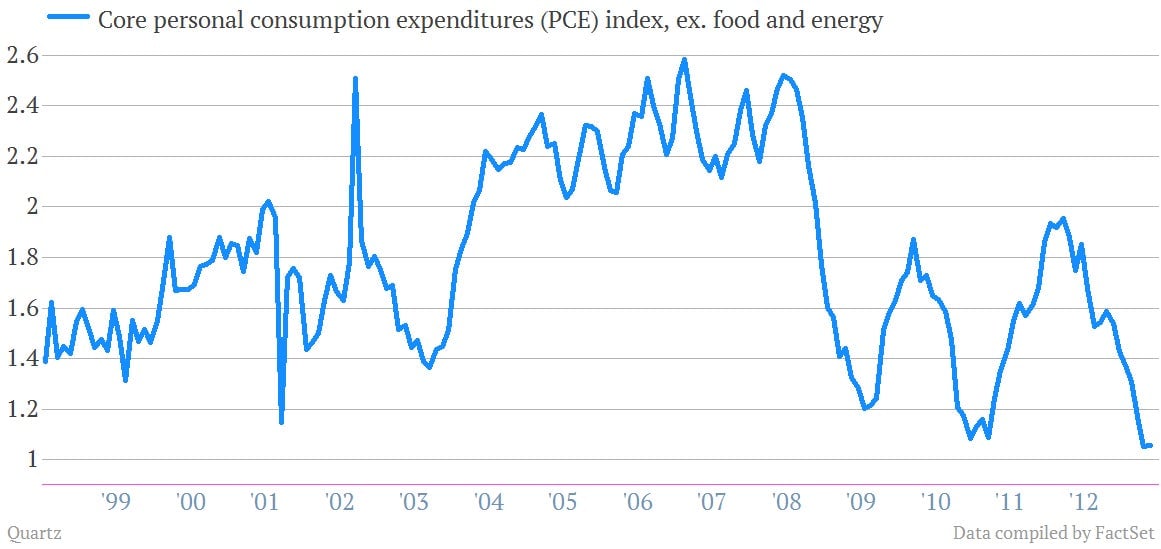
The US Federal Reserve says it targets 2% inflation. But today, inflation is well below that; the Fed’s preferred measure of inflation—annual growth in the core personal consumer expenditures index (core PCE)—hit its lowest level ever in April: 1.05%. It rose just 1.06% in May compared with last year, which is giving some members of the Fed the heebie jeebies.

The US Securities and Exchange Commission (SEC) has voted to allow hedge funds to advertise to the general public, easing 80-year-old restrictions on how investment funds can raise money in the United States.

Standard & Poor’s today cut Italy’s credit rating from BBB+ to BBB, despite signs of stabilization across the European periphery. Last year, markets might have gone crazy over this news; today, a downgrade seems far less important.

The British Bankers’ Association (BBA) voted unanimously to sell Libor—the London Interbank Offered Rate—to NYSE Euronext, the US-based stock exchange company. Libor, calculated based on rates at which the world’s largest financial institutions say they can lend to each other on a daily basis, is the world’s most important financial benchmark; it’s what helps determine interest rates on everything from home loans and credit cards to complex derivatives transactions. Both companies expect to complete the transition by early 2014.

Thomson Reuters will stop releasing economic data early to high-speed clients—at least for now—according to a source cited by the New York Times, suspending a practice we first reported on last month.

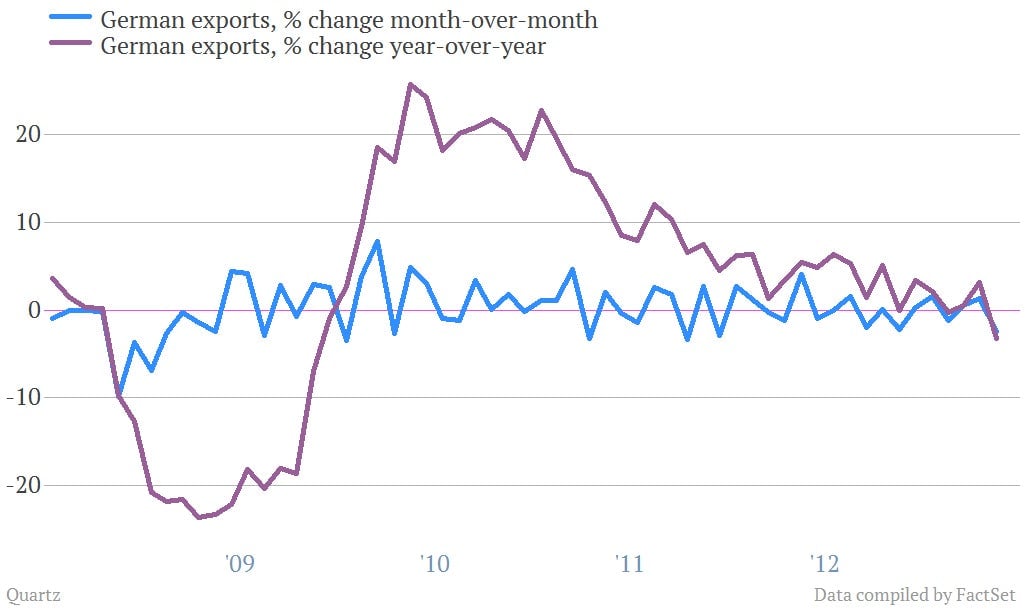
German exports fell more than analysts expected in May, down 2.4% in May from April and 3.2% from May of 2012. As the chart above shows, German export growth is on a downward trend following rapid growth in 2010.

Updated July 4, 11:30 a.m. ET

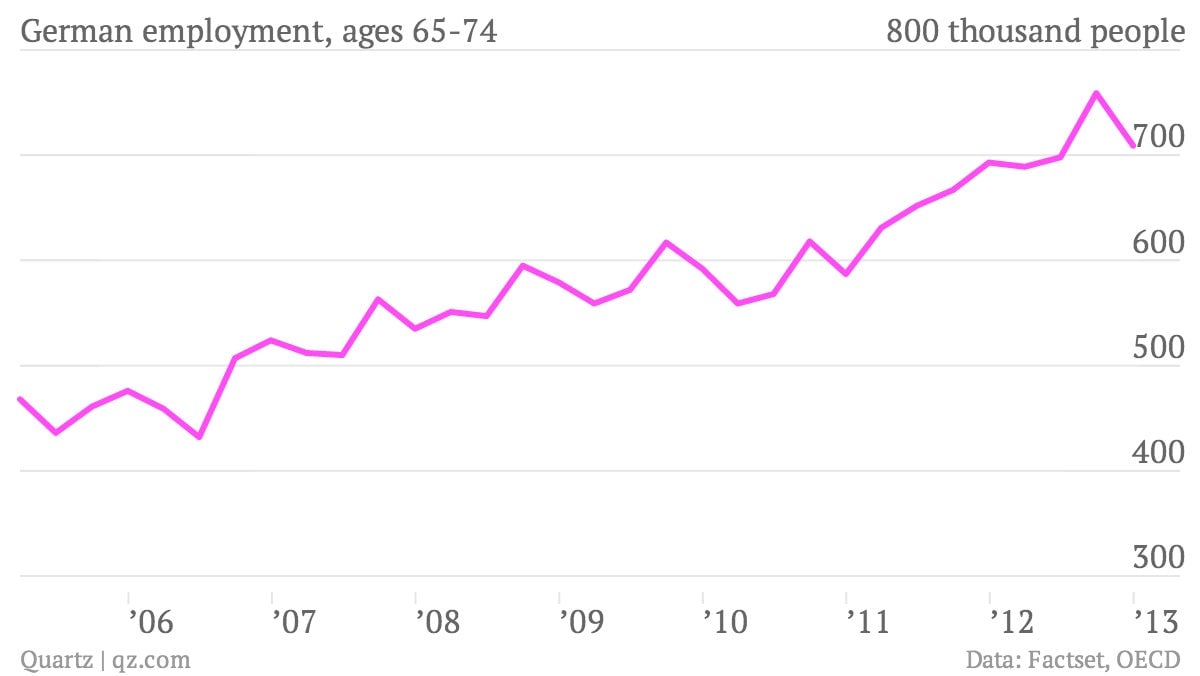
The number of employed Germans aged 65-74 has nearly doubled since 2005, when the OECD began recording those statistics, even as the overall population has slightly declined. In the last quarter of 2012, 709,000 Germans in that age range had jobs, adjusted for seasonal fluctuations in employment.

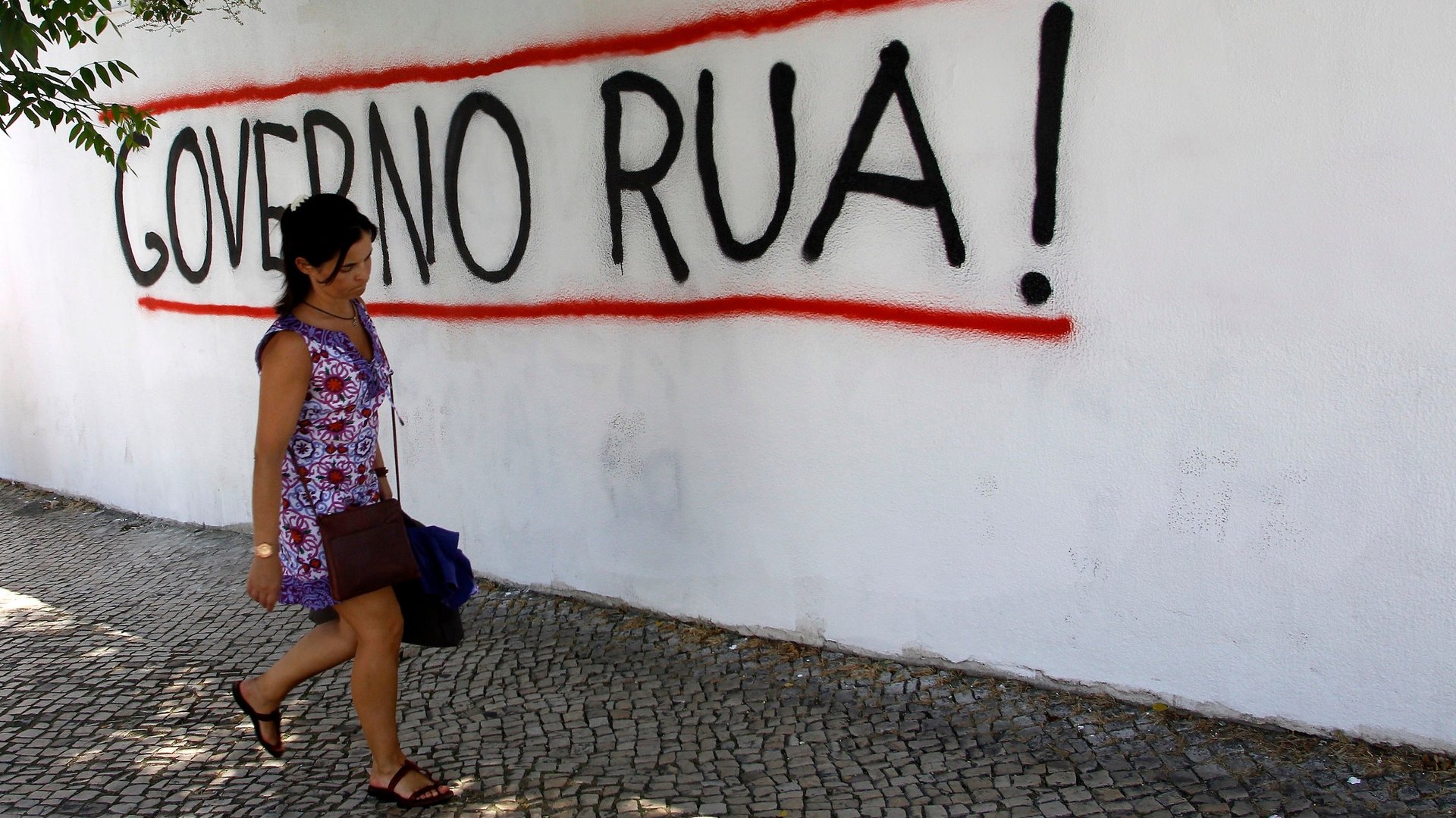
A wave of political unrest in Portugal is causing its government’s borrowing costs (i.e., yields on bonds) to shoot higher today. According to the latest data from Tradeweb, Portuguese 10-year bonds now yield 7.98%. The “danger level” for sovereign bonds, meaning a high risk of default, is typically seen as around 7%.

Update (3:26 PM ET): Portugal’s governing coalition today saw its second major loss in two days, as Paulo Portas, the foreign minister and leader of the Democratic and Social Center-People’s Party (CDS-PP), tendered his resignation.

Today, the US Federal Reserve approved a final rule instituting the Basel III financial accords, a global agreement meant to make sure banks are better prepared to weather financial shocks. The rules, drawn up in 2010 and modified since, are supposed to be the strictest global financial rules anyone’s put in place yet. But critics are still concerned that they won’t be enough to contain a global meltdown, and many contend that they go about fixing the financial system in the wrong way.

The vaunted secrecy of Swiss banks is gradually being eroded. And that, say analysts polled by Bloomberg, presages a “shake-out” in the Swiss banking industry that could prompt a wave of mergers and acquisitions over the next 12 to 18 months.

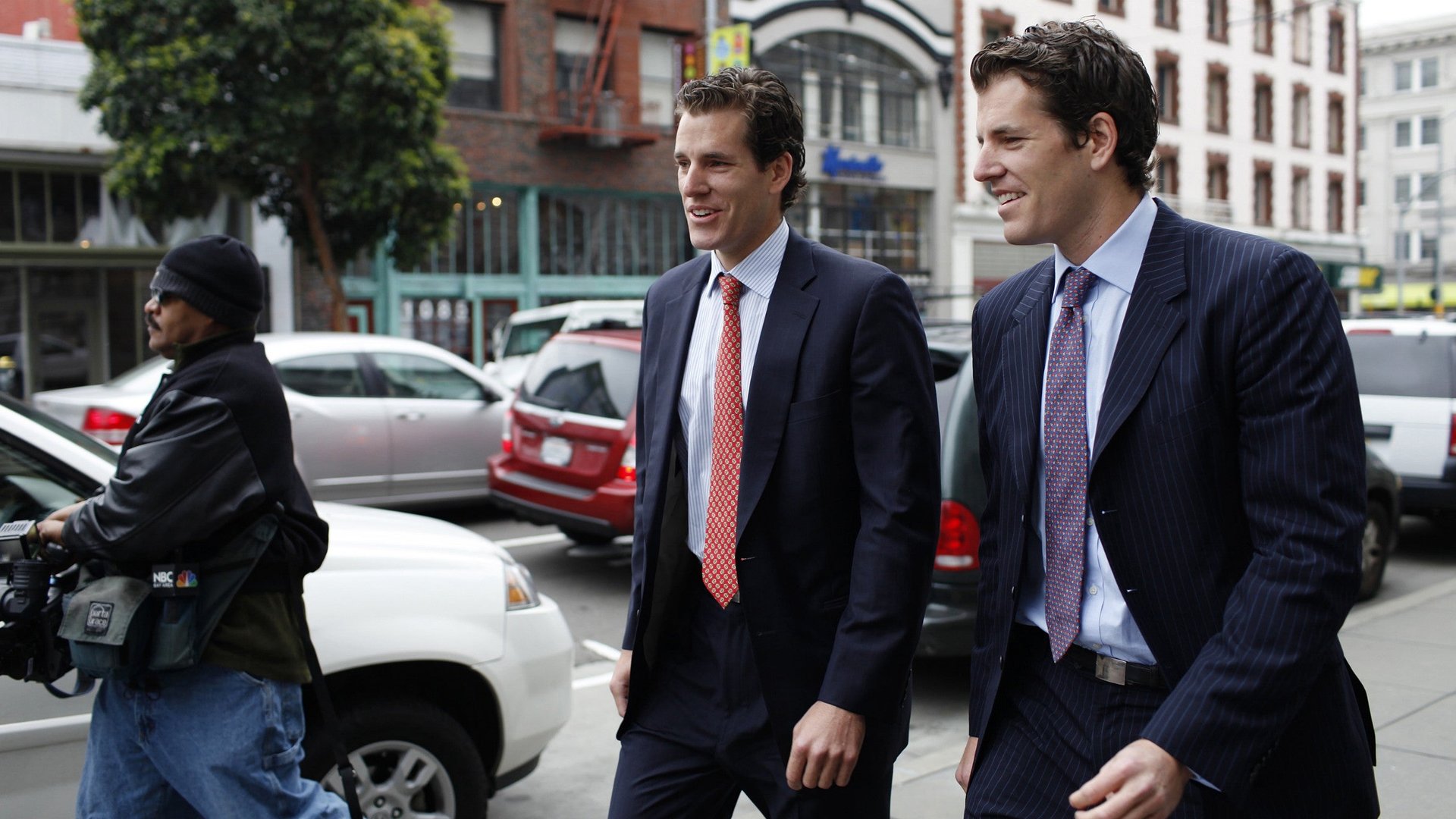
Cameron and Tyler Winklevoss are forming an exchange-traded fund (ETF) for bitcoin, the alternative currency in which they hold a large stake.

For an economy to grow, companies, the thinking generally goes, need to spend their money and make investments that will generate jobs. The data show that this isn’t happening in the US; in fact, companies seem to be pulling back even further. Politicians blame the opposing party’s policies, Wall Street blames persistent financial uncertainty. But there may be a completely different reason US companies aren’t spending.

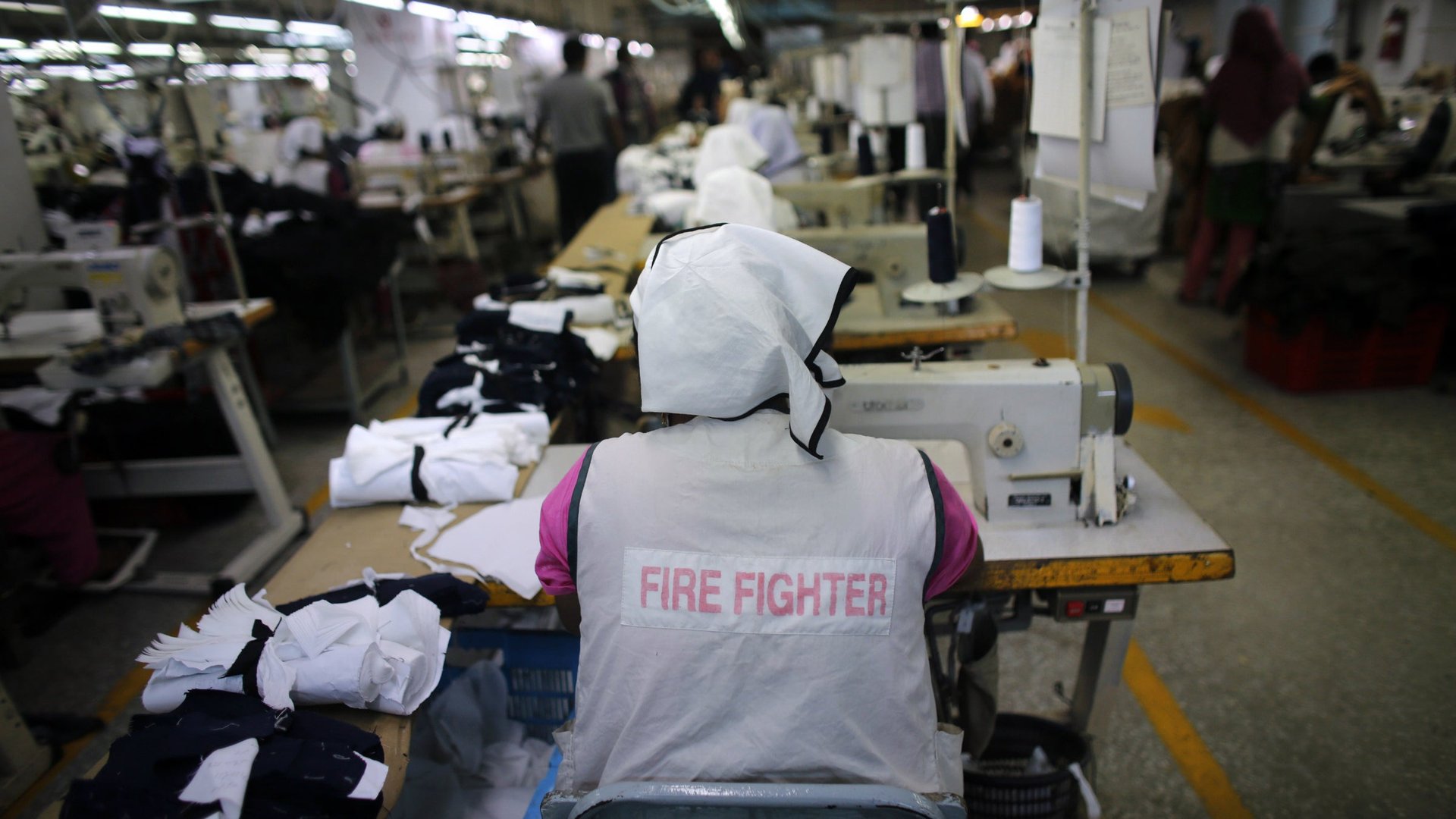
Today, US president Barack Obama is expected to suspend certain privileges for Bangladeshi exporters, the Associated Press reports. It’s meant to be a signal to US companies to rethink doing business in Bangladesh, after a series of deadly episodes including the factory collapse that killed 1,127 people—the worst industrial accident in nearly 30 years. The European Union is contemplating the suspension of a similar program.

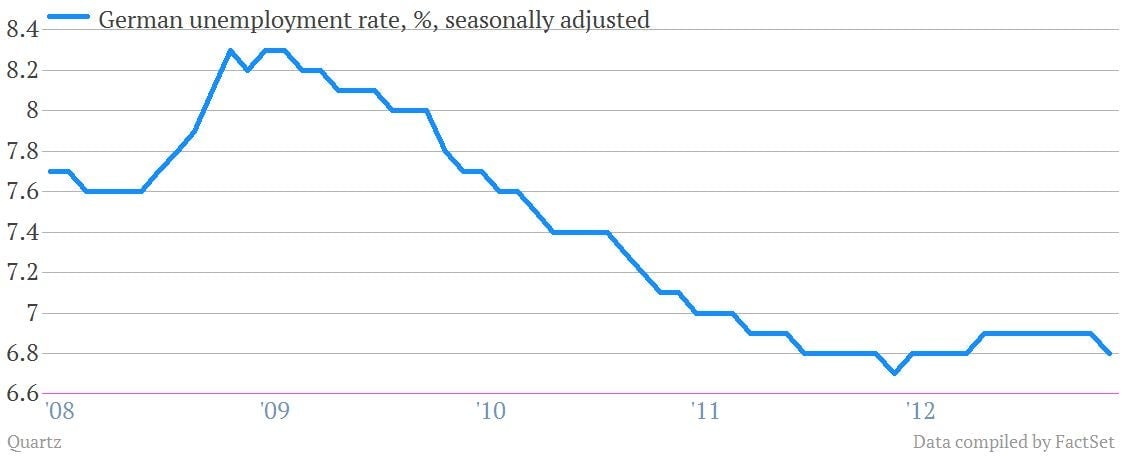
German unemployment fell unexpectedly in June to 6.8%, down slightly from 6.9% in April. The decline seems extraordinary, as many other European countries continue to set unemployment records. Even youth unemployment in Germany is low: just 5.6% for people under 25, and falling. (In other European countries it’s as much as double the overall national rate.)

Since the US Federal Reserve spooked markets last week, causing a general rise in interest rates, some of the hardest hit have been yields on bonds in peripheral Europe—particularly Italy and Spain. Some speculate that the European Central Bank (ECB) could be forced to act to quell the unease.