On the face of it, US President Barack Obama’s nomination on Feb. 6 of Sally Jewell to head up the Department of the Interior, which manages the country’s massive portfolio of public land use, is an unconventional one.

On the face of it, US President Barack Obama’s nomination on Feb. 6 of Sally Jewell to head up the Department of the Interior, which manages the country’s massive portfolio of public land use, is an unconventional one.

It’s not just disgraced politicians and careless celebrities any more: Real people are having naked photos of themselves pop up online. Some 13% of American adults have had personal data posted online without their permission, and around half of those were smutty photos. That’s according to an unnerving study on relationships and online privacy done by cyber-security company McAfee.

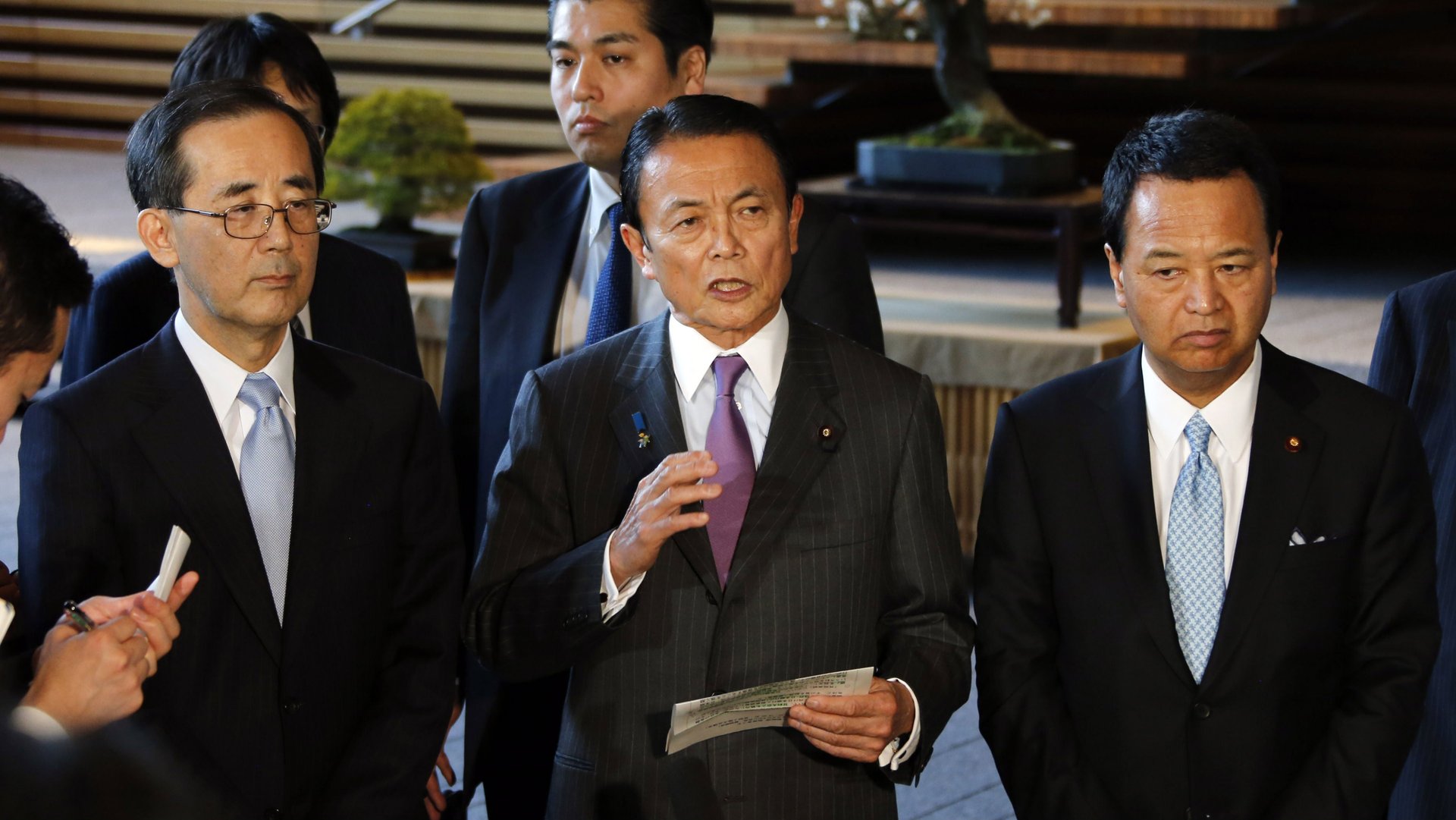
Abenomics is turning out to be quite the drama. Yesterday, Japan’s central bank governor Masaaki Shirakawa announced his early resignation, sending shivers down the spines of those who see central bank independence as a crucial check against potential government excess.

An uncommonly strong euro is making European exports expensive—dangerously so for the continent’s weaker economies. So what’s the solution: Depress the euro, or force countries to do possibly painful things to make their exports cheaper?

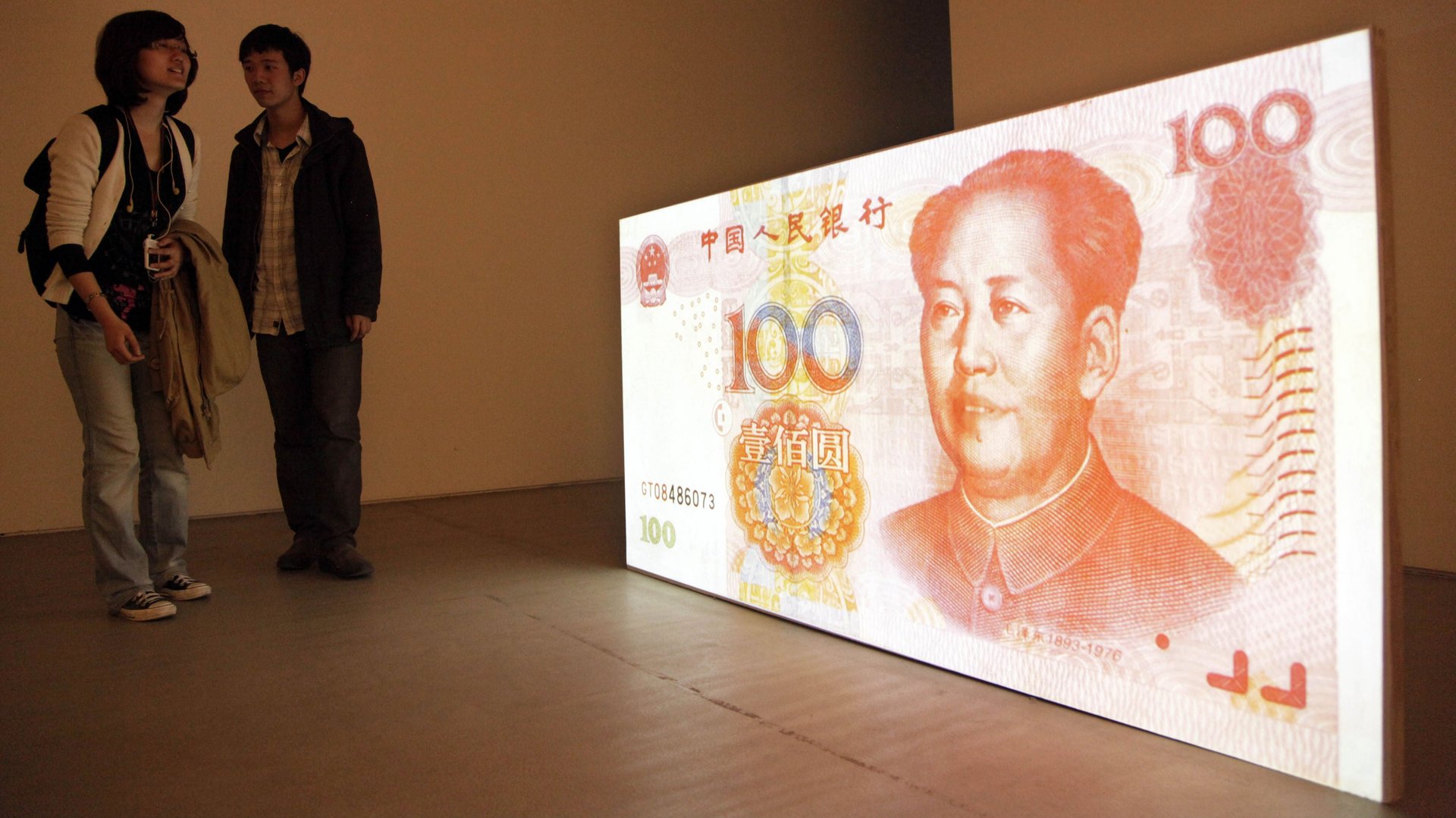
The Chinese government obviously used to manipulate its currency. Its currency policies have been abundantly documented and plenty debated. Here’s basically how this has shaken out over the last few decades:

The plummeting yen might be great news for Japanese stocks and Japan’s carmakers. But as we’ve discussed before, it’s terrible for the country’s energy importers. And earlier today, Tokyo Electric Power Co—better known as Tepco—quantified what “terrible” might actually mean.

This item has been corrected.

Markit’s euro zone manufacturing purchasing managers’ index (PMI), which reflects manufacturing activity, came in at 47.9 in January (pdf), compared with 46.1 the prior month. (A reading above 50 signals growth; below 50 indicates a contraction.)

Instead of brain drain, call it muscle drain: what happens when your star athletes flee economic collapse at home in search of opportunity abroad.

Earlier today, online restaurant booking site OpenTable announced that it is buying San Francisco startup Foodspotting, a crowd-sourced database of dishes, for $10 million.

Caterpillar reported profit of $1.91 per share for the fourth quarter of 2012, exceeding estimates of $1.70. However, that’s only if you don’t count the $580 million writedown of an investment into a fraudulent Chinese company, which dragged profit down by $0.87 per share, to $1.04. Meanwhile, revenues and adjusted profit were better than analyst estimates.

Which is more trustworthy: the UK’s GDP data … or its employment numbers? On the one hand we have GDP, which fell 0.3% in the fourth quarter of 2012, leading to fears of a triple-dip recession. But the UK also added an impressive 513,000 jobs in 2012, and unemployment has been falling steadily for over a year. So either the economy is atrophying and jobs growth is merely an outlier—or people are getting jobs, collecting wages and then doing something with their money that the macro data aren’t capturing.

Last year was a good one for the US new-homes market: 367,000 were sold, up 19.9% from 2011. Though December’s data came in lower than expected, 2012 as a whole did something huge: It reversed a six-year trend in declining sales of new homes.

The UK is hurting something awful, we all know now. Behind the unexpectedly sharp 0.3% decline in the UK’s fourth-quarter GDP were withering factory output, a North Sea oil production slowdown and post-Olympics doldrums, reports Reuters. And the outlook’s not good: The term “triple-dip” is now being bandied around. Have a look:

The CFO of China’s Lenovo, the second-biggest personal computer manufacturer in the world, said yesterday that the company was thinking about a possible deal with Canada’s Research in Motion. RIM-bulls rejoiced: the company’s shares rose around 3%, closing at C$17.80, marking a 52-week high.

You saw it coming: Japan’s trade deficit yawned to an unheard-of ¥6.93 trillion ($77 billion) in 2012. That’s up 170% from ¥2.56 trillion in 2011, which, itself, was only the second time the country had run a trade deficit since 1980 (the Wall Street Journal has a great chart here, though it’s paywalled). The trade deficit for December came in at ¥641.5 billion, worse than expected (paywall).

The ranks of Spain’s unemployed neared 6 million people—some 26% of the population—in the last quarter of 2012, up from 25% in the third quarter (pdf). That means that one-third of the euro region’s unemployed live in Spain, reports Bloomberg. With the country hemorrhaging jobs at a pace just shy of 2,000 a day last year, and the current recession potentially lifting only at the end of the year, Spain is on track to claim even more of that share as 2013 wears on.

China’s big, smoking hot potato—the reimbursement of a prominent wealth management product (WMP) that went bust—has been resolved at last. Anticlimactically, as it turns out, since it raises more questions than it answers about what it might mean for China’s banks.

This article has been corrected.

Today the Bank of Japan rolled out quantitative-easing-with-a-catch—disappointing the markets, which had expected more aggressive monetary easing.

The die seems cast: Japan is officially going all-out in a war against deflation and recession, as Japan’s central bank today closed out its two-day policy board meeting by agreeing to open-ended asset-purchasing until it hit a 2% inflation target. The “open-ended” approach and the switch from an inflation “goal” to a “target” are key communication tools clarifying BoJ’s commitment to a set economic outcome, as opposed to an arbitrary end-date for loose monetary policy. This Federal-Reserve-style approach builds confidence in an economic course that investors, businesses and consumers can base decisions on without fear of a sudden policy reversal, which BoJ is known for having done in the past.

China’s central bank, the People’s Bank of China, just okayed 3 trillion yuan ($482.6 billion) in new lending for 2013. It’s not much more than what it allowed in 2012—but still a considerable sum for a country struggling with overcapacity.

America’s states have nearly $1 trillion less than they need to pay their public employees’ pensions. While some, like Illinois, are flailing in their efforts to find a solution, Florida recently won the right in court to trim pension benefits and require a minimum contribution from workers, thereby allowing it to close the budget shortfall.

Need a reason to panic about the US government’s squabbling over the debt ceiling? Here’s one: