While on a trade mission to China, Britain’s finance chief announced measures to “simplify and streamline” the visa process for Chinese visitors to the UK. Chancellor of the Exchequer George Osborne unveiled a three-part pilot scheme yesterday:

While on a trade mission to China, Britain’s finance chief announced measures to “simplify and streamline” the visa process for Chinese visitors to the UK. Chancellor of the Exchequer George Osborne unveiled a three-part pilot scheme yesterday:

The travails of businesses seeking loans in the euro zone are well known. A new report shows that small businesses are suffering the worst. Corporate loans of less than €1 million ($1.4 million) have plunged from their pre-crisis peak by more than 80% in Ireland and 60% in Spain, according to research by Bain & Co. and the Institute of International Finance.

The largest IPO in Europe in more than two years could have been even larger. The privatization of the Royal Mail, in which around two-thirds of the company’s shares began trading this morning, raised £1.7 billion ($2.7 billion) for the government.

The euro zone’s economic ills, in a nutshell, derive from too much debt. Still, there are many blameless borrowers—particularly small businesses—that find it difficult to get credit as banks are preoccupied with nursing their own balance sheets back to health. Loans to euro-zone businesses, as detailed in the latest monthly bulletin (pdf) from the European Central Bank (ECB), are falling faster than ever.

All is not well in the luxury world. Stalwart luxury buyers in China are cutting back, according to recent statements from Burberry and Richemont, among others. New data from research firm Euromonitor International confirms that the industry is in a bit of a slump. Global luxury sales are on track to grow by 3% this year, the slowest rate in four years.

Alcatel-Lucent’s announcement of 10,000 job cuts caught many by surprise, not least the French government, which vows to fight the layoffs alongside unions. Those familiar with trends in the telecoms equipment industry are not as surprised by the cuts; they are only the latest in a string of layoffs at network suppliers, driven by stiff competition from Chinese challengers.

Fortune favors the brave. The past few days have seen a number of bold investments in some of the most troubled corners of the euro zone. The shrewd money always spots opportunities in adversity, but judge for yourself whether these recent moves signal a bottom in the market or foretell burnt fingers:

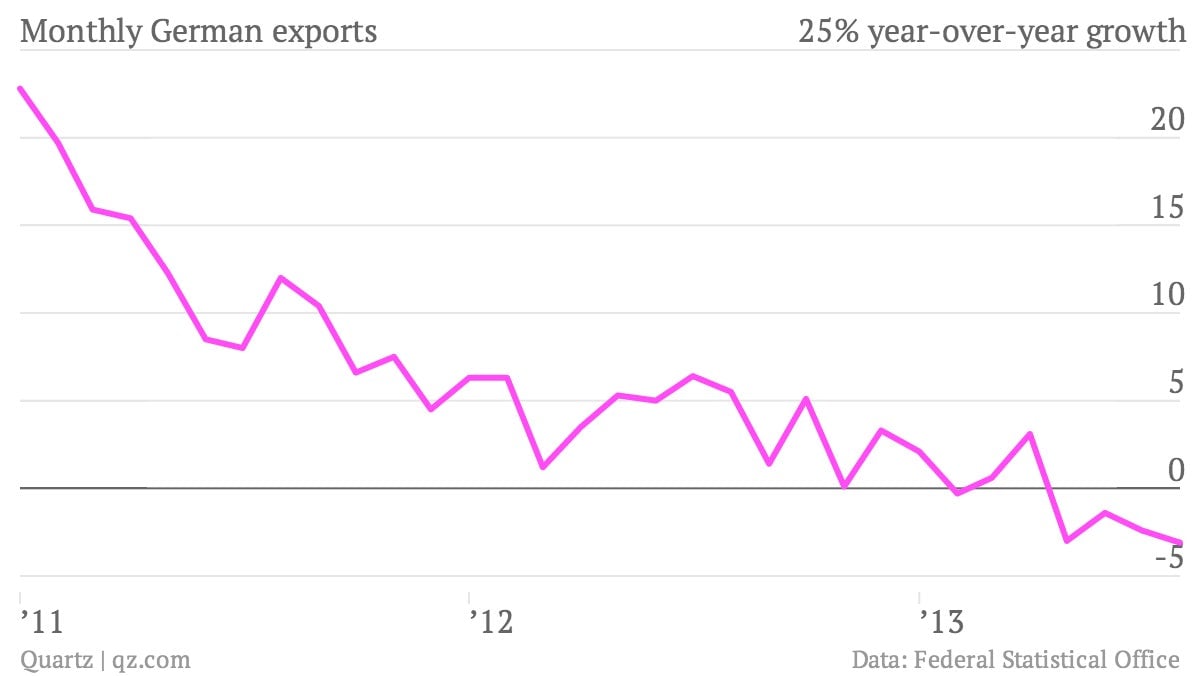
Germany’s export machine is a long way from running at full throttle. August exports, released today, grew by 1% from the previous month, reversing an unexpected decline in July. Still, compared with the previous August, exports are down by more than 3%. Exports in the first eight months of the year are down by around 1% versus 2012.

Even for a straight-talking Dutchman, the recent remarks from outgoing ING chief executive Jan Hommen were remarkably frank. Hommen, who stepped down last week from the helm of the bailed-out bank, admitted to the Financial Times that the bank grew “too big to manage.”

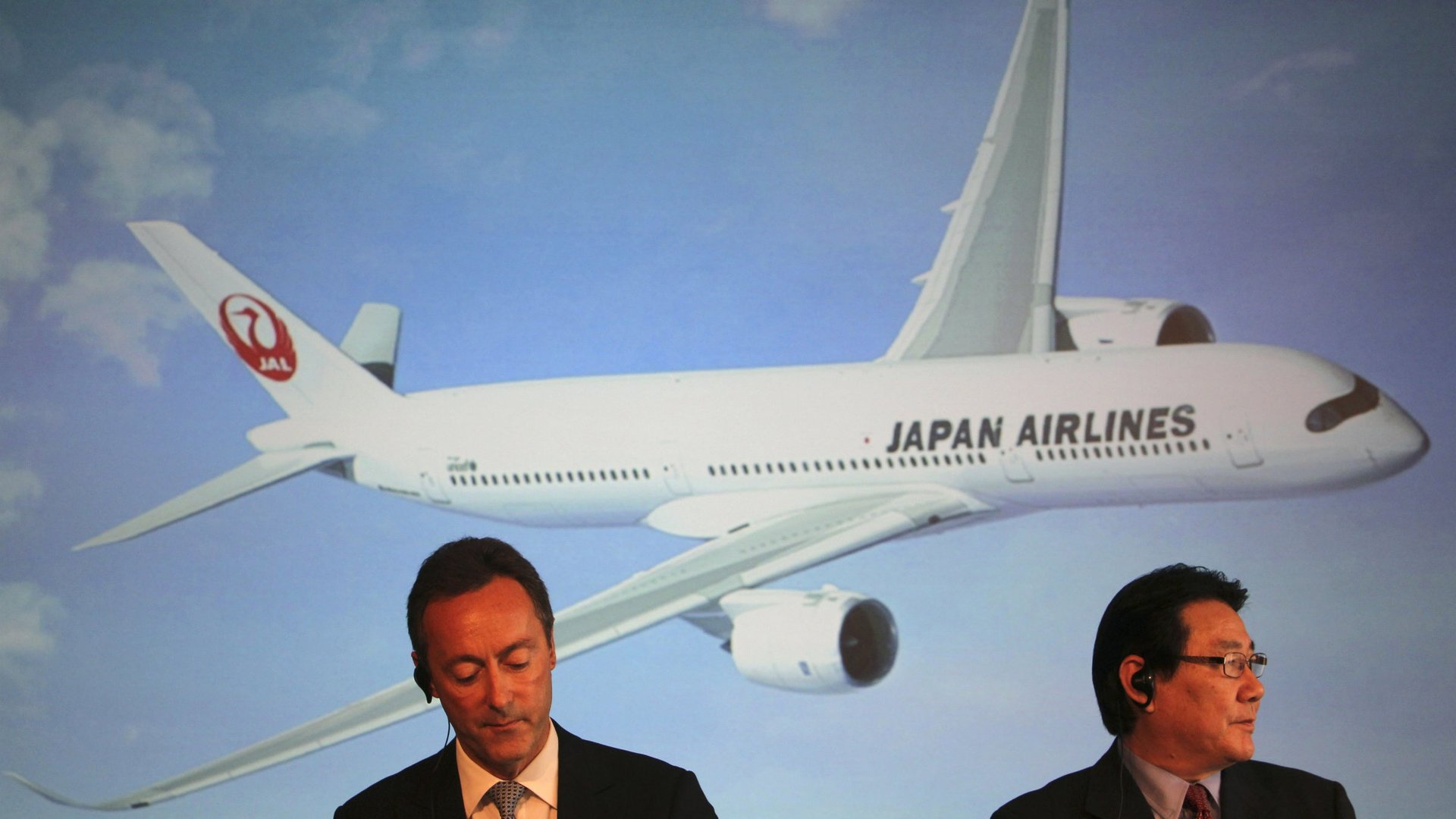
In one of the corporate world’s great rivalries, Airbus is gaining the upper hand over Boeing. The European aerospace group announced a major new order for its A350 jets from Japan Airlines (JAL)—its first deal with Japan’s second-largest carrier. The deal for 31 jets is worth more than $9 billion before discounts, with an option for another 25 deliveries in the future; shares of Airbus parent company EADS jumped on the news.

Brits bought more cars this September than in any over the past five years, a UK auto association reported today. This follows buoyant purchasing managers’ indexes, consumer confidence numbers and other survey-based data that an economist at HSBC recently described as “staggering.” Falling unemployment, soaring property prices and upgrades to GDP forecasts round out the picture of a British economy in rude health.

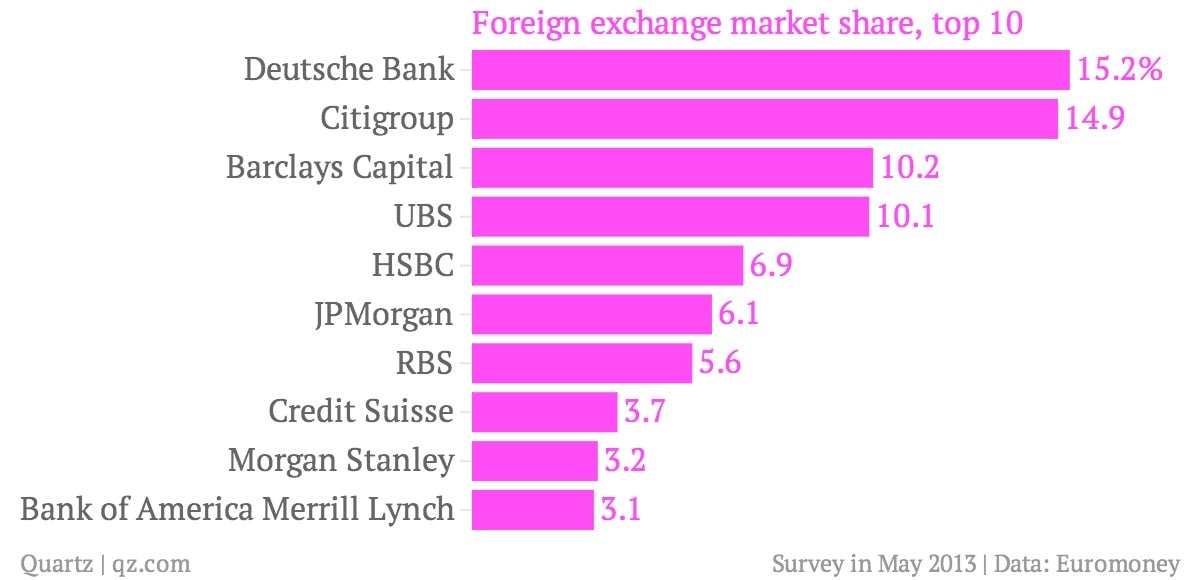
Can we trust any financial indexes any more? This morning Swiss regulators announced an investigation into potential manipulation of foreign currency exchange rates. They are “coordinating closely with authorities in other countries as multiple banks around the world are potentially implicated,” according to a statement. British regulators launched their own probe into the market in June.

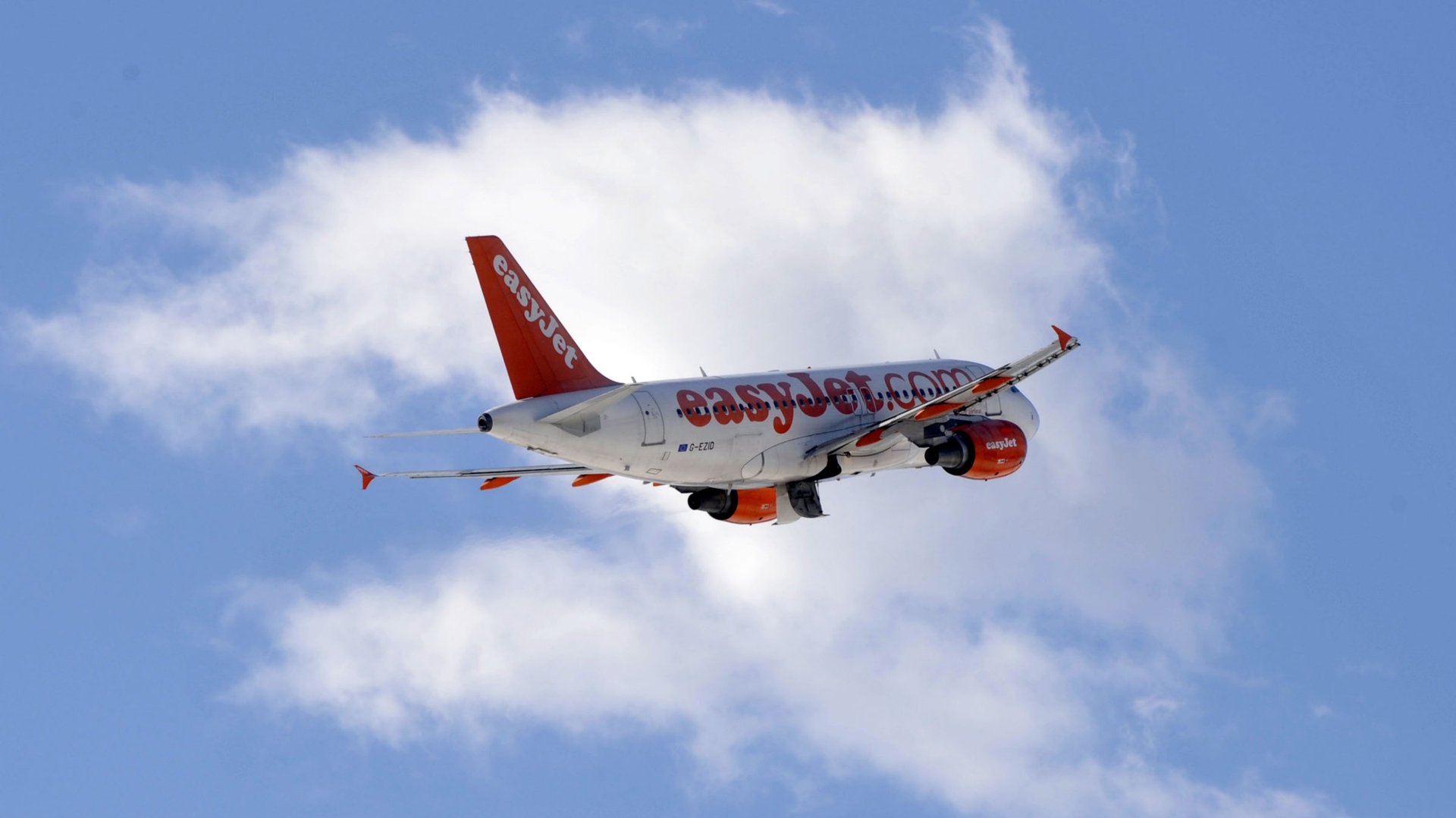
For any consumer-facing business, it often pays to move upmarket. Budget airlines are no exception. Today, easyJet flagged to investors that fiscal-year profits will come in at the higher end of its expected range, implying growth of at least 50%. A few weeks ago low-cost rival Ryanair issued the precisely opposite warning to its investors, saying that its profits would fall at the lower end of its guidance, roughly flat against the previous year.

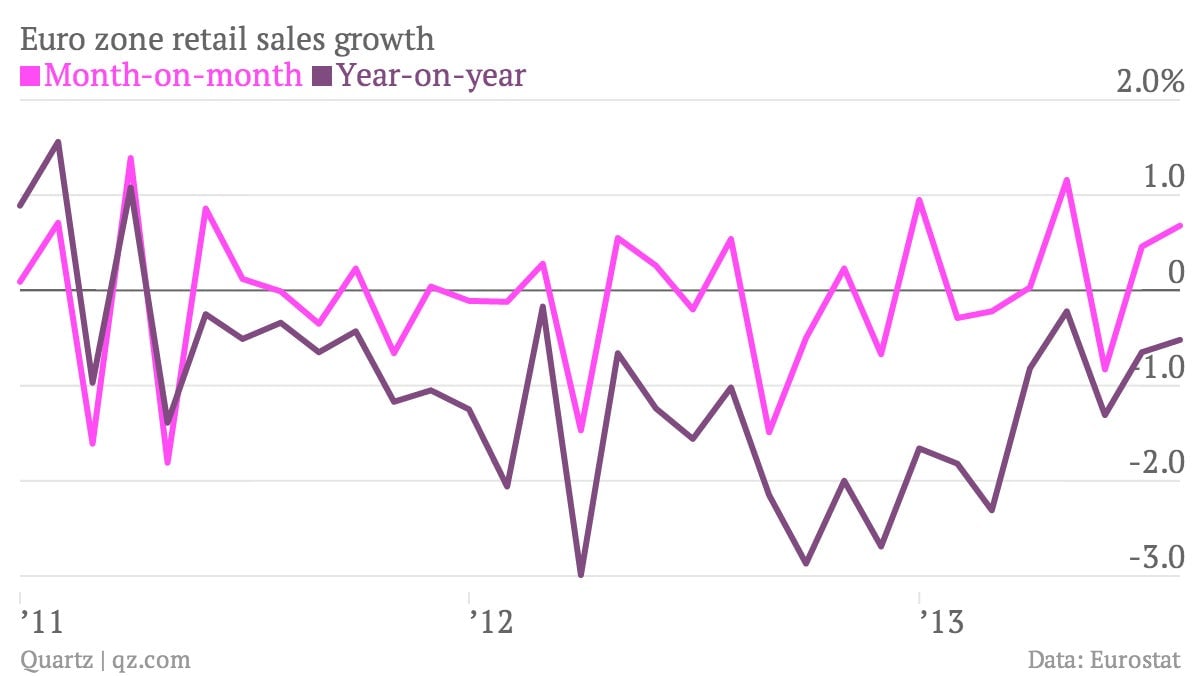
Retail sales in the euro zone posted surprisingly strong growth in August, according to data released today (pdf). The level of shopper zeal surpassed expectations, with August sales rising by 0.7% versus the previous month. The increase was paced by Spain and Portugal, of all places, with August sales in the recession-riddled, unemployment-addled Iberian neighbors rising by 3.8% and 4.8%, respectively.

What just happened? It was billed as a momentous day for the Italian government, but Rome ended today in exactly the same situation as where it started. Given the recent turmoil, this is rather remarkable. The drama is reflected in a see-saw day of trading in Milan, as traders tried to make sense of what they were seeing.

Supermarkets are a volume business. It was Jack Cohen, the founder of British retail giant Tesco, who coined the oft-repeated mantra “pile it high and sell it cheap”. Today, Tesco reported a weak set of results for the first half of its fiscal year and, more significantly, quit the world’s two largest economies: the US and China. (It gave up on Japan, the third-largest, last year.)

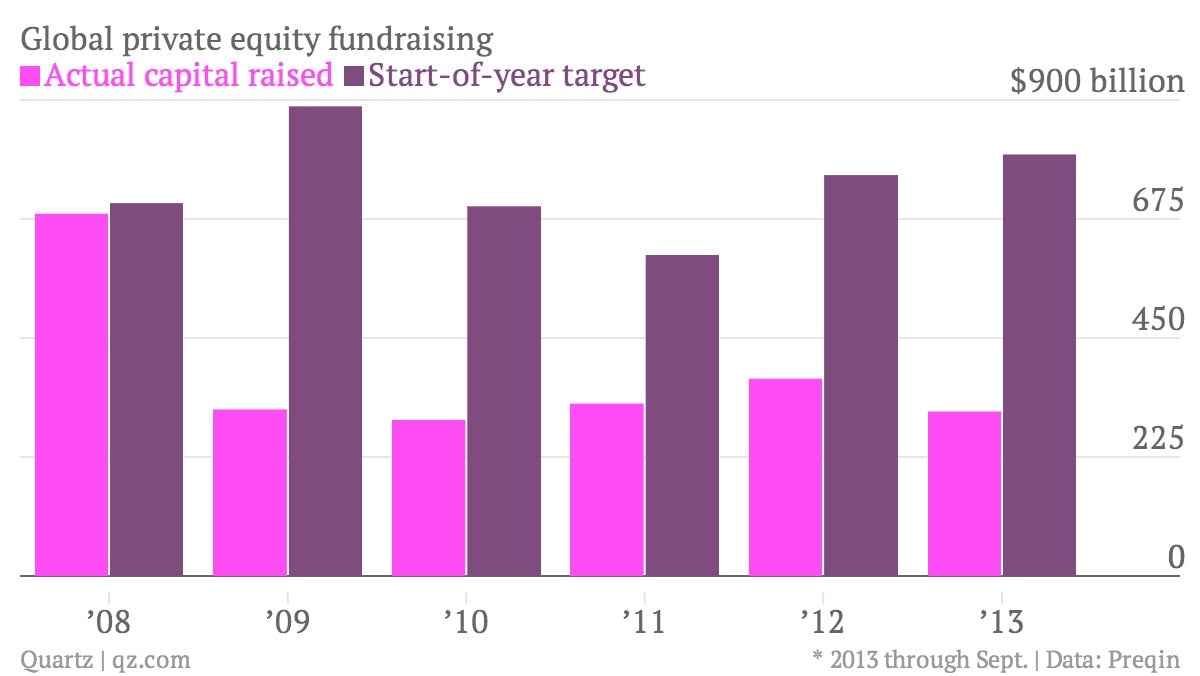
Private equity firms are delusional. A record number—nearly 2,000 of them—are currently out on the road seeking more than $700 billion in fresh funds, according to new statistics from data provider Preqin (pdf).

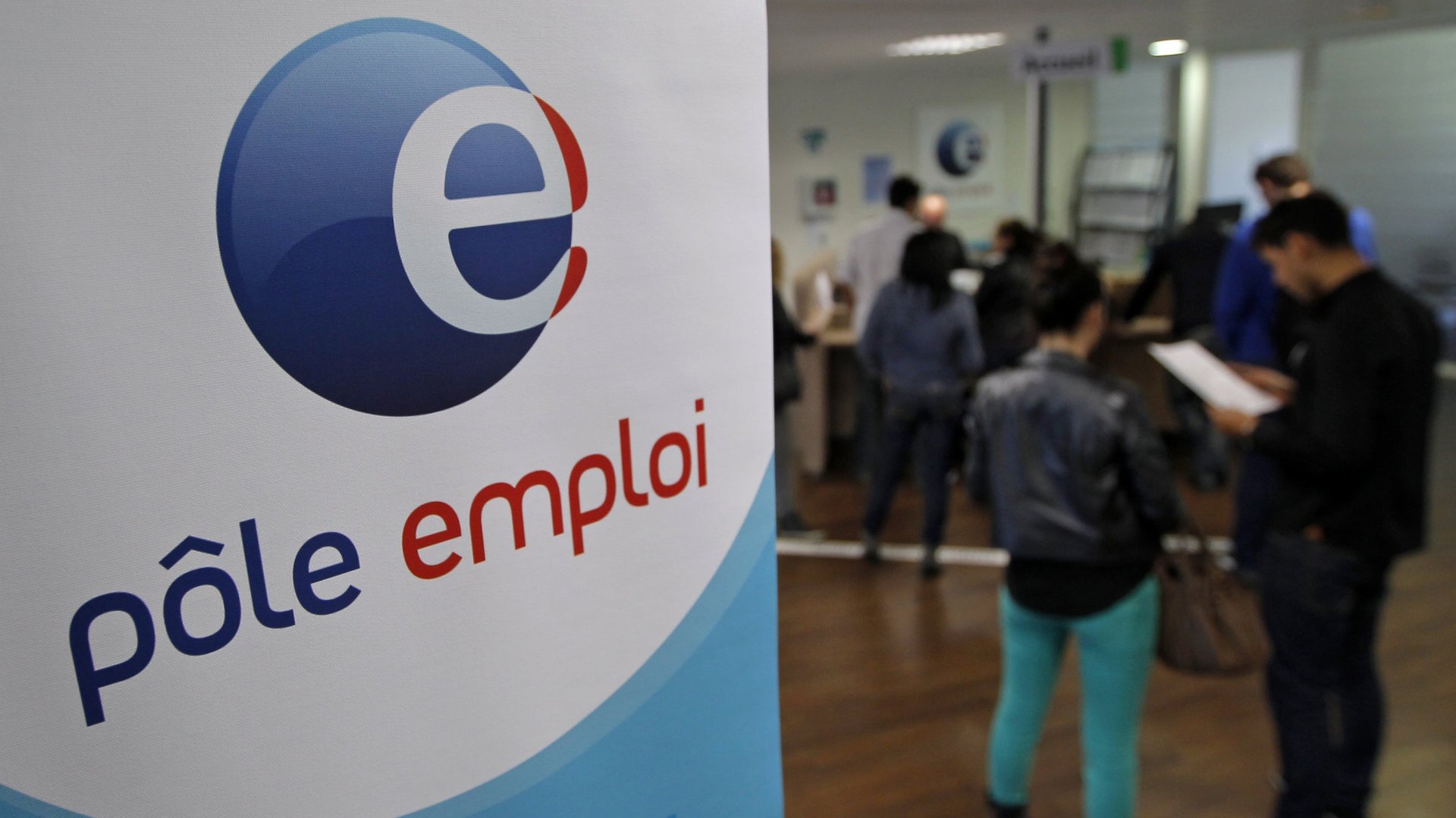
The hits keep coming for France. One of the few bright spots during a week when the government unveiled a brutal budget was an unexpectedly large drop in the number of jobseekers registered at official employment agencies. As originally reported, the unemployment rolls shrank by 50,000 in August, to 3.24 million, the largest monthly drop since 2000.

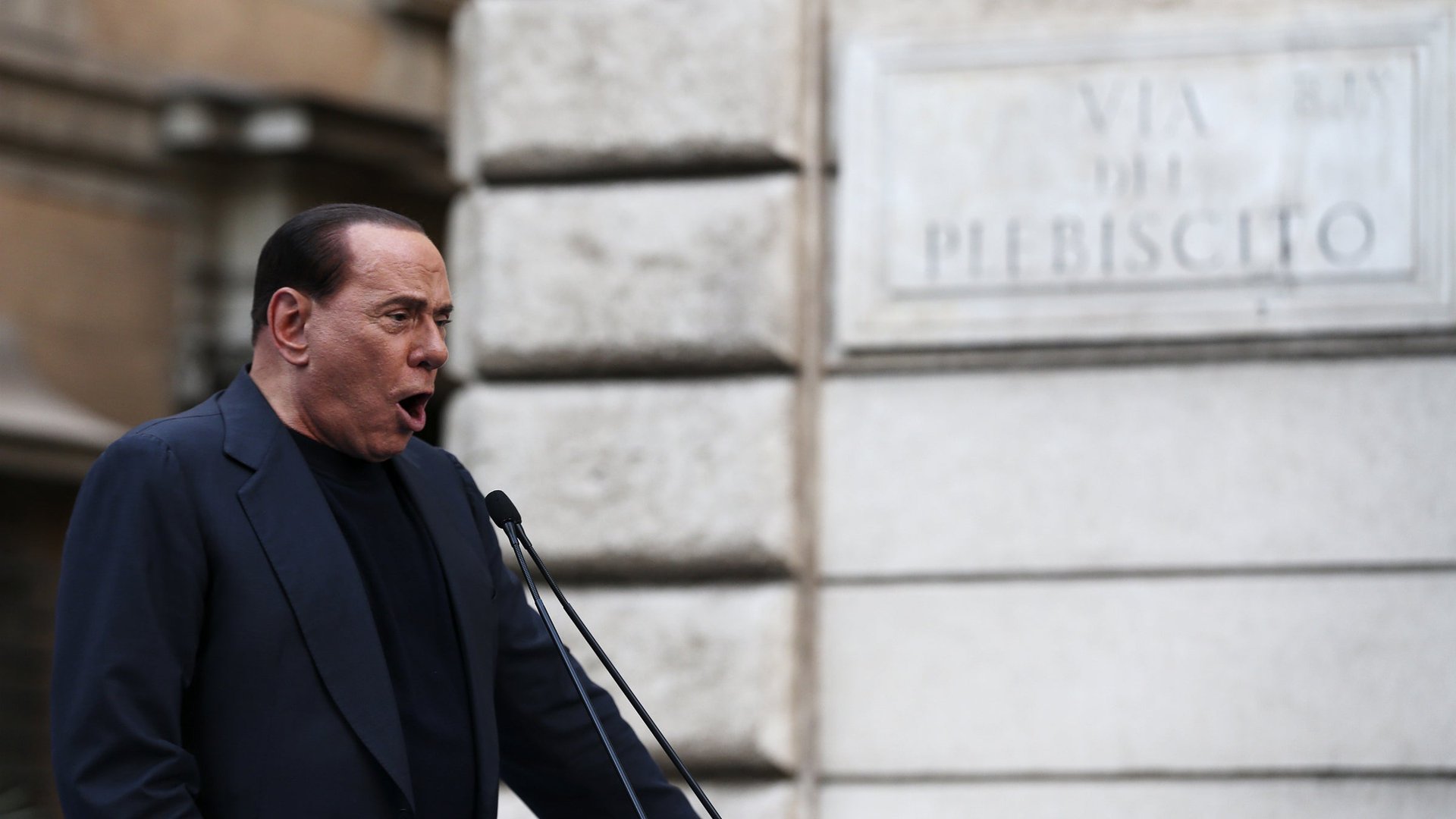
In Italy, the government is teetering. A credit ratings downgrade looms. Two of the country’s three largest banks are in turmoil, as is the main telecoms operator. Given the headlines, it’s surprising how subdued the market reaction has been; bond yields have barely budged and stocks are down by less than 1% so far this week. Has dysfunction in Italy’s parliament and boardrooms finally lost its capacity to surprise?

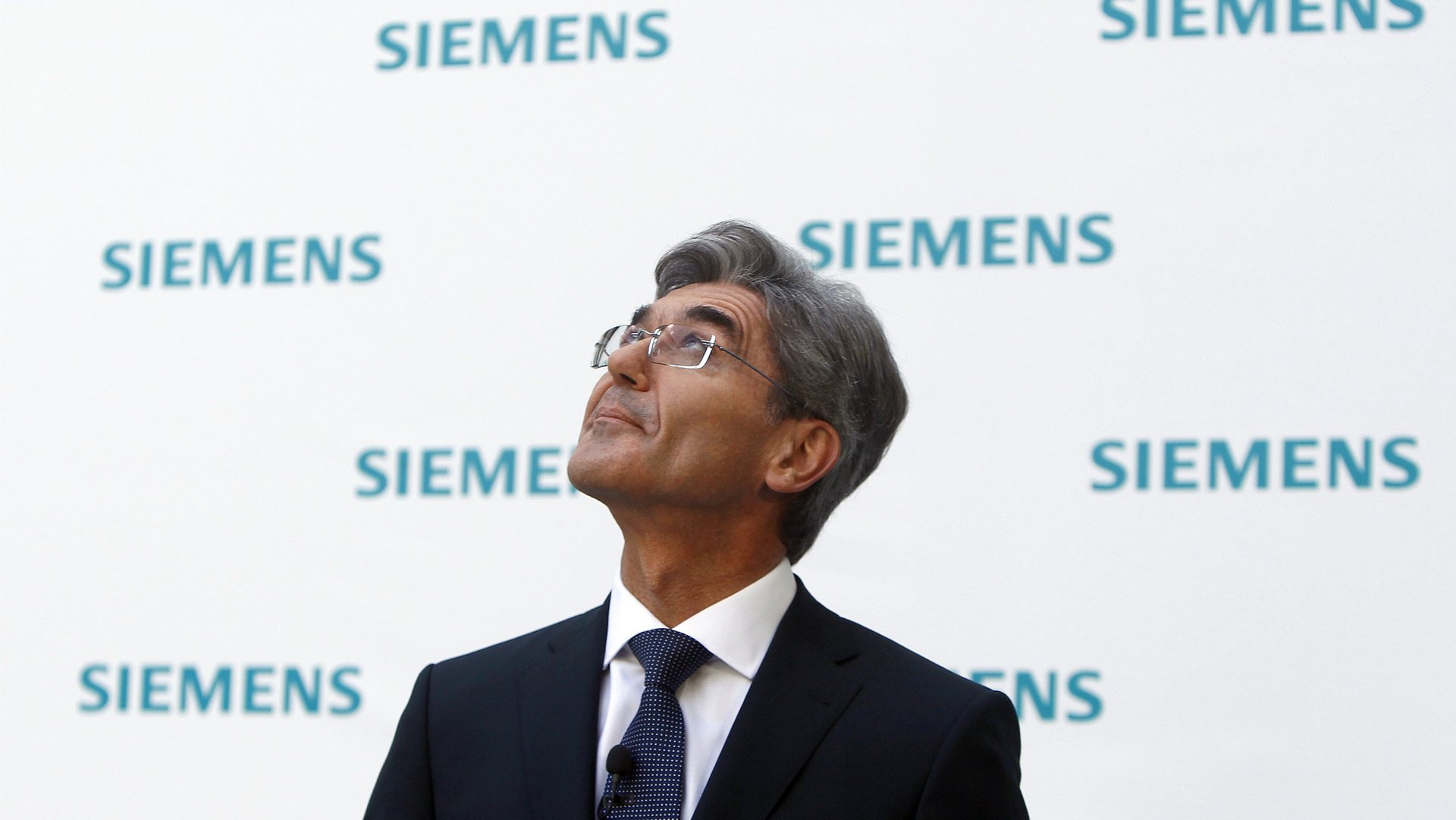
Another corporate giant is following the traditional post-crisis playbook. German conglomerate Siemens is planning to cut 15,000 jobs, according to Bloomberg. This is nearly double the company’s original target for layoffs, first announced last year as part of a broad cost-cutting exercise to put the venerable engineering group back on track after a series of missteps.

Just because you need to cut back doesn’t mean you can’t look good doing it. In July, Italian retail sales dropped to their lowest point in 12 years, it was reported today. The country’s economy is teetering, with investors fretting about fragile banks and a renewed bout of political instability. It’s no wonder that consumers are wary.

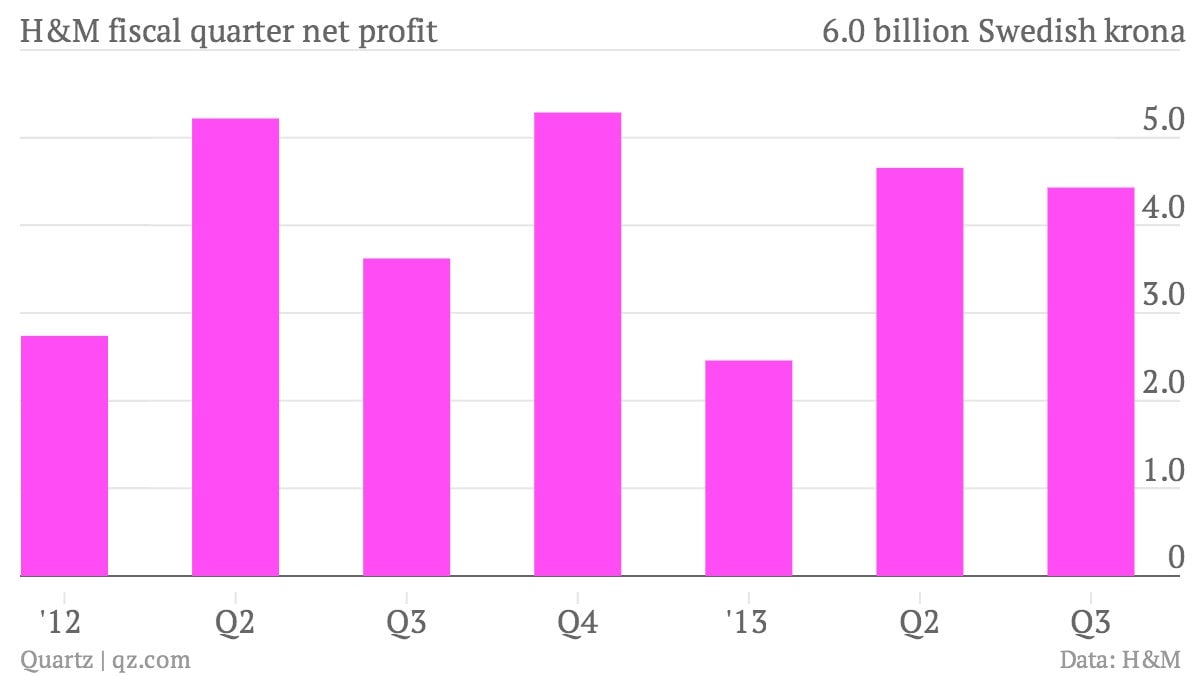
The numbers: Better than expected. Net profit rose by 22% in its latest quarter, covering the three months to August. Coming shortly after larger Spanish rival Zara reported flat earnings over a similar period, investors rewarded H&M’s perkier results by pushing its share price up by more than 6% to reach all-time highs.

Slow growth, high taxes and moribund industry. Bienvenue en France.

As Europe’s fragile financial system slowly returns to health, governments are unwinding the measures they took to prop up ailing banks during the worst of the crisis. In mid-September, the British government sold a 6% stake in Lloyds Banking Group, trimming the state’s ownership of the bank from 39% to 33%.