
Business News
More freewheeling traders are leaving the big banksRisk-taking traders at the world’s biggest banks are on the outs.
Updated July 21, 20221 min read
Risk-taking traders at the world’s biggest banks are on the outs.
At first glance, the fortunes of American families have significantly improvement recently. Household net worth has rebounded back to roughly where it was before the financial crisis.

So, yes, the US jobs report was disappointing, with a scant 74,000 new jobs reportedly created in the month of December. That’s the weakest month in three years.

When it comes to US employment reports, the Bureau of Labor Statistics’ extravaganza early each month is clearly the most important. The next iteration—which will detail the state of the US job market in December—is due tomorrow (Jan. 10) at 8:30am. The consensus among Wall Street prognosticators is for an increase of 190,000 jobs, leaving the unemployment rate flat at 7.0%, according to data firm FactSet.

The numbers: Nothing to write home about. Profits fell 2.8% to $78 million. Revenues rose 3.2% to $2.5 billion. Sales at stores open at least one year fell 2.8%. (Same-store sales tells investors how much a retailer’s sales gains are related to improving performance of stores that are already open, rather than new sales from freshly opened locations.)

Another day, another update on the disastrous state of some important European economies. This time it’s the official unemployment rate from the European Union’s statistical body, which shows Spain’s unemployment rate at an ungodly 26.7%.
Fresh data on US trade are out, showing ongoing improvement in the US balance of goods and services.
So the US Senate has made it a done deal. Federal Reserve vice chair Janet Yellen will be the next head of the powerful US central bank, making her arguably, the most powerful woman in US history. She’ll take over after current chairman Ben Bernanke’s term ends on Jan. 31. Here’s a look at all of the major rungs on Yellen’s climb to the top.

There’s still plenty of a fair bit of chest-thumping going on between Japan and China over territorial claims in the East China Sea.
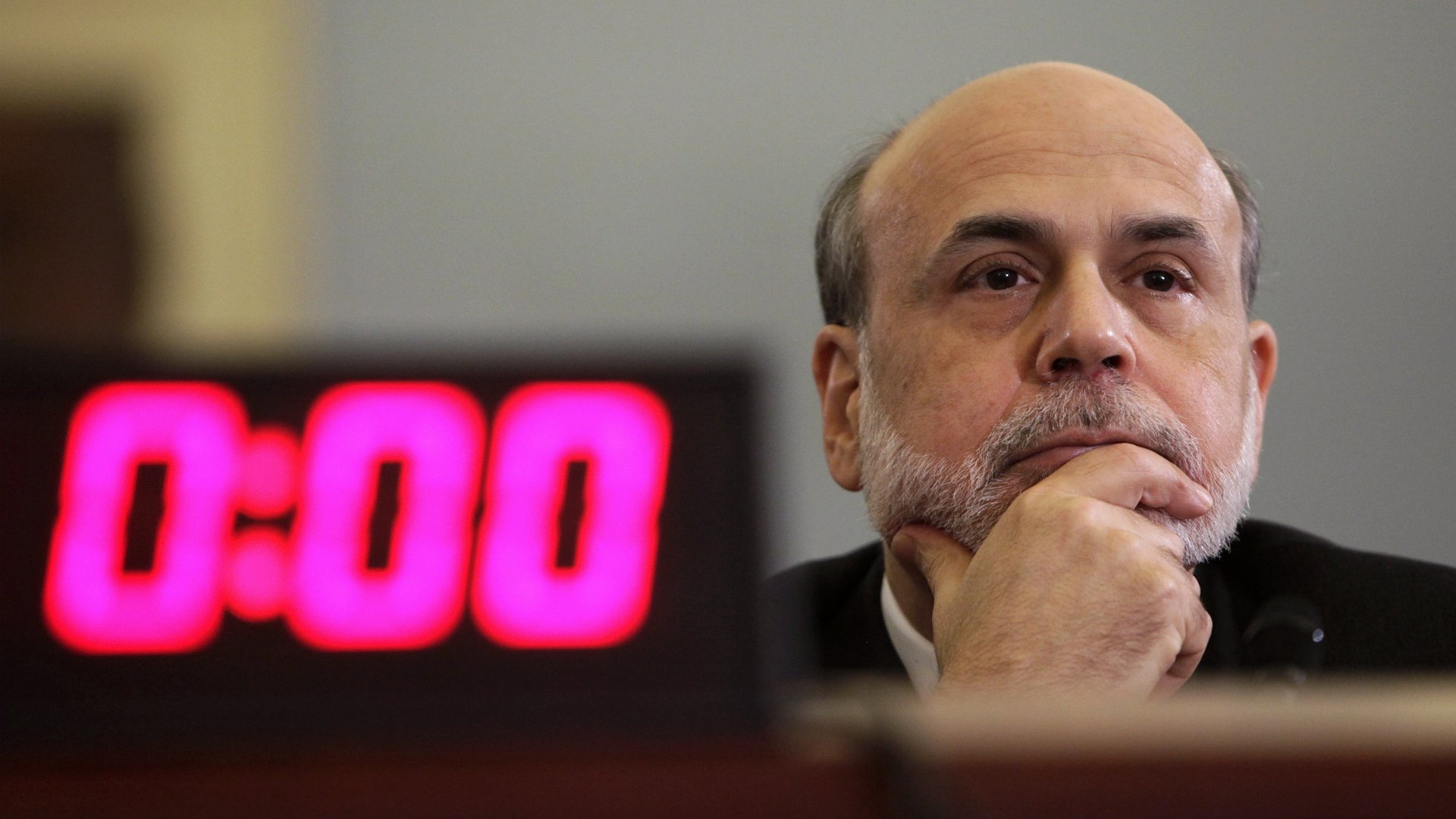
Ben Bernanke just delivered what looks to be one of his final official speeches before the end of his term as Federal Reserve chair on Jan. 31. The speech is a nice, long history lesson of his thoughts on the extraordinary measures the Fed undertook during the financial crisis.
This could really be the year. After years of post-crisis malaise, the stars look to be aligning for the US economy in 2014. Here’s why, according to Wall Street’s economy watchers.
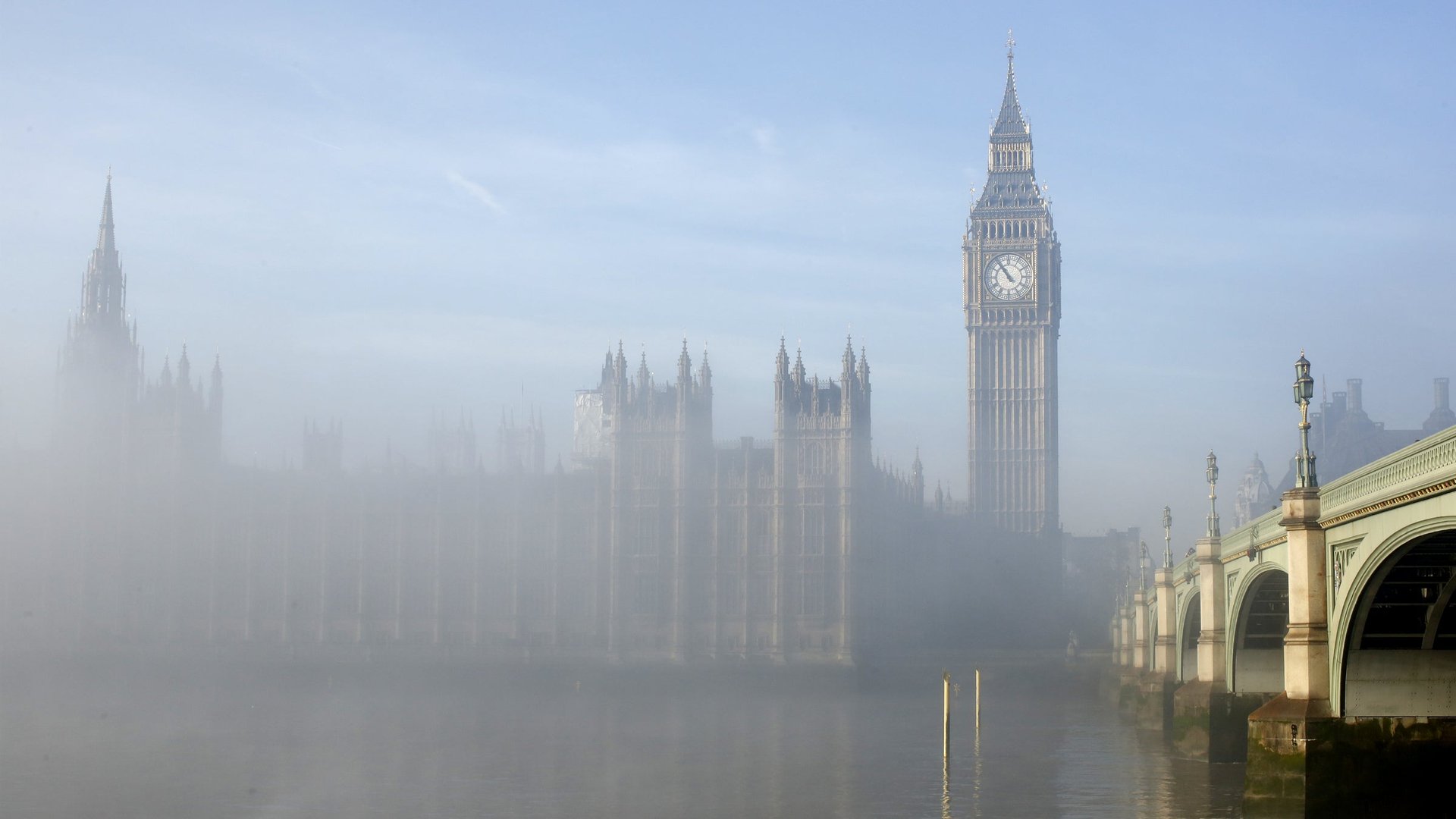
The British economy has definitely distanced itself from the economic miasma of the euro zone. Granted, you don’t have to do much to top the 0.1% in GDP growth the euro zone eked out in the third quarter. But Britain’s 0.8% pace over the prior quarter did the trick.

The last US housing data point of the year came on strong. The Case-Shiller 20-city home price index was up 13.6% in October—the latest data available. That’s the largest year-over-year price increase in seven years. Here’s a look at the data all the way back to 2001.

Sure, gold has done badly this year. And a few gold miners have done even worse.

Any way you slice it, it was a tremendous year for Japanese stocks. One of the world’s best performing asset classes, the central bank’s effort to reflate the economy helped drive a 57% price gain in the Nikkei 225 this year. The stock market benchmark index ended the year today at 16,291, its highest level since December 2007. This year’s rise in the Nikkei was the best for the benchmark index since 1972, when it rose nearly 92%. And, in percentage terms, it outpaced all of of the best years of Japan’s red hot markets in the 1980s.

Alas, it seems like gold bugs have given up on the arrival of the long-awaited, Weimar-style hyper-inflation in US.

Japan seems like it is finally turning the tide in its decades-long battle with deflation.

It’s great for the environment. It’s salubrious. And it’s good, clean fun.

The gold bugs have taken a beating this year.
Another positive—if somewhat tertiary—data point on the improving US economy. The third and final revision of third-quarter GDP shows that it grew at an annualized clip of 4.1% (pdf) over the second quarter, even faster than the 3.6% of the previous estimate, which was faster still than the 2.8% initial estimate. Areas of the economy that grew faster than first thought included private inventories, personal consumer spending, business investment, exports, residential real estate and state and local government spending. Negatives included even weaker federal spending than first thought.
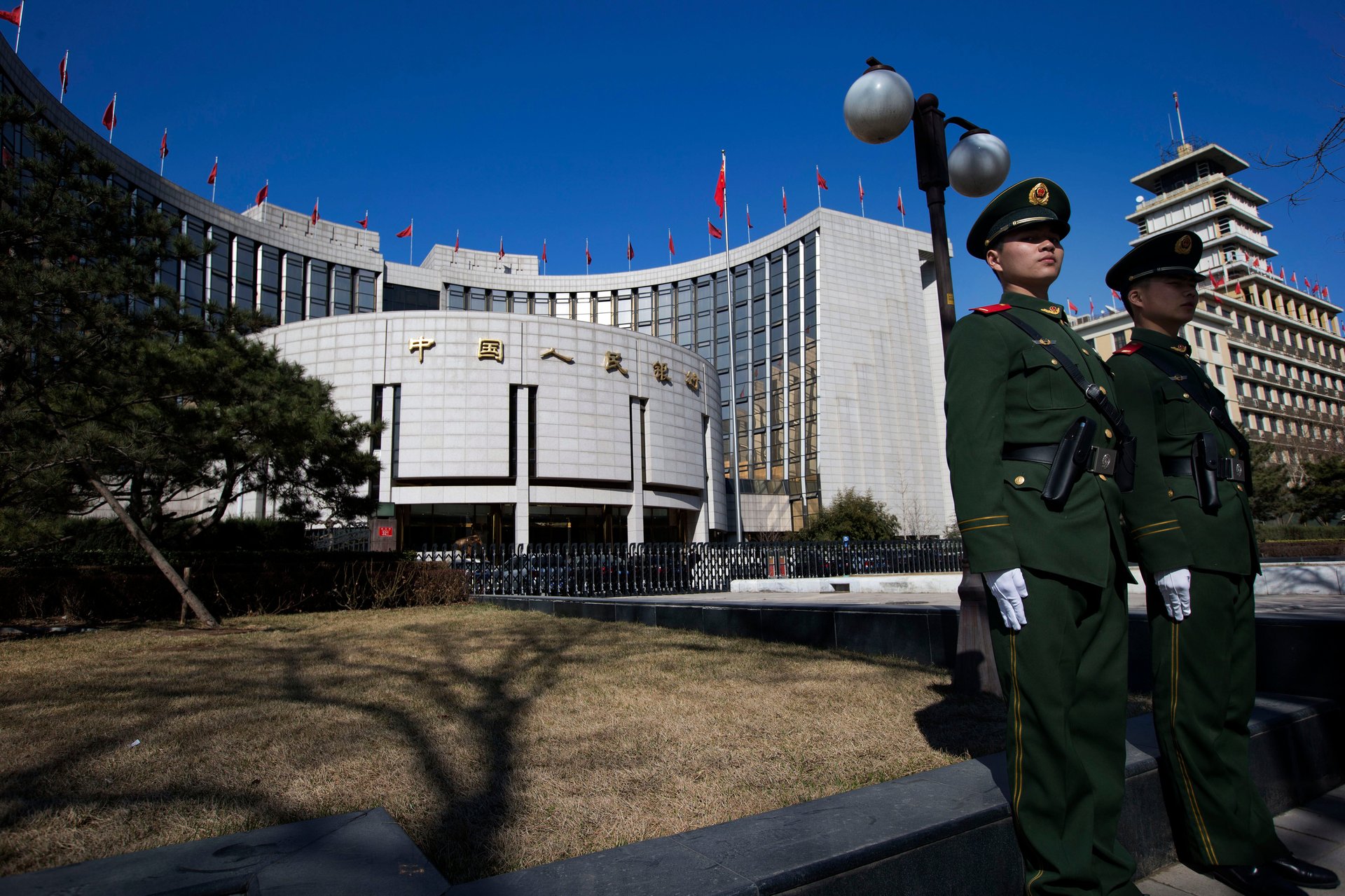
China’s highly-leveraged and opaque financial system ranks high on the list of threats to global growth.
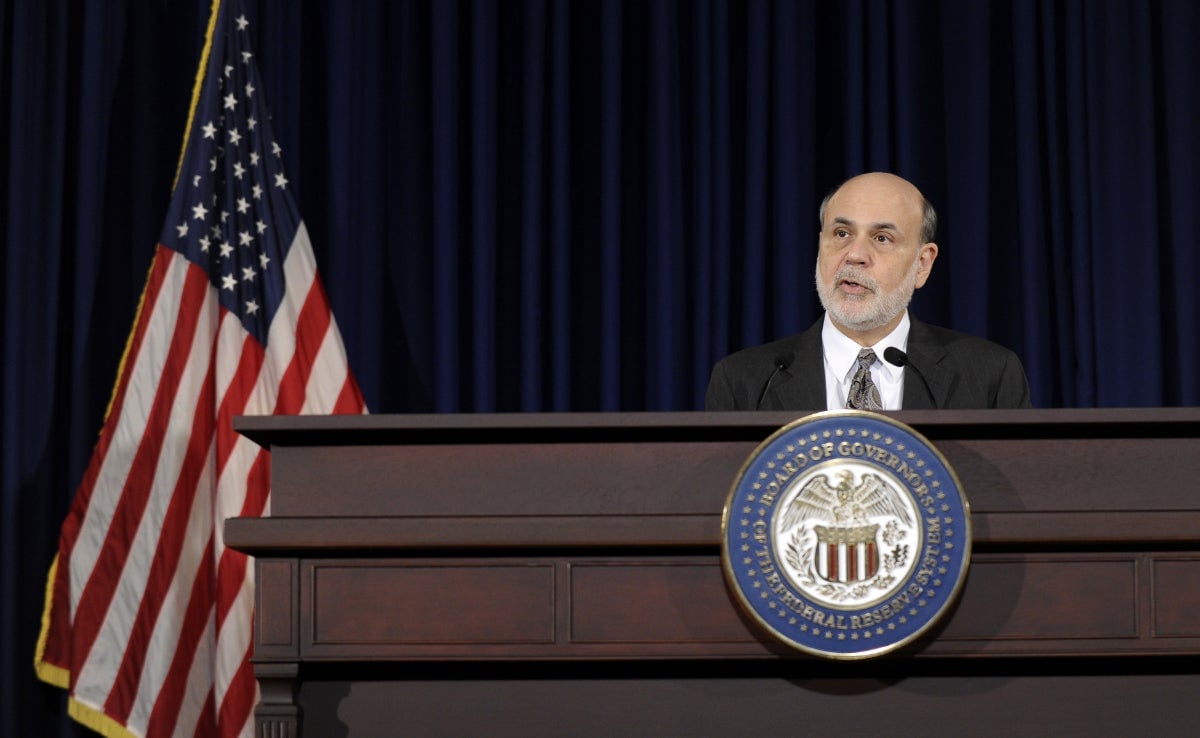
The Federal Reserve’s decision to tamp down on its bond-buying program yesterday was something of a surprise, as many observers of the US central bank thought a call to ease up on bond-buying might have to wait until next year. But perhaps even more surprising was the largely positive reaction of US financial markets. Stocks soared. And after a bit of volatility on the actual announcement, long-term bond yields only edged up slightly. (Though they are on the rise today.)
Ireland’s making a real go of it. Since Dec. 15, it’s no longer been getting new money from the European Commission, IMF or European Central Bank—the troika. (Cyprus, Greece and Portugal are still relying on the troika’s cash handouts.)
Even the journey of $4 trillion dollars begins with a single taper.