
Business News
Forcing banks to draw up their own death plans—an exercise in futility?Breaking up is eminently hard to do.
Updated July 21, 20222 min read
Breaking up is eminently hard to do.
Back to the drawing board.

While some would argue it never really left, Wall Street’s swagger is back, at least when it comes to the lucrative business of corporate matchmaking.
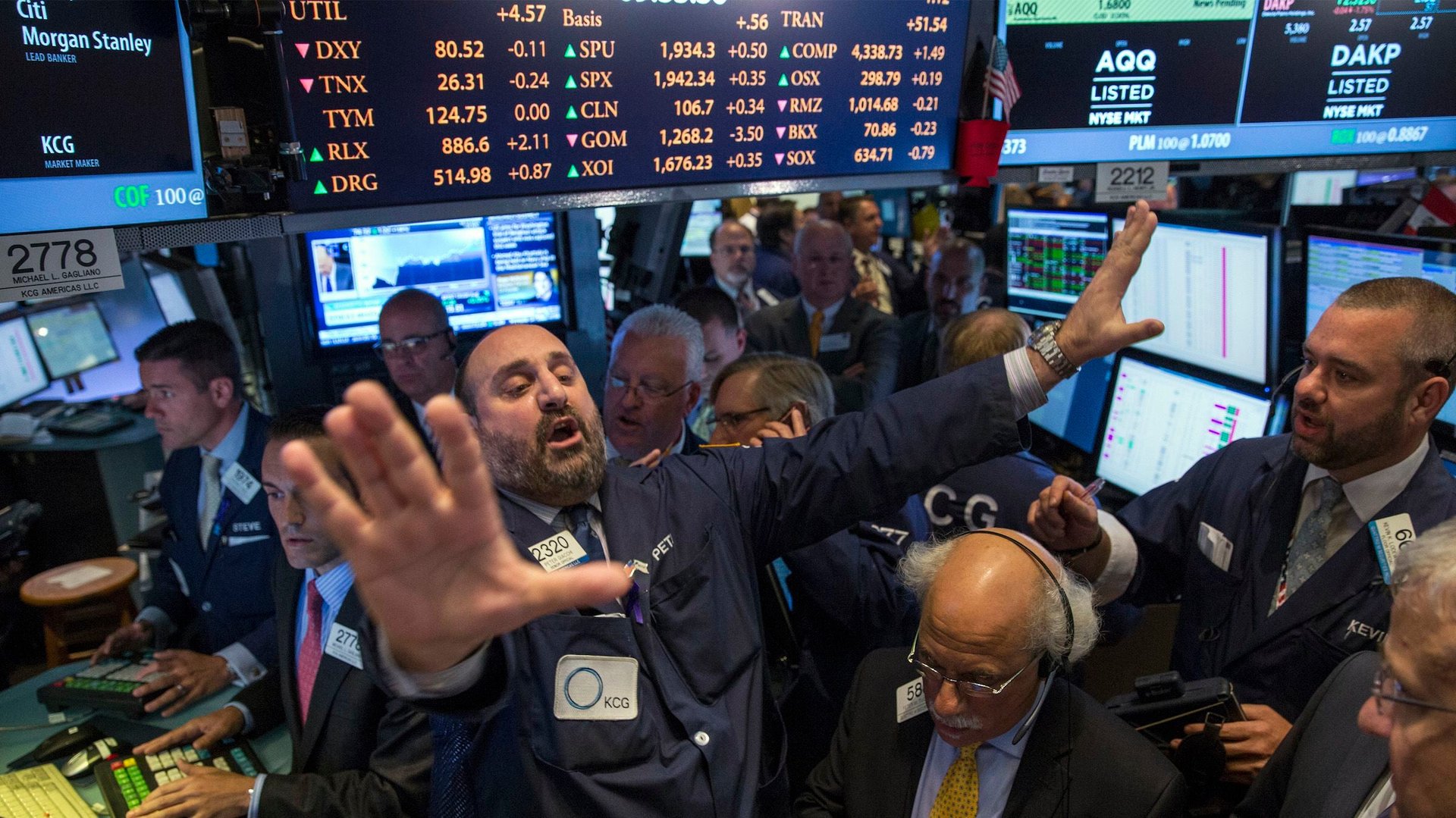
It’s been a busy period for IPOs. While stock investors have turned panicky, enough initial public offerings came to market in the days beforehand to make the week of July 28 the biggest week for debut issues since 2007.
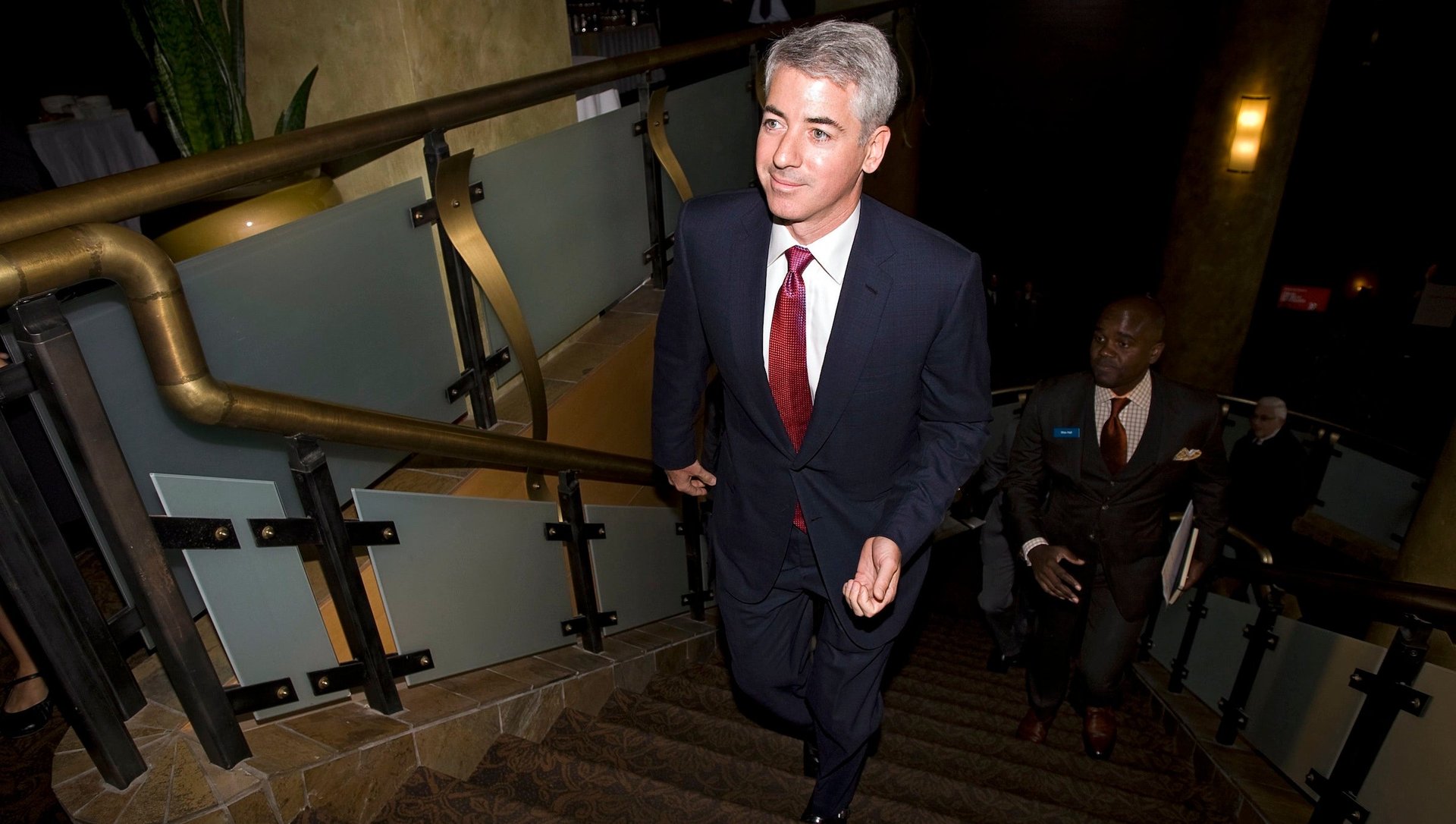
It’s a rare admission for a cocksure hedge fund boss. But that’s what we just heard from Bill Ackman, who acknowledged during an interview with Bloomberg that his hours-long presentation on Herbalife that promised to deliver ”a deathblow” to the nutritional supplement company was a “PR failure.”

The instant messaging app Snapchat may soon be a part of an exclusive Silicon Valley club: startups commanding valuations of $5 billion or better.

Boom times in mergers and acquisitions come at a key moment for banks, which are eager to find ways to offset weakness in their trading businesses.
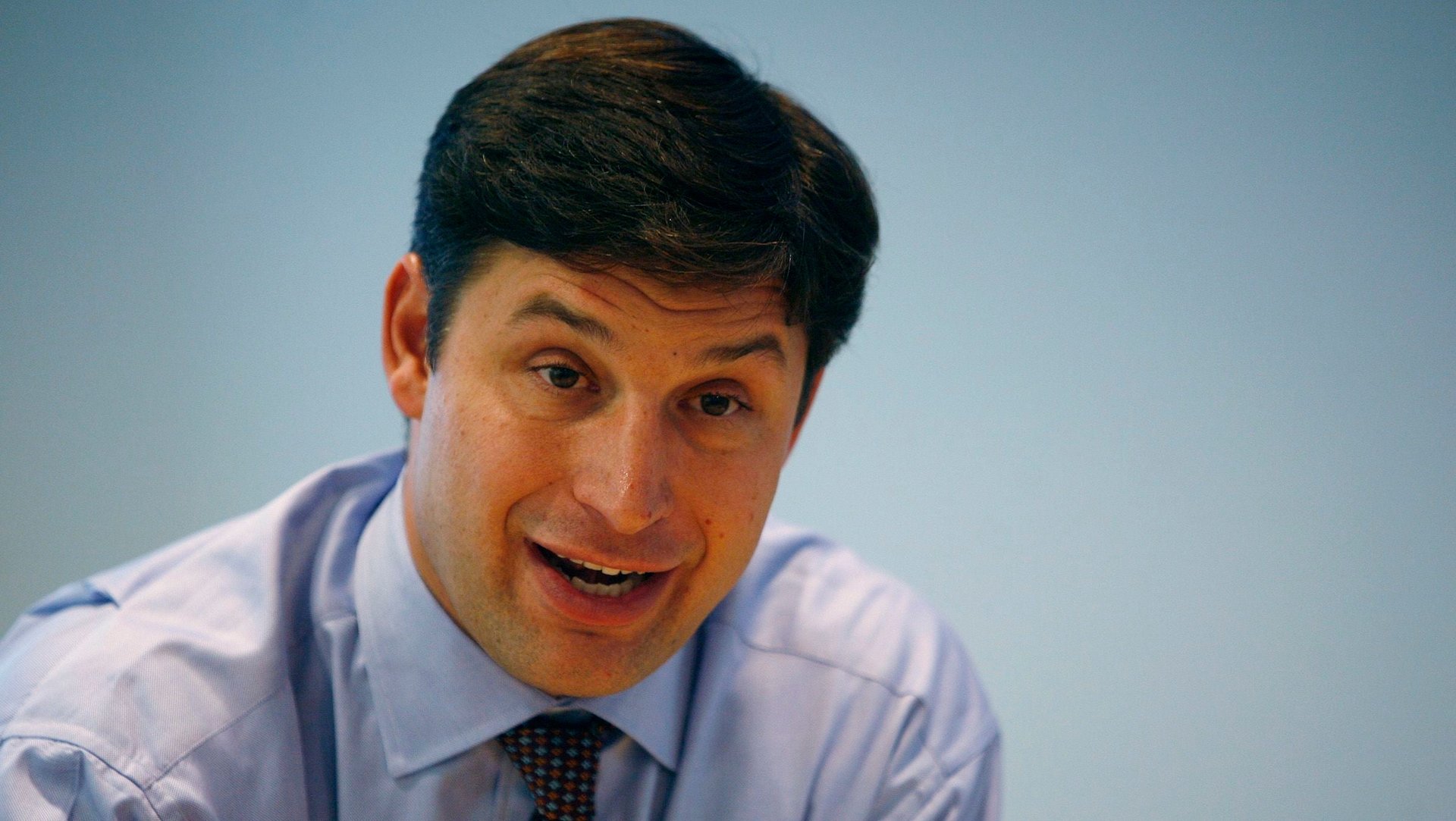
It’s showtime for Anthony Noto.
Disappointing second-quarter earnings have dealt the resounding blow to Herbalife’s stock price that hedge-fund billionaire Bill Ackman’s laborious attempted “deathblow” last week tried but failed to deliver. Shares of Herbalife were down in after-hours trading by more than 11% after the nutritional-supplement company made less profit than analysts were predicting for the first time in 21 quarters. The company’s revenue of $1.3 billion also failed to beat analyst expectations.
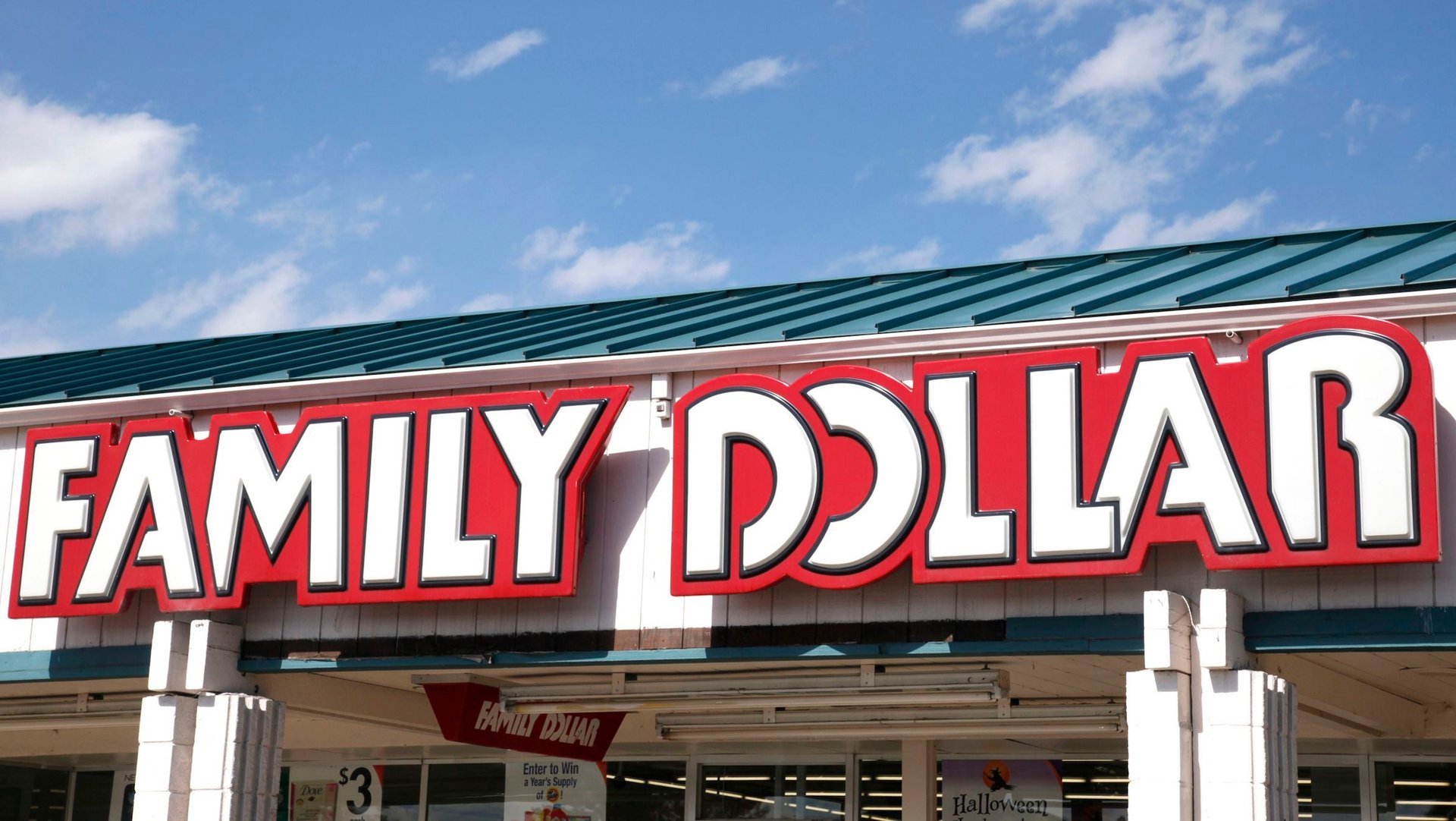
The American discount retailers known as “dollar stores” help many working families stretch their paychecks for household supplies. And they may be an even better deal, it turns out, for billionaire activist investors.
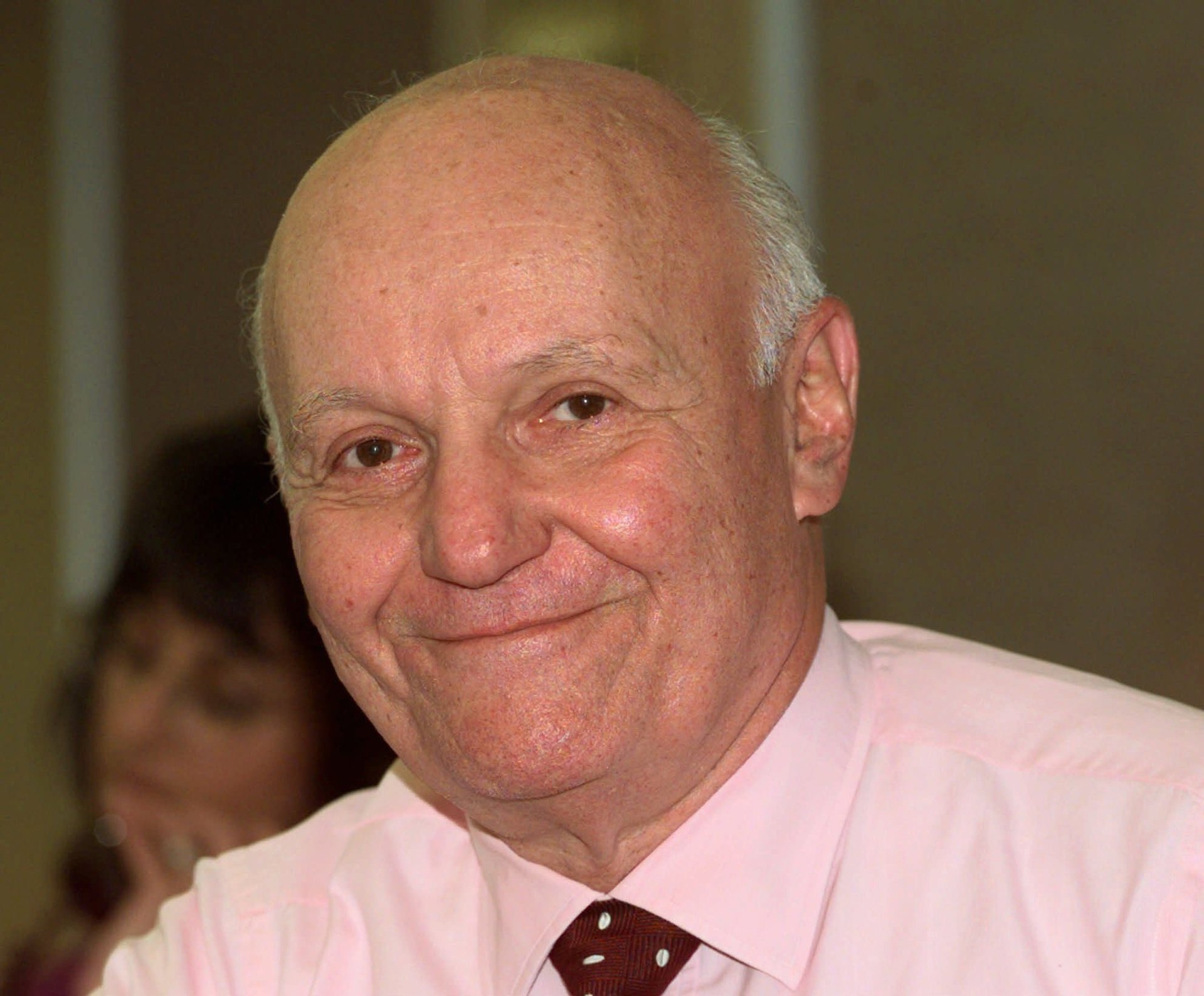
Wall St. legendary trader Alan C. Greenberg passed away today from complications due to cancer. The 86-year-old, nicknamed “Ace,” helped to build Bear Stearns into a powerhouse investment bank to rival those of Goldman Sachs and Morgan Stanley, until it buckled under the in the maelstrom of the financial crisis, on March 17, 2008.

An office, a secretary, some video-conferencing gear. It’s a lot to ask at a jailhouse, right? But these are just the basics that the 66-year-old Indian billionaire Subrata Roy is requesting as he tries to auction off his iconic real estate properties around the world to come up with a whopping 100-billion-rupee ($1.7 billion) bail tab, Bloomberg reports. And the Indian court may grant Roy’s requests.
New York Attorney General Eric Schneiderman isn’t the boss of Barclays’ dark pool (or its lifeguard, for that matter). That’s the position the UK bank has put forth in its response today to a lawsuit filed in June by the top New York prosecutor: ”[W]e do not believe that this suit is justified, and we have a duty to our shareholders, clients and staff to defend our position,” said a spokeswoman in an emailed statement.

News you can really use: that’s the innovative plan of upstart online-trading firm Motif Investing. Based in California, the company, run by former Microsoft executive Hardeep Walia, says it is hammering out a deal with an as-yet-unnamed news organization, to which it will pay fees to drive customers to Motif’s concept-based investing platform.
Fixed-income traders should perhaps consider retraining themselves as lawyers. Why? Because these are boom times for compliance officers and risk management executives at large financial institutions. It’s the one area of US finance in which a substantial bit of hiring is taking place, as banks grapple with the shifting regulatory landscape in the US under the Dodd-Frank financial reforms and tougher international banking codes.
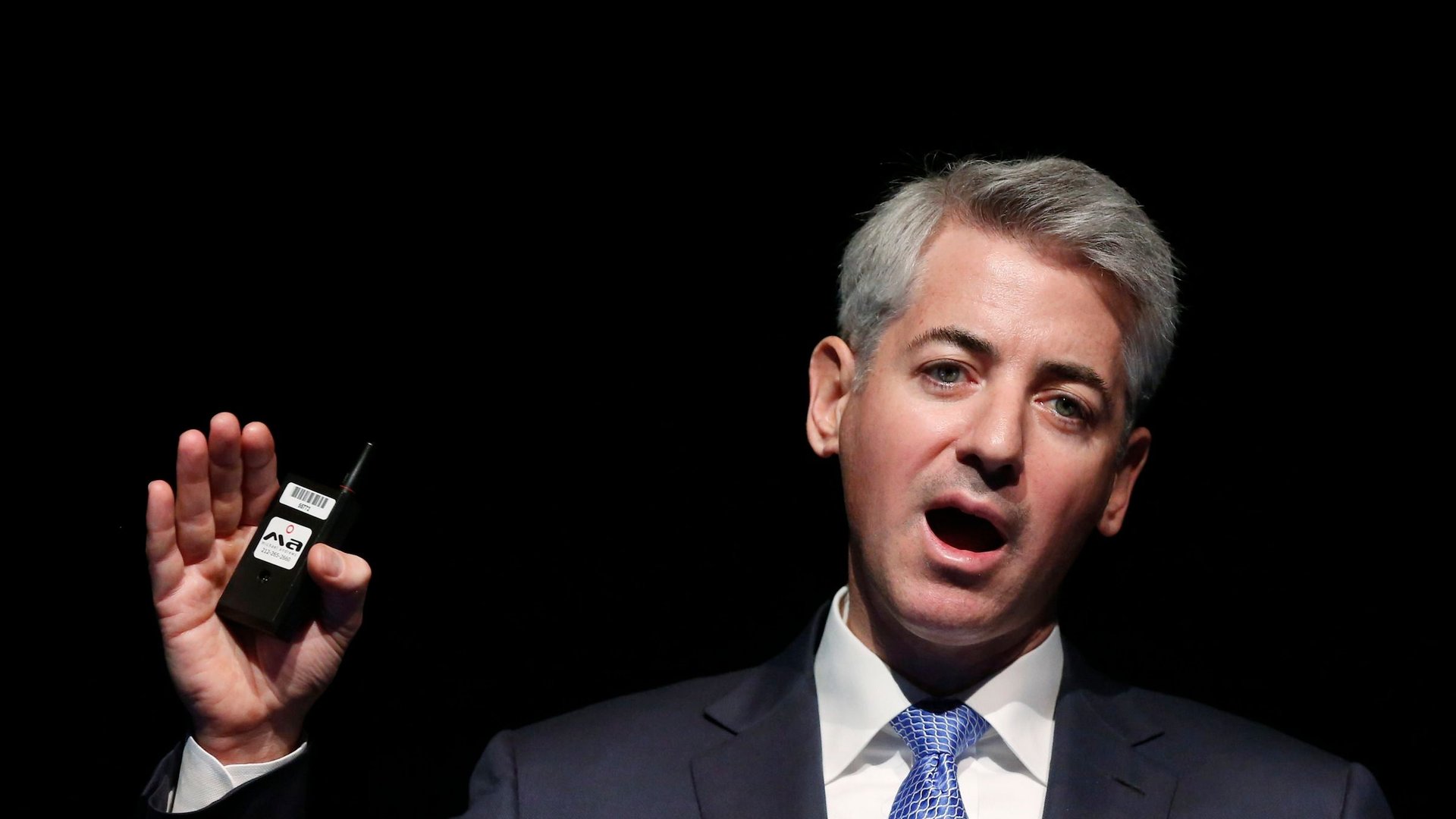
So much for delivering a “deathblow” to Herbalife. That’s what the hedge fund manager Bill Ackman vowed to do on CNBC yesterday, prior to his screed against Herbalife today, which lasted more than three hours. After promising to offer the clearest evidence to date that the international nutritional club is a giant pyramid scheme that preys on Latinos, the hedge fund maestro didn’t deliver a smoking gun incriminating the Los Angeles, California-based company.
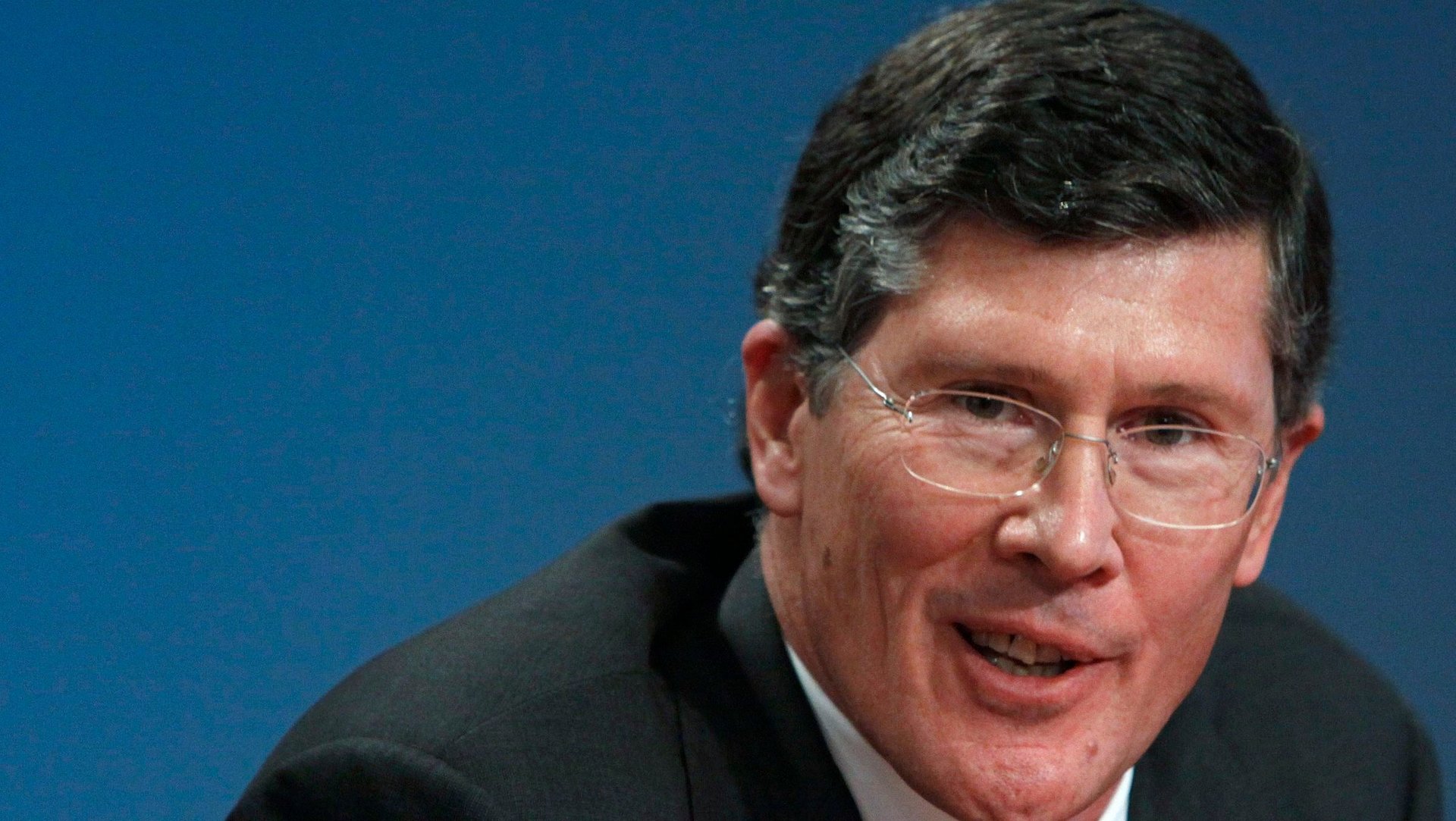
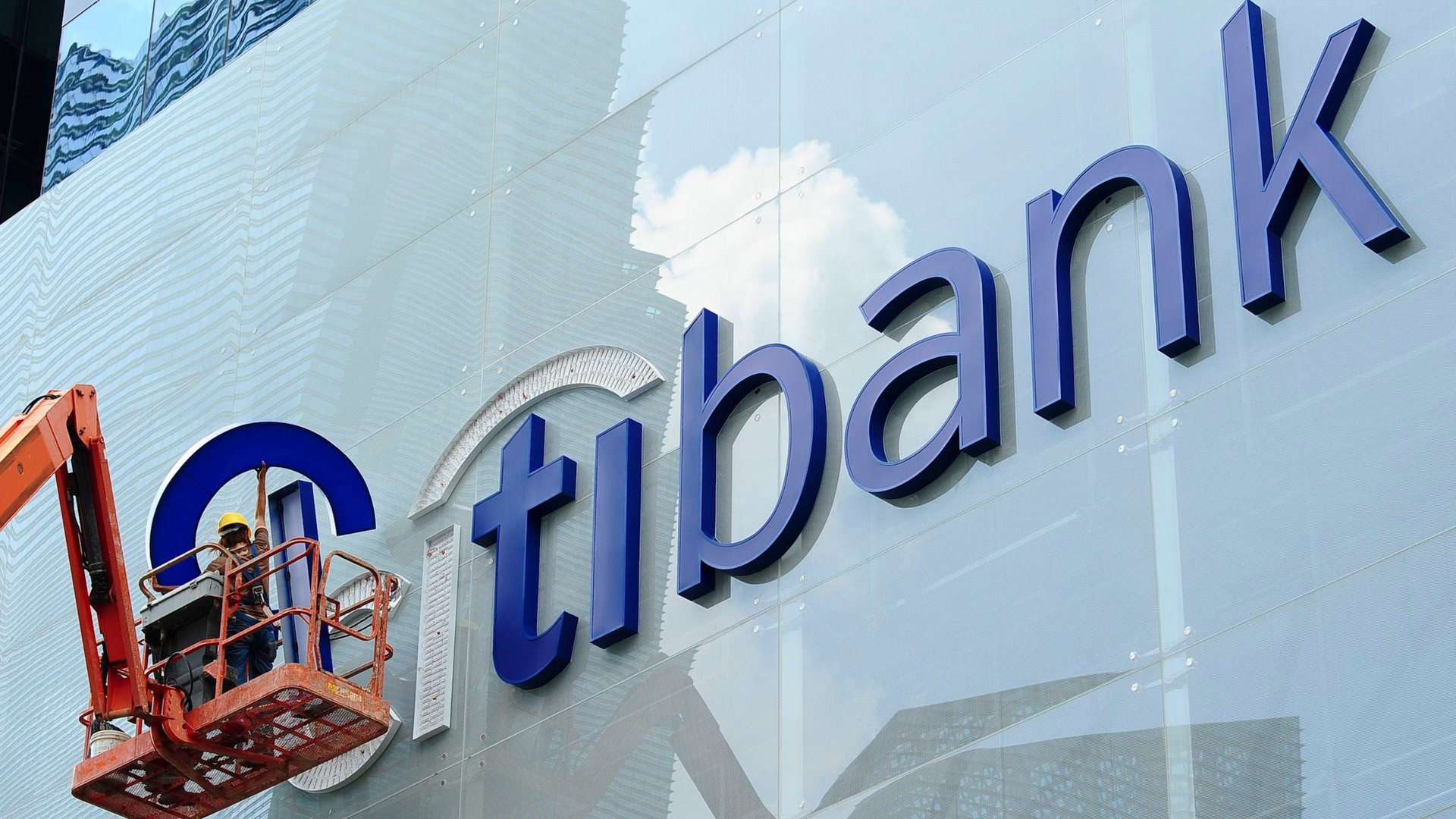
Bring on the regulatory scrutiny. That’s the message that CIT Group’s CEO, John Thain, has sent to the US government. CIT Group just bought itself much closer oversight by US regulators as a result of its planned $3.4-billion merger with the parent company of the California regional bank OneWest Bank.

Credit Suisse has a struck a deal to give clients of Fidelity’s retail brokerage arm a taste of the newly-minted IPOs that the investment bank underwrites in the United States. Gaining access to a big roster of potential investors—Fidelity’s brokerage has some 15 million retail accounts—could be a boon for Credit Suisse as it tries to bolster its IPO franchise.

Barclays’ so-called “dark pools” are draining fast. The UK financial institution has seen shrinking trading activity in those secretive trading venues, where buy and sell stock orders are placed outside the scope of traditional, well-established exchanges like the New York Stock Exchange and Nasdaq OMX.
General Electric got mired in the risky business of consumer credit cards and car and home loans—and now it’s steadily pursuing an exit.
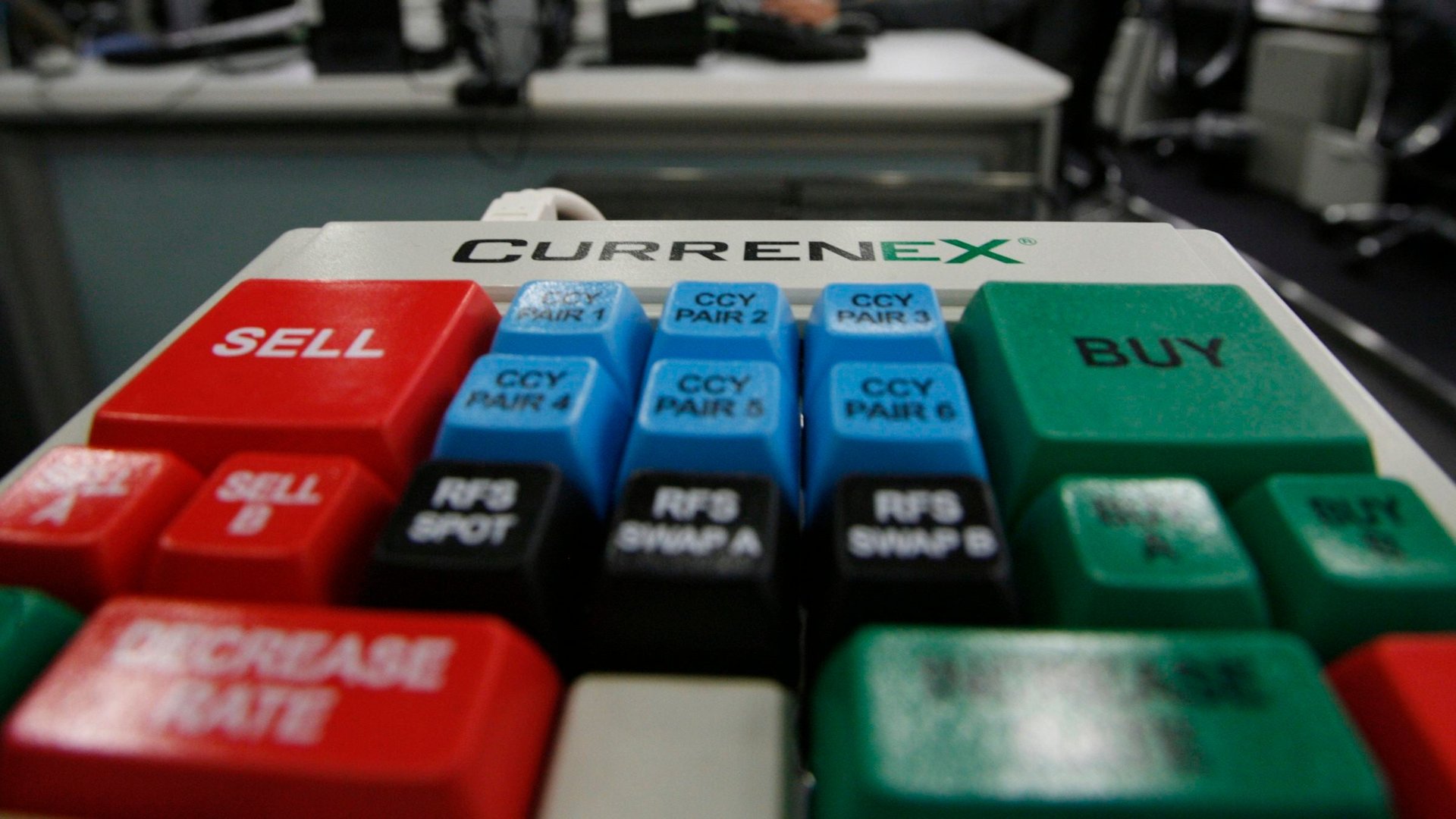
Giving the boot to traders charged with rigging key benchmark rates is harder than you might think. Case in point: Deutsche Bank, which was ordered by a German appeals court back in April to return lucrative jobs to traders that had previously been fired for allegedly colluding to fix rates similar to a key benchmark known as the London Interbank Offered Rate, or Libor.

It’s a Russian invasion but of the cyber variety.
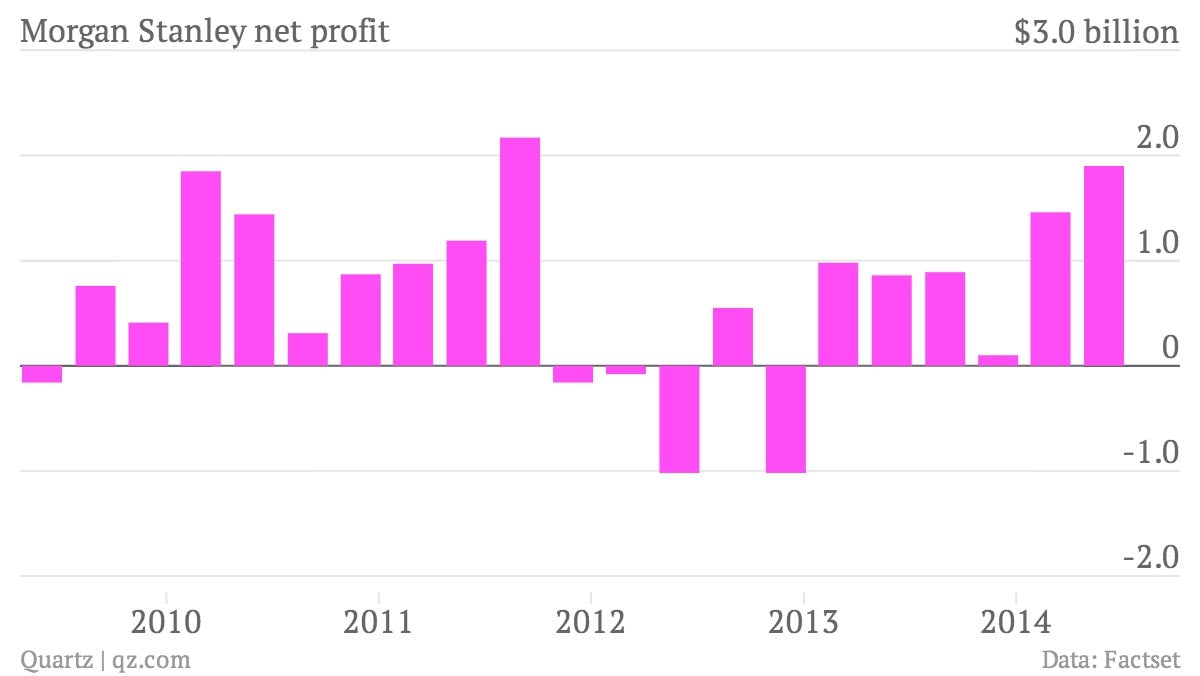
The numbers: Impressive. The smallest of the main US investment banks posted a second-quarter profit of $1.9 billion, almost double the same period last year, on revenue of $8.6 billion, up 1%. That was significantly better than what most analysts expected. As always with Morgan Stanley, there is a bit of messiness in the numbers, with esoteric accounting adjustments and tax adjustments clouding the results, but even so it’s clear that the bank’s core businesses are humming along nicely.
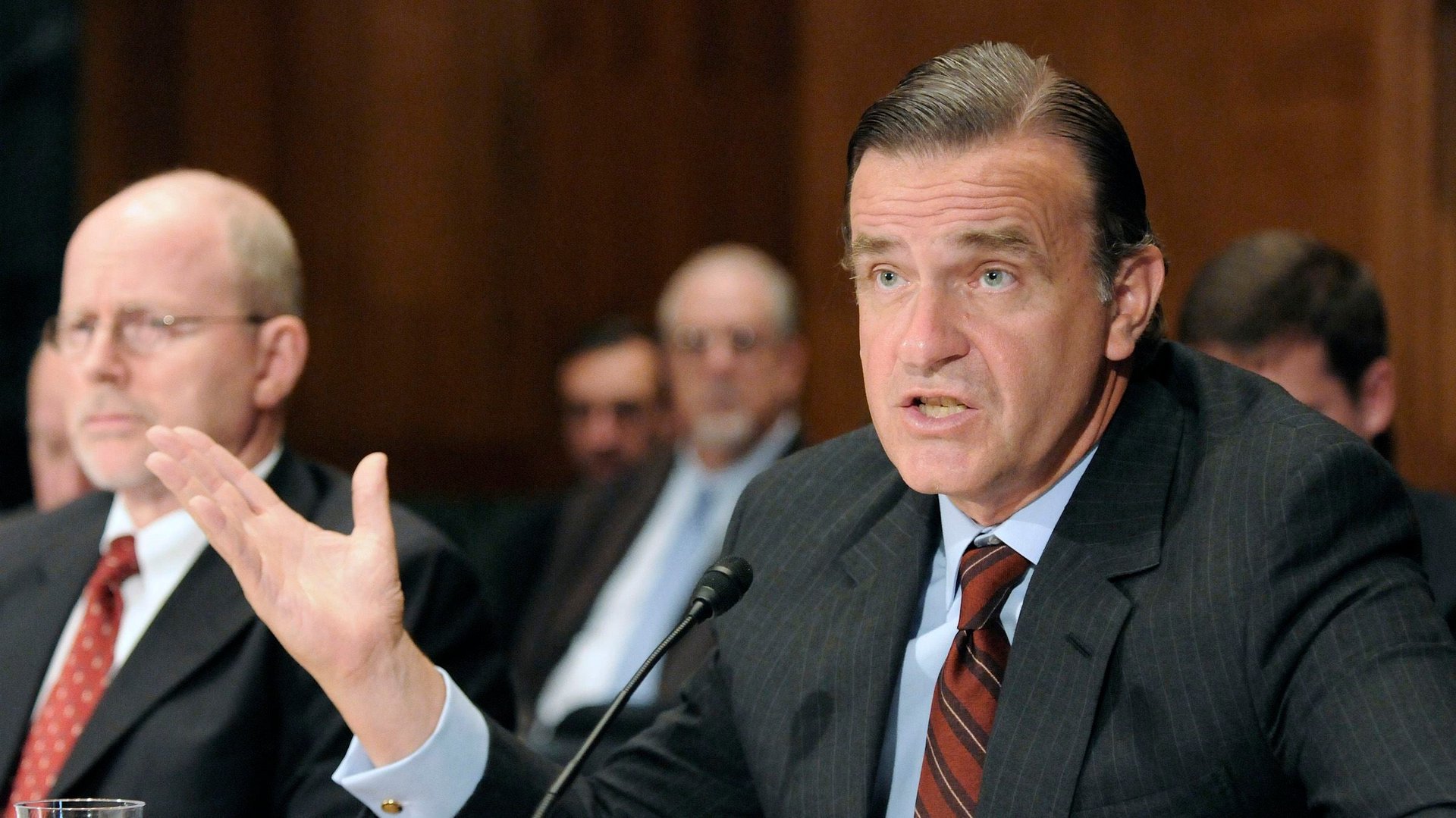
UK-based Funding Circle has added Perella Weinberg CEO Bob Steel to its board of directors. Steel is a former Wachovia CEO, former US Treasury undersecretary, and former New York City deputy mayor who was named Perella’s CEO two months ago. His arrival is meant to deliver additional Wall Street credentials to the online lending platform.