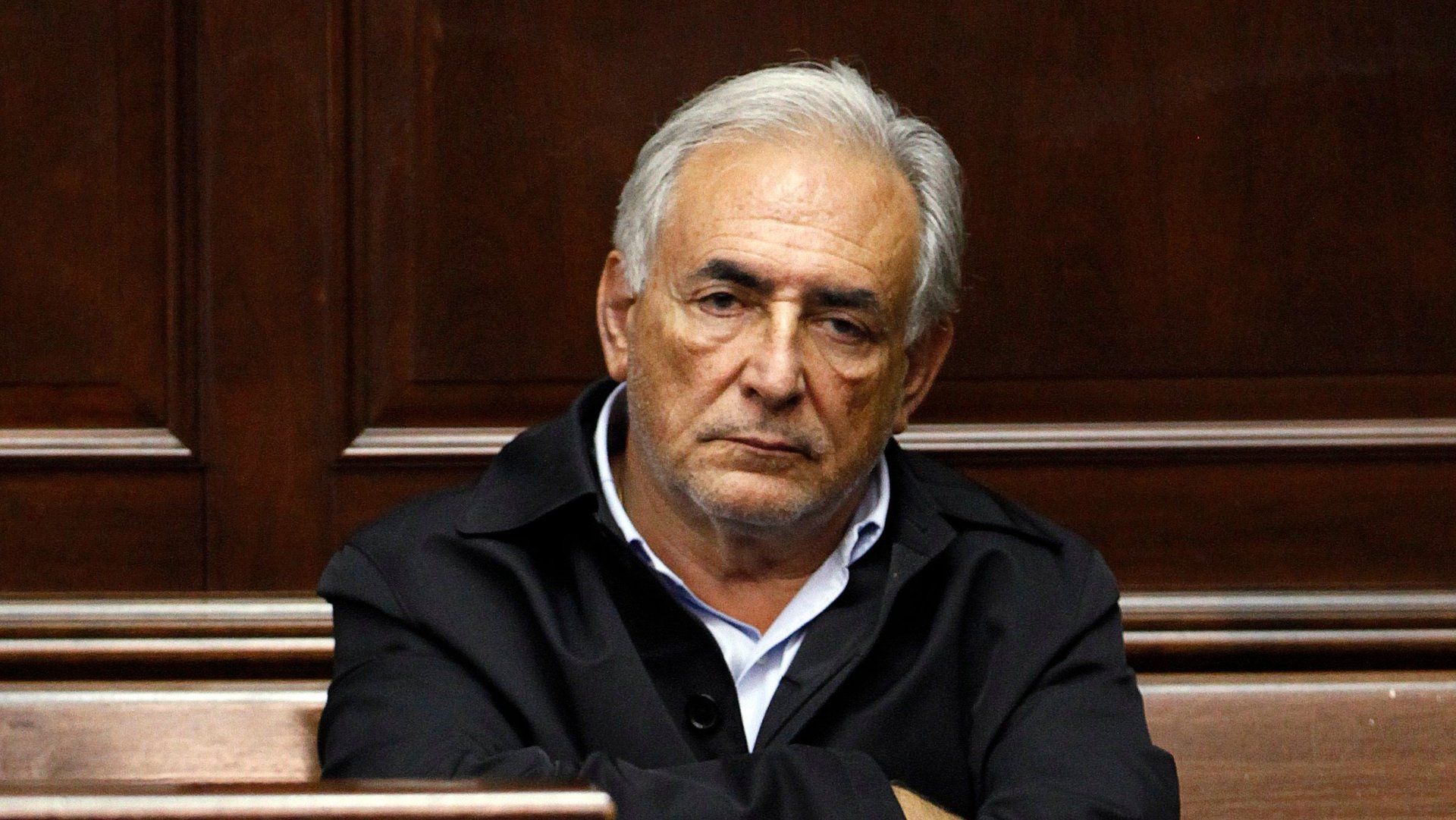
A new hedge fund aiming to raise $2 billion wouldn’t be particularly noteworthy in itself. But when the name behind the venture— DSK Global Investment Fund—is former IMF chief Dominique Strauss-Kahn, as the Wall Street Journal reports, it’s news.

A new hedge fund aiming to raise $2 billion wouldn’t be particularly noteworthy in itself. But when the name behind the venture— DSK Global Investment Fund—is former IMF chief Dominique Strauss-Kahn, as the Wall Street Journal reports, it’s news.

A global commodities giant in less than a decade. That’s where Mercuria Energy Group is headed.

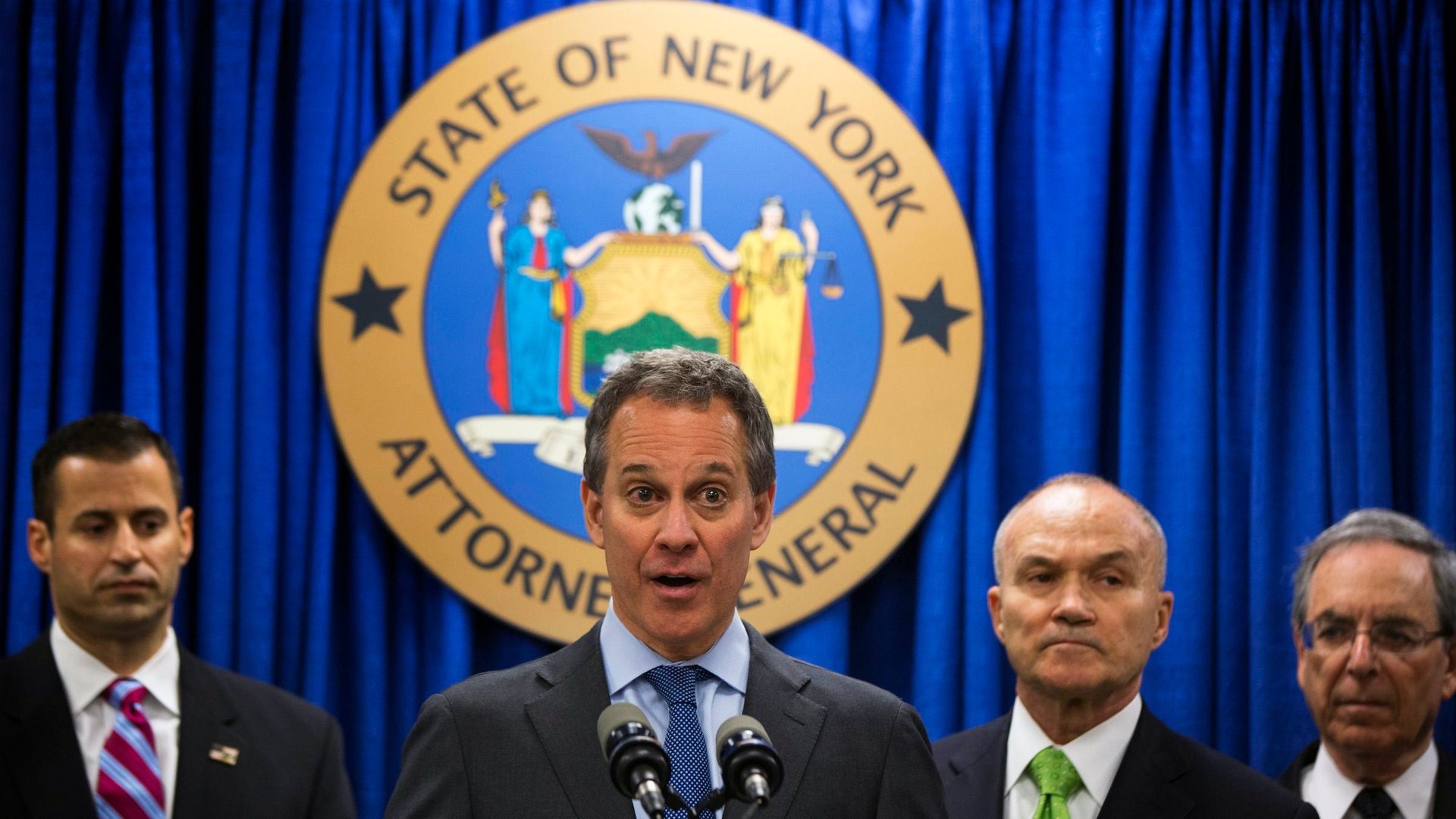
New York attorney general Eric Schneiderman is turning up the heat on on high frequency traders (HFTs). He announced an inquiry yesterday into the benefits that exchanges like the NYSE and Nasdaq offer HFT firms for a fee, such as “co-locating” their servers in the exchanges’ own data centers to give them a few milliseconds of edge.

There were fewer aspiring masters of the universe in the hedge-fund industry last year. Launches of new hedge funds (1,060) hit their lowest level in three years in 2013, and more existing hedge funds (904) went out of business than any year since 2009, according to Hedge Fund Research.

Alibaba’s much-ballyhooed stock has been ballyhooed for a reason. The US equity offering of China’s Alibaba Group Holdings is aiming to raise roughly $15 billion, putting it within shouting distance of the all-time largest US tech IPOs.

Sina Weibo, the Chinese microblogging service often compared to Twitter, just filed papers for an IPO.

Goldman Sachs’ golden goose looks—if not fully cooked—at least lightly seared.

Nearly six years ago, Barclays had high hopes that its purchase of Lehman Brothers’ US operations—acquired for the relative pittance of $250 million—would prove a resounding success. The theory of then-president Robert Diamond was that Lehman would give the largely consumer-focused bank a leg up against its fiercest investment banking rivals. But success in investment banking for Barclays has proven to be far more challenging than Diamond ever envisioned.

Billionaire hedge fund manager Bill Ackman has staged a two-year war against Herbalife, betting that authorities in the US and other countries like China would ultimately determine the health-products retailer to be an illegal pyramid scheme.

Google’s venture capital arm, Google Capital, will plunk roughly $40 million into seven-year-old company, Credit Karma, in a bet that financial firms will pay to advertise to a carefully sifted set of prospective customers.

What do you do when your reputation has been so dragged through the mud that you fear the world might not do business with you again? You change your name!

New York based high-frequency trading firm Virtu Financial is slated to go public, having filed the required regulatory disclosures today. The firm, which was co-founded 12 years ago by chairman Vincent Viola—who recently bought the National Hockey League’s Florida Panthers—reported profits of $184 million in 2013, 108% higher than the prior year.

The digital storage company Box appears set to kick off its initial public offering after secretly filing its plans in January. Meanwhile, the hotly anticipated IPO of its competitor, Dropbox, looks unlikely to launch until next year, according to sources familiar with both offerings.

The emergence of non-traditional bank lenders (paywall) in the US home lending market has drawn intense scrutiny from regulators, and a look at the eye-popping growth of one non-bank mortgage lender, Ocwen Financial, can help explain why.

It’ll take more than a unfolding currency-trading scandal to shake the dominance of the world’s biggest currency dealers. The top five currency-trading banks have actually increased their share of the market during this slow-motion train wreck, according to new research from Greenwich Associates. Those firms—Deutsche Bank, UBS, Citigroup, Barclays and JP Morgan Chase—now hold a commanding 52.9% share, up from the 47.9% they held back in 2011.

Just a few weeks ago, Goldman Sachs unveiled a new plan to pay its traders in Britain and Europe, seemingly in response to new European Union rules meant to put caps on the large bonuses the financial industry is famous for.

As if there weren’t enough reasons to cast a jaundiced eye on the banking system, Bloomberg reports that several international banks are now accused of manipulating a key benchmark, known as the gold fix, in the $20 trillion gold market. The charges of fixing gold prices in London are being leveled at Barclays, Deutsche Bank, ScotiaMocatta (the metals-trading division of Canada’s Scotiabank), Société Générale, and HSBC by New York resident Kevin Maher, who filed a lawsuit against the banks in a US federal court yesterday evening (Mar. 4). The lawsuit follows a draft research report published last week by New York University Professor Rosa Abrantes-Metz and Moody’s Investors Service analyst Albert Metz, noting unusual patterns in the gold benchmarks.

Superstar banker Ken Moelis has been paying handsomely for talent at his privately held advisory firm.

Maybe it’s just a sign that the markets are getting overheated: Americans are taking out student loans in part to cover everyday expenses. The Wall Street Journal reports on this phenomenon—in which borrowers are using student loans as stop-gap financing to cover everything from monthly bills to groceries to previous student loan payments. The development is particularly troubling as student loans hit a staggering $1.1 trillion, and as college tuition costs continue to rise.

Goldman Sachs is chasing fixed-income business Down Under by snapping up the best bond traders in Australia. Bloomberg reports that the firm is in talks with about 10 potential hires as it seeks to expand from trading to capital markets.

Citigroup can’t seem to get out of its own way.

Take the weekend off, Morgan Stanley junior bankers!

Online storage company Dropbox is widely expected to emerge soon as one of the most anticipated Silicon Valley public offerings this year. And as it does, privacy worries are coming to the forefront.

Looking at this key gauge of bank profitability, it’s hard to believe the US banking industry just suffered through the worst economic crisis in a generation.